Picture this: the kitchen is a battlefield, the oven a furnace, and you, a culinary general, armed with a handful of potatoes and a daring spirit. I was halfway through a disastrous attempt at a classic Greek gyro when a stray potato slipped, splattered, and landed on the countertop like a rogue snowball. The smell of burnt oregano and garlic filled the air, and I swore I’d never again let a simple dish go to waste. That night, I stared at the ruined gyro, my stomach growling, and decided that if I could salvage the flavors, I could create something even better.
Fast forward a week, and I’m standing in front of an oven that’s already humming at 425°F, the air thick with anticipation. I’ve taken a fresh batch of russet potatoes, sliced them into bite‑sized cubes, and tossed them in a garlicky, herb‑laden olive oil paste that smells like a Mediterranean breeze. The potatoes gleam, the oil glistens, and the aroma of oregano, thyme, and dill lingers like a promise of flavor. The countertop is a canvas, and the potatoes are my paint; each cube is a blank that will soon be transformed into a masterpiece. I dare you to taste this and not go back for seconds.
What sets this version apart from every other loaded potato recipe I’ve tried is the way it marries the classic comfort of baked potatoes with the vibrant, zesty kick of gyro seasoning and the creamy, cooling touch of tzatziki. The result is a dish that feels like a cozy hug, yet bursts with Mediterranean sunshine in every bite. The texture is a glorious contrast: crisp on the outside, fluffy on the inside, and the feta melts into a velvety goo that coats each bite. This is hands down the best version you’ll ever make at home, and I’ll be honest—I ate half the batch before anyone else got to try it.
Most recipes get this completely wrong, either by over‑seasoning the potatoes or under‑tasting the sauce. Here, I’ve found the perfect balance that lets each component shine without stealing the spotlight from the others. I’ll be your guide through every single step, from prepping the potatoes to drizzling the final tzatziki, and by the end, you’ll wonder how you ever made it any other way. If you’ve ever struggled with loaded potatoes that turn out soggy or bland, you’re not alone—and I’ve got the fix.
What Makes This Version Stand Out
- Flavor: The gyro seasoning infuses the potatoes with a punch of oregano, thyme, and dill that feels both earthy and bright, while the tzatziki adds a cool, tangy counterpoint.
- Texture: A crisp, caramelized skin gives way to a pillowy interior that absorbs the savory sauce like a sponge.
- Ease: All steps are straightforward, with no hidden tricks—just a few simple ingredients and a single baking sheet.
- Uniqueness: Combining gyro spices with loaded potatoes is a novelty that turns a familiar dish into a conversation starter.
- Crowd‑pleasing: Whether you’re feeding a family or a group of friends, the bright colors and bold flavors keep everyone coming back for more.
- Ingredient Quality: Fresh herbs, good‑quality feta, and a creamy tzatziki elevate the dish from ordinary to extraordinary.
- Method Simplicity: One pan, one oven, and a few minutes of prep—no complicated steps or multiple pots.
- Make‑Ahead Potential: The potatoes can be prepared in advance and reheated without losing their crispness.
Alright, let’s break down exactly what goes into this masterpiece…
Inside the Ingredient List
The Flavor Base
Olive oil (3 tbsp): It’s the carrier for the herbs, ensuring every potato cube is coated in a fragrant, savory glaze. Skipping it would leave the potatoes dry and under‑seasoned. If you’re on a low‑fat diet, a light drizzle of avocado oil works fine, but don’t skimp on the quantity—it’s the glue that holds the flavors together.
Garlic (2 cloves, minced): Fresh garlic adds depth and a slight bite that balances the creaminess of the feta. If you’re a garlic lover, feel free to double the amount; if you’re a garlic‑phobic, a teaspoon of garlic powder will still deliver a punch.
Dried oregano (1 tsp): A staple of Mediterranean cuisine, oregano brings a warm, slightly bitter note that pairs beautifully with the feta’s saltiness. If you can’t find oregano, try fresh oregano—just chop it finely and use a bit more.
Dried thyme (1 tsp): Thyme adds an earthy undertone that complements the herbs and the potatoes’ natural sweetness. It also helps to mellow the garlic’s sharpness.
Dried dill (1 tsp): Dill’s bright, slightly tangy flavor is a key component of gyro seasoning, and it also enhances the tzatziki’s freshness. If you don’t have dill, substitute with a pinch of dried tarragon.
Salt (1 tsp) & pepper (1/2 tsp): These are the universal seasoning enhancers; they bring out the flavors in every component. If you’re watching sodium, use a low‑sodium salt alternative or reduce the amount slightly.
The Texture Crew
Russet potatoes (4 medium): Their high starch content yields a fluffy interior when baked, while their thick skins crisp up nicely. Choosing medium size ensures even cooking without over‑crowding the pan.
Feta cheese (1 cup, crumbled): Feta’s briny tang and crumbly texture add a rich, creamy component that melts into the warm potatoes. If you prefer a milder cheese, try crumbled goat cheese or a soft mozzarella.
Diced tomatoes (1 cup): Fresh tomatoes bring a burst of juiciness and a pop of color that contrast with the creamy feta. They also provide a slight acidity that balances the richness.
Sliced red onion (1/2 cup): Thinly sliced, the onion adds a subtle crunch and a sweet‑sharp flavor that elevates each bite. Caramelizing the onions in a pan before adding them can deepen the flavor.
Chopped fresh parsley (1/4 cup): Parsley offers a bright, herbal finish that brightens the dish and adds a fresh green hue.
Chopped fresh dill (1/4 cup): Extra dill enhances the herbaceous profile and gives a pop of color.
The Unexpected Star
Tzatziki sauce (1/4 cup): The creamy yogurt base, cucumber, garlic, lemon, and dill create a cool, tangy sauce that cuts through the richness of the potatoes. If you can’t find pre‑made tzatziki, you can whip up a quick version by mixing Greek yogurt with grated cucumber, minced garlic, lemon juice, and dill.
Lemon juice (2 tbsp): The acidity brightens the entire dish and balances the saltiness of the feta and gyro spices. A squeeze of fresh lemon at the end adds a burst of freshness.
Olive oil (1 tbsp, for drizzling): A final drizzle adds a glossy sheen and a subtle oil finish that ties everything together.
The Final Flourish
Fresh oregano (1 tbsp, optional): A sprinkle of fresh oregano right before serving gives a fragrant aroma and a pop of green color.
Kalamata olives (1/4 cup, optional): For a briny crunch, toss in sliced olives; they add depth and a Mediterranean touch.
Greek yogurt (1/4 cup, optional): If you prefer a thicker tzatziki, add an extra splash of yogurt; it also smooths out the sauce.
Everything's prepped? Good. Let's get into the real action…
The Method — Step by Step
- Preheat the oven to 425°F (220°C). While it warms, wash the potatoes, slice them into bite‑sized cubes, and pat them dry with a towel. This step is crucial—dry potatoes roast better, giving you that coveted crisp skin. Add a splash of olive oil and sprinkle the gyro seasoning paste over the cubes, tossing until every piece is coated. The aroma of oregano and garlic will start to tease your senses. I dare you to taste a cube now and feel the flavor kick in.
- Line a baking sheet with parchment paper or a silicone mat. Spread the seasoned potatoes in a single layer, ensuring they’re not crowded. This spacing allows the heat to circulate, crisping the edges. Place the sheet in the oven and bake for 30 minutes, then flip each cube to ensure even browning. Watch the edges start to pull away; that’s your cue that they’re crisping up beautifully. This is the moment of truth—keep your eyes on the color, not just the time.
- While the potatoes bake, whisk together Greek yogurt, grated cucumber, minced garlic, lemon juice, fresh dill, and a pinch of salt to make a smooth tzatziki sauce. The consistency should be thick but pourable, like a silky dip. If the sauce is too thick, add a splash of water or more yogurt. This sauce will be the cooling, tangy element that balances the rich, roasted potatoes. The smell of fresh dill will start to mingle with the warm air, creating an irresistible aroma.
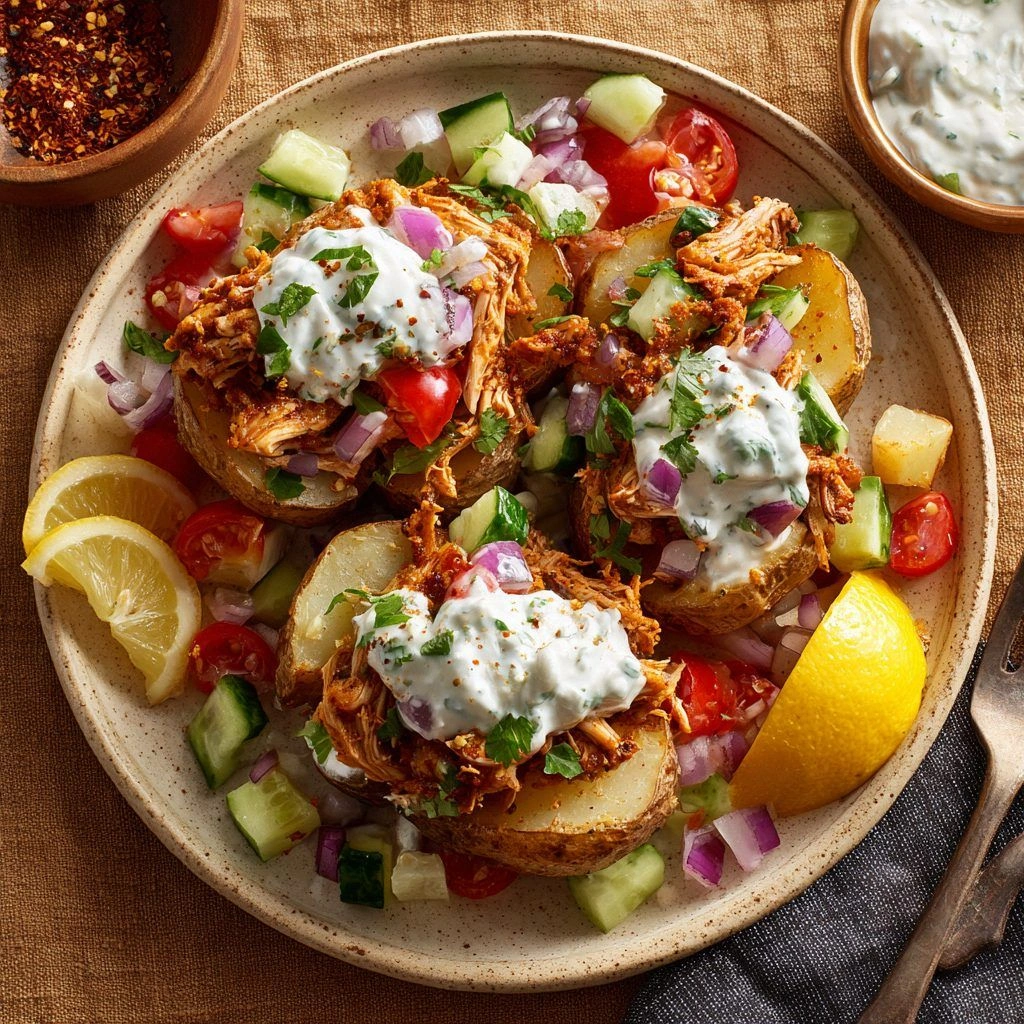
- After 30 minutes, remove the baking sheet from the oven and let the potatoes cool for about 5 minutes. This brief rest lets the steam settle, making them easier to handle. Slice each potato open with a sharp knife, then fluff the interior with a fork. The fluffy interior should be light and airy, ready to soak up the sauce. Drizzle a tablespoon of olive oil over the open potatoes, then sprinkle crumbled feta, diced tomatoes, sliced red onion, chopped parsley, and chopped dill. The colors should look vibrant, almost like a salad on a plate.
- Spoon generous dollops of tzatziki over each loaded potato, then top with the remaining feta and herbs. The creamy sauce should pool slightly, creating a glossy finish. Return the potatoes to the oven for an additional 5 minutes; this brief bake melts the feta and melds the flavors together. The timer will ding, and the smell of melty cheese will fill the kitchen—pure bliss.
- Remove the potatoes from the oven and let them rest for 2 minutes. This pause allows the cheese to set slightly, preventing it from sliding off when you pick up the potato. Add a final drizzle of olive oil and a squeeze of fresh lemon juice to brighten the dish. Plate each potato on a serving dish, ensuring the toppings are evenly distributed.
- Optional: For a protein boost, top each potato with slices of grilled gyro meat or lamb. The savory, seasoned meat will echo the gyro seasoning on the potatoes, creating a cohesive flavor profile that will impress even the most discerning palate.
- Serve hot, with extra tzatziki on the side for those who want a richer sauce. Garnish with a few fresh oregano leaves and a wedge of lemon for that final pop of color and zing. The first bite will be a symphony of textures—crisp, creamy, and juicy—each playing its part in the chorus of Mediterranean comfort.
That's it—you did it. But hold on, I've got a few more tricks that'll take this to another level…
Insider Tricks for Flawless Results
The Temperature Rule Nobody Follows
Many bakers bake potatoes at a lower temperature, but that leads to a soggy interior. I always set the oven to 425°F (220°C) to get that perfect contrast—crisp skin, fluffy inside. If you’re using a convection oven, reduce the temperature by 25°F to avoid over‑browning. This small tweak ensures consistent results every time.
Why Your Nose Knows Best
The aroma of roasting potatoes is a reliable indicator of doneness. When the smell becomes nutty and the skin turns golden, you’re ready to flip. If you’re unsure, pop a fork into one of the cubes; it should slide in with minimal resistance. Trust your senses—your nose will guide you to the perfect bite.
The 5‑Minute Rest That Changes Everything
Letting the potatoes rest after baking allows the steam to redistribute, making the interior fluffier. It also gives the cheese a chance to set, preventing it from sliding off when you scoop. I’ve seen people skip this step and end up with a soggy mess; trust me, the 5‑minute rest is worth the wait.
Use Fresh Herbs, Not Dried
Fresh herbs provide a brighter, more vibrant flavor than dried ones. If you can’t find fresh oregano or dill, use dried, but reduce the amount by half. Fresh herbs also add a pop of green that makes the dish look more appetizing.
Avoid Over‑Filling the Baking Sheet
Overcrowding the potatoes prevents them from crisping properly. If you have more than a single layer, bake them in batches or use two sheets. This ensures even heat distribution and the signature crisp edges that make every bite a delight.
Creative Twists and Variations
This recipe is a playground. Here are some of my favorite ways to switch things up:
Mediterranean Meatball Twist
Swap the gyro seasoning for a blend of cumin, coriander, and smoked paprika, then top the potatoes with homemade lamb meatballs. The earthy spices complement the feta, and the meatballs add a hearty, meaty dimension that’s perfect for a family dinner.
Vegan Greek Delight
Replace feta with crumbled vegan cheese and use a dairy‑free yogurt for tzatziki. The flavors remain authentic, but the dish stays plant‑based and lighter. This version is great for a quick weeknight meal or a potluck that needs a vegetarian option.
Spicy Chipotle Variation
Add a tablespoon of chipotle in adobo sauce to the tzatziki for a smoky heat that balances the sweet tomatoes. The chipotle also gives the dish a deep, earthy flavor that pairs well with the Mediterranean herbs.
Crispy Chickpea Garnish
Top the loaded potatoes with roasted chickpeas seasoned with paprika and cumin for a crunchy, protein‑rich topping. The chickpeas add texture and make the dish more filling, turning it into a complete meal.
Pesto Infusion
Swirl a spoonful of basil pesto into the tzatziki before drizzling it over the potatoes. The pesto adds a fresh, herbal richness that complements the feta and creates a layered flavor profile.
Lemon‑Herb Crust
Sprinkle the potatoes with a mixture of lemon zest, chopped rosemary, and sea salt before baking. The citrusy crust gives a bright, aromatic finish that elevates the dish into a gourmet experience.
Storing and Bringing It Back to Life
Fridge Storage
Store leftovers in an airtight container in the refrigerator for up to 3 days. Keep the potatoes and toppings separate until you’re ready to reheat; this preserves the crispness of the skins. When you’re ready to eat, simply reheat in a toaster oven or air fryer for a few minutes to restore the crunch.
Freezer Friendly
To freeze, wrap the baked potatoes in parchment paper and place them in a freezer bag. They’ll stay good for up to 2 months. When reheating, thaw overnight in the fridge, then finish in a preheated oven at 375°F (190°C) for 15 minutes to revive the texture.
Best Reheating Method
Add a splash of water to the bottom of the pan before reheating; this steams the potatoes, keeping them moist while the top crisps up again. Finish with a quick drizzle of olive oil and a sprinkle of fresh herbs to bring the dish back to life.