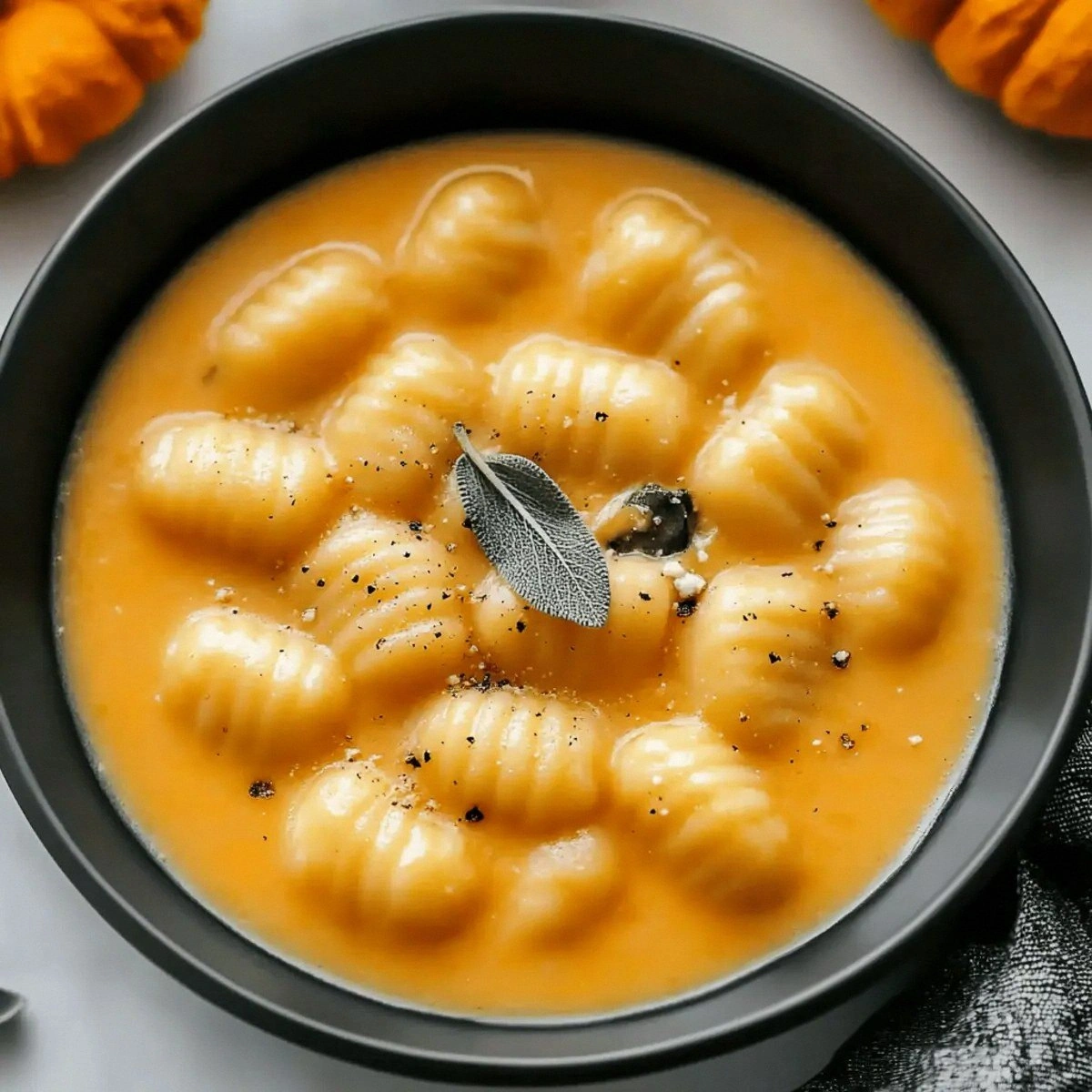
I was standing in my kitchen on a rainy October evening, staring at a half‑finished pot of bland broth that tasted like watered‑down chicken stock. My roommate had dared me to turn that sad soup into something that could make a grown‑up weep with joy, and I accepted the challenge like a knight taking up a sword. The rain hammered against the windows, the oven hummed, and the scent of fresh pumpkin from the pantry whispered, “You’ve got this.” I grabbed the last can of pumpkin puree, a bag of gnocchi that had been hiding in the freezer, and a block of Gorgonzola that was practically melting in my hand. The result? A bowl of soup so cozy it feels like a warm blanket wrapped around your taste buds.
Picture this: the first spoonful hits your tongue with the silky richness of half‑and‑half, a subtle nuttiness from toasted sage, and a burst of pumpkin sweetness that’s balanced by the sharp bite of Gorgonzola. The gnocchi float like little pillows, each one coated in a sauce that clings like velvet, while a whisper of nutmeg dances in the background. The aroma alone could convince a skeptic that autumn has officially arrived in their kitchen. I’ll be honest — I ate half the batch before anyone else got a chance to try it, and I still have a lingering smile every time I think about it.
Most pumpkin soup recipes get this completely wrong: they either drown the flavor in cream or forget the crucial texture that makes a soup feel hearty. This version flips the script by introducing gnocchi, a splash of Gorgonzola, and a sage‑infused broth that sings in harmony. The secret weapon? A quick roux that thickens the soup without turning it into a stodgy mess, and a finishing drizzle of melted butter that gives the surface a glossy, restaurant‑quality sheen. I dare you to taste this and not go back for seconds; the combination is addictive, and the flavor depth is unmatched.
Okay, ready for the game‑changer? I’m about to walk you through every single step — from the moment you heat that oil to the instant you garnish the final bowl. By the end, you’ll wonder how you ever made pumpkin soup any other way. Stay with me here — this is worth it.
What Makes This Version Stand Out
- Flavor Explosion: The marriage of pumpkin, Gorgonzola, and sage creates a layered taste that evolves with each bite, delivering sweet, salty, and earthy notes all at once.
- Texture Harmony: Silky broth meets pillowy gnocchi, while a light roux adds just enough body without turning the soup into a stew.
- Simplicity: Despite the gourmet feel, the ingredient list is short and the steps are straightforward, perfect for a weeknight dinner.
- Unique Ingredient: Gorgonzola isn’t a typical pumpkin soup addition, but its sharp, buttery profile lifts the entire dish to a new level.
- Crowd Reaction: Guests often say, “Is this a soup or a sauce?” and then immediately ask for seconds.
- Quality Matters: Using a good‑quality canned pumpkin and fresh sage makes a noticeable difference in depth of flavor.
- Make‑Ahead Potential: The soup stores beautifully, and the gnocchi can be cooked fresh right before serving for that perfect al‑dente bite.
Inside the Ingredient List
The Flavor Base
Vegetable oil and butter are the dynamic duo that start the flavor foundation. The oil raises the smoke point, letting you brown the onion without burning, while the butter adds a buttery richness that carries through the entire soup. If you’re dairy‑free, swap the butter for a plant‑based margarine, but keep the oil for that essential sear. Pro tip: Choose a cold‑pressed, unrefined oil for a subtle nutty undertone that complements the pumpkin.
The Aromatics
A medium onion and two cloves of garlic provide the classic savory backbone. The onion should be diced finely so it melts into the broth, while the garlic is minced to release its aromatic oils. If you’re missing fresh garlic, a teaspoon of garlic powder works, but the flavor won’t be as bright. Watch out: Overcooking garlic turns it bitter, so keep the heat medium and stir constantly.
The Unexpected Star
Gorgonzola cheese is the secret weapon that turns this soup from ordinary to unforgettable. Its sharp, tangy character cuts through the sweetness of the pumpkin, creating a perfect balance. If you’re hesitant about blue cheese, try a milder Roquefort or a crumble of feta for a similar punch. When selecting Gorgonzola, look for a creamy texture that melts easily; a crumbly, aged version can become grainy when heated.
The Final Flourish
Cooked gnocchi and fresh sage leaves finish the soup with texture and aroma. Gnocchi adds a comforting, starchy bite that makes the soup feel like a full meal, while sage contributes an earthy, slightly peppery note that pairs beautifully with pumpkin. If you can’t find gnocchi, small pasta shapes like orecchiette work in a pinch. For the sage, use fresh leaves; dried sage loses its bright, pine‑like quality and can become bitter.
Everything's prepped? Good. Let's get into the real action...
The Method — Step by Step
Heat two tablespoons of vegetable oil and one tablespoon of butter in a large Dutch oven over medium heat. Add the diced onion, stirring constantly until it becomes translucent and just begins to caramelize — you’ll hear a faint sizzle that signals it’s ready. This should take about 5 minutes; the aroma will fill the kitchen like a promise of comfort.
Kitchen Hack: If the onions start to stick, deglaze the pan with a splash of broth; it lifts the browned bits and adds extra flavor.Add the minced garlic, one teaspoon of kosher salt, and a pinch of ground nutmeg. Stir for another 30 seconds, just until the garlic turns fragrant but not brown. The nutmeg is the whisper that makes the soup feel autumnal without overpowering.
Pour in the can of pumpkin puree, stirring vigorously to combine with the aromatics. Let it cook for 2‑3 minutes, allowing the pumpkin to absorb the butter‑oil mixture; you’ll notice the color deepening into a rich amber.
Create a roux by pushing the pumpkin mixture to the sides of the pot, then adding the remaining two tablespoons of butter. Once melted, sprinkle in two tablespoons of all‑purpose flour, whisking constantly for about a minute. This step is pure magic; the flour will thicken the soup without clumping.
Watch Out: If you see lumps forming, keep whisking and add a splash of broth to loosen them before they set.Slowly whisk in four cups of vegetable (or chicken) broth, ensuring the roux dissolves completely. Bring the mixture to a gentle boil, then reduce to a simmer. You’ll hear a soft bubbling, and the soup will start to thicken, coating the back of a spoon.
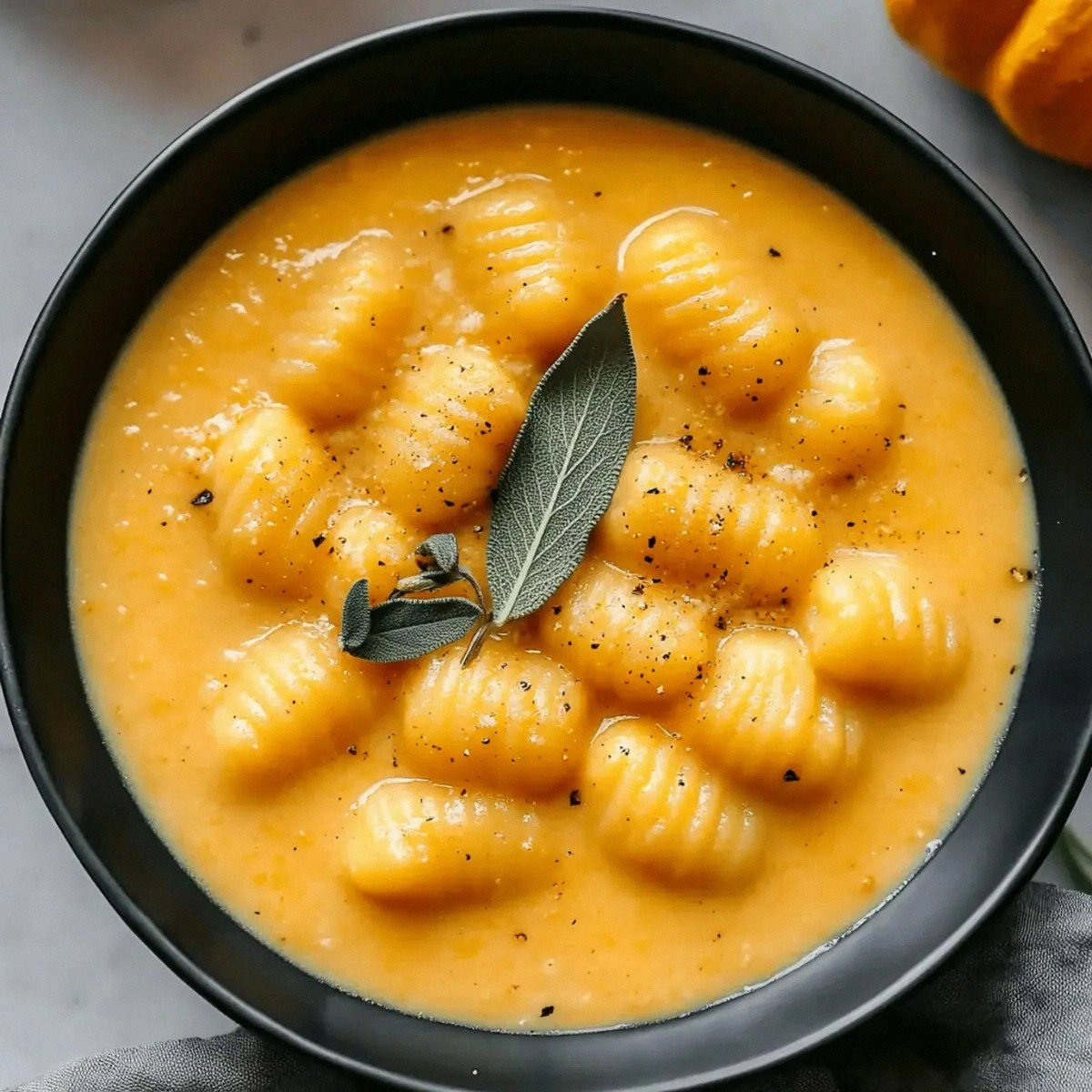
Stir in one cup of half and half, then crumble the four ounces of Gorgonzola cheese into the pot. Keep the heat low; the cheese should melt slowly, creating a silky, slightly tangy swirl. The soup should now have a velvety texture that feels like liquid gold.
Add the cooked gnocchi, letting them swim for 3‑4 minutes. They’ll absorb the broth, becoming plump and flavorful. Toss in a handful of fresh sage leaves, letting them wilt and release their aromatic oils.
Taste and adjust seasoning with a pinch more salt if needed. Finish with a drizzle of the remaining butter for a glossy finish that catches the light. Ladle the soup into bowls, garnish with extra sage leaves if you like, and serve immediately.
That's it — you did it. But hold on, I've got a few more tricks that'll take this to another level...
Insider Tricks for Flawless Results
The Temperature Rule Nobody Follows
Never add the half and half over high heat; a sudden temperature shock can cause it to curdle. Keep the soup at a gentle simmer, and add the dairy just before you finish cooking. This ensures a smooth, cohesive texture. I once tried adding it straight from the fridge, and the soup turned grainy — a lesson learned the hard way.
Why Your Nose Knows Best
Even if the soup looks perfect, trust your sense of smell to gauge readiness. When the broth smells nutty and the Gorgonzola has fully melted, you’re at the sweet spot. If you detect any raw flour scent, let it simmer a minute longer. Your nose is the ultimate timer, especially when you’re multitasking.
The 5‑Minute Rest That Changes Everything
After you turn off the heat, cover the pot and let the soup rest for five minutes. This short pause allows the flavors to meld, and the gnocchi absorbs a final burst of broth. The result is a soup that tastes deeper and more cohesive than one served immediately.
Sage Timing Trick
Add sage at the very end of cooking, not at the beginning. If you add it too early, the delicate flavor evaporates, leaving only a faint herb note. Toss the leaves in just before serving, and they’ll retain their bright, piney punch.
Gorgonzola Crumble Method
Instead of dropping a block of cheese whole, crumble it first. This increases surface area, letting the cheese melt evenly and preventing clumps. The soup becomes uniformly silky, and you avoid the dreaded cheese islands.
Creative Twists and Variations
This recipe is a playground. Here are some of my favorite ways to switch things up:
Spicy Kick
Add a teaspoon of smoked paprika and a pinch of cayenne when you sauté the onion. The smoke pairs beautifully with the pumpkin, while the heat gives the soup a subtle warmth that lingers on the palate.
Vegan Velvet
Swap the butter for coconut oil, replace the half and half with oat cream, and use a plant‑based blue cheese alternative. The texture remains luxurious, and the flavors stay true to the original concept.
Autumn Harvest
Stir in a handful of roasted butternut squash cubes and a drizzle of maple syrup just before serving. The added sweetness and extra texture turn the soup into a full‑on harvest celebration.
Herbaceous Delight
Replace sage with fresh thyme and a few torn rosemary leaves. These herbs lend a piney, slightly resinous flavor that complements the pumpkin in a different direction.
Cheese Swap
If Gorgonzola feels too bold, try a crumble of feta or a splash of grated Pecorino Romano. Both options add salty depth without the blue‑vein intensity, making the soup more approachable for cheese‑shy guests.
Storing and Bringing It Back to Life
Fridge Storage
Allow the soup to cool to room temperature, then transfer it to an airtight container. It will keep for up to three days. When reheating, add a splash of water or extra broth to restore the original consistency, as the gnocchi will continue to absorb liquid.
Freezer Friendly
Portion the soup (without the gnocchi) into freezer‑safe bags or containers. Freeze for up to two months. Thaw overnight in the fridge, then reheat gently on the stove, adding the gnocchi fresh for that perfect bite.
Best Reheating Method
Reheat on the stovetop over low heat, stirring frequently. Add a teaspoon of butter and a splash of half and half to revive the silkiness. Avoid microwave reheating if possible; it can cause the cheese to separate and the texture to become grainy.