Picture this: it was a Tuesday night, the kind that starts with noble intentions and ends with me standing over the sink, stress-eating cold pizza crusts while my original dinner plan smoldered in the trash. I’d tried to wing a sheet-pan situation—just toss broccoli and sweet potatoes with oil, salt, and hope—but what emerged was a tragic tale: florets burnt to charcoal on the tips, potatoes still crunchy in the middle, and the whole kitchen smelling like a campfire that had lost its will to live. I swore off “healthy” dinners forever, or at least until the pizza ran out. Fast-forward three days and a humiliating grocery-store run later, I set myself a dare: roast those same two vegetables so outrageously well that even my snobbiest foodie friend would beg for the secret. I’m talking caramelized edges that shatter like thin ice, soft candy-sweet centers, and a smoky whisper that makes you close your eyes involuntarily. I dare you to taste this and not go back for seconds.
What happened next was a week-long obsession. I tested six different oven temperatures, played spice-cupid with smoked paprika and its sexier cousin cayenne, and discovered that the difference between “meh” and “holy crunch” is a single sheet-pan flip at exactly the 17-minute mark. I’ll be honest—I ate half the batch before anyone else got to try it. My neighbors started loitering near the hallway, lured by the aroma that somehow seeps under doors and through drywall. By the time I nailed the final version, my notes looked like the scribblings of a mad scientist: “425 F convection, dark pan, pre-heat 15 min, NO CROWDING, lemon at the end or perish!” But trust me, this next part? Pure magic.
Most recipes get this completely wrong. They tell you to cube the potatoes small so they cook faster, but then the broccoli turns to mush waiting for its turn. Or they drown everything in oil, leaving you with soggy vegetables swimming in an orange puddle. Here’s what actually works: a two-wave roasting strategy that treats each vegetable like the diva it is—sweet potatoes head in first for a head start, broccoli joins the party fashionably late, and both finish together bronzed and singing in harmony. Future pacing for a moment: picture yourself pulling this out of the oven, the whole kitchen smelling incredible, while your phone buzzes with texts asking what on earth you’re making because the scent is drifting down the street.
If you’ve ever struggled with uneven roasting, you’re not alone—and I’ve got the fix. Stay with me here, because this is worth it: we’re about to turn humble produce into candy-savory nuggets that you’ll pop like popcorn. Let me walk you through every single step—by the end, you’ll wonder how you ever made it any other way.
What Makes This Version Stand Out
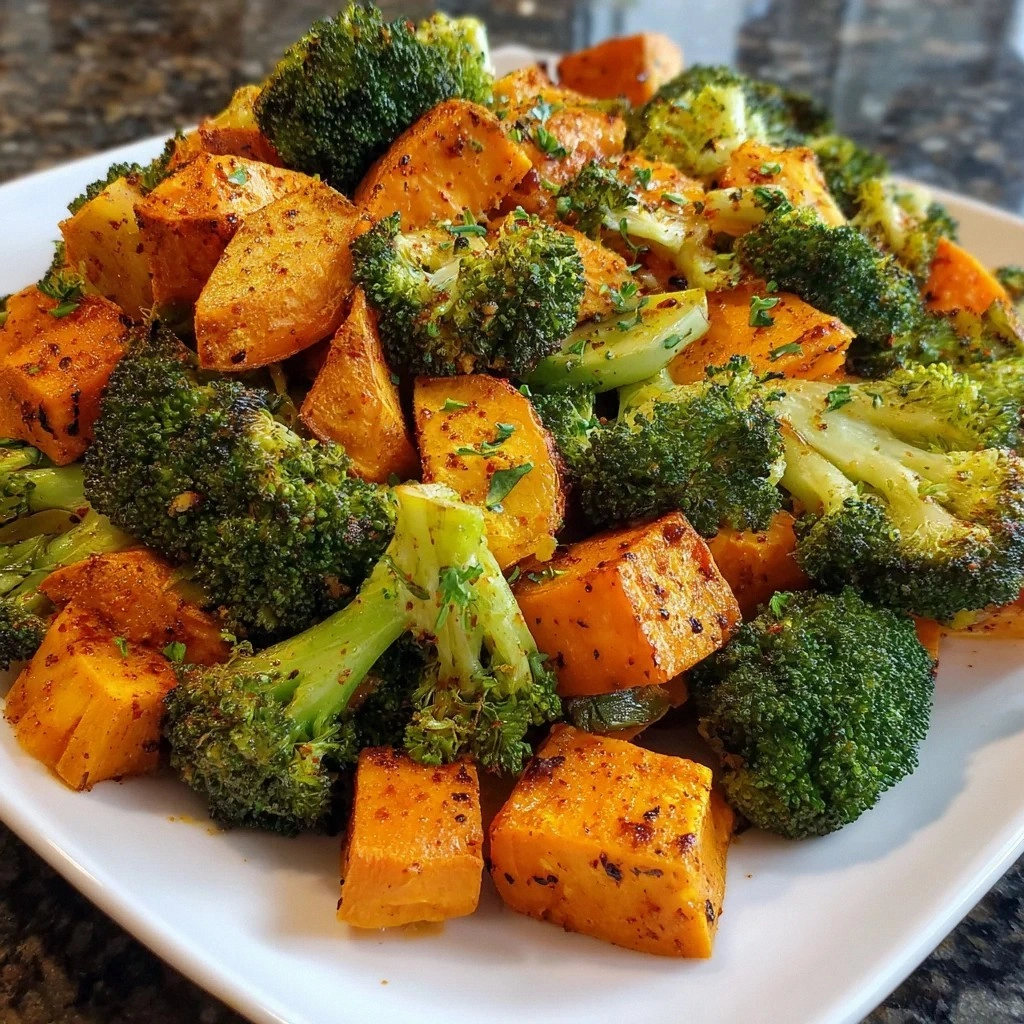
Taste Explosion: The sweet potatoes caramelize until their edges taste like toasted marshmallow, while the broccoli develops crispy, almost burnt-cheese fronds that will make you question why you ever steamed it. Together they hit every note—sweet, smoky, garlicky, with an optional cayenne kick that sneaks up like a plot twist.
Texture Nirvana: We’re chasing contrast here: soft, custardy centers inside the potato cubes and delicate crunch on each broccoli floret. The trick is cutting the potatoes just shy of an inch so they stay creamy without turning into baby food, and blasting the broccoli at high heat for the shortest possible time.
One-Pan Simplicity: Sure, you use a bowl for tossing, but everything lands on a single sheet pan that goes straight into the oven. No par-boiling, no foil tents, no rotating racks halfway through. Okay, ready for the game-changer? You’ll flip once, at the 17-minute mark, and that’s it.
Smoky Secret Weapon: Most recipes rely on bland Italian seasoning. We’re taking a detour through Spain with smoked paprika—it adds depth that makes guests swear there’s bacon hidden somewhere. Spoiler: there isn’t. This dish is vegetarian, vegan if you skip the optional honey drizzle.
Crowd-Pleasing Flexibility: Serve it hot alongside roast chicken, fold it into grain bowls, or eat it straight off the pan while standing in your slippers. I’ve watched toddlers steal broccoli florets like candy and self-proclaimed sweet-potato haters beg for the recipe. I dare you to bring this to Thanksgiving and not have it upstage the turkey.
Make-Ahead Magic: Roast a double batch on Sunday, refrigerate, and you’ve got lightning-fast lunches all week. The flavors actually intensate overnight, and a quick blast in a hot skillet brings back that just-roasted snap. Meal-preppers, you’re welcome.
Ingredient Integrity: Every element pulls its weight. No random dried herbs that taste like hay, no sugary glazes masking the vegetables’ natural flavor. You’ll taste sweet potato that tastes like the earth it grew in, broccoli that tastes like spring, and spices that taste like someone who knows what they’re doing seasoned them.
Alright, let’s break down exactly what goes into this masterpiece...
Inside the Ingredient List
The Flavor Base
Extra-virgin olive oil does more than keep things from sticking; it carries fat-soluble flavor compounds straight into the vegetables’ cells. Use enough to coat every cube and floret—about three tablespoons for a full sheet pan—but not so much that it pools underneath. Think glossy, not swimming. If you only have light olive oil, it works, but you’ll miss the grassy perfume that plays so nicely with sweet potato sugars.
The Texture Crew
Sweet potatoes are the star, and size matters here. Cut them into ¾-inch cubes: small enough to cook through in under half an hour, large enough to stay creamy inside. Leave the skin on for a rustic chew and extra nutrients; just scrub well and trim any gnarly bits. Broccoli crowns should be split into florets no bigger than a golf ball so the flat edges can ride flush against the pan and blister. And now the fun part: after trimming, peel the thick stems and cube those too—they roast into tender, almost artichoke-like bites that will have you wondering why anyone throws them away.
The Unexpected Star
Smoked paprika is the quiet genius. Sweet or hot variety works, but make sure it’s labeled “smoked,” not just “paprika,” or you’ll miss the campfire whisper. Garlic powder disperses more evenly than fresh minced garlic, which can burn and turn acrid under high heat. Onion powder adds subtle sweetness, knitting the spices together so no single flavor pokes out. If you’re out of onion powder, a tiny pinch of fennel seed ground in a spice mill gives a similar roundness, but don’t tell anyone I said so.
The Final Flourish
Salt is non-negotiable; use kosher or flaky sea salt for bigger crystals that stick. Black pepper should be freshly cracked—pre-ground tastes like dust. The optional cayenne is your volume knob: a pinch warms, a quarter-teaspoon sings, half a teaspoon will make your eyebrows sweat in the best way. Finish with a squeeze of lemon right before serving; the acid cuts through the sweetness and brightens the smoky paprika like sunlight hitting stained glass.
Everything’s prepped? Good. Let’s get into the real action...
The Method — Step by Step
- Position one oven rack in the lower-middle slot and crank the oven to 425 °F convection (or 450 °F conventional). Slide a heavy, rimmed baking sheet onto that rack while the oven preheats—at least 15 minutes. That sizzle when it hits the pan? Absolute perfection. If your oven runs cold, use an oven thermometer; you want true heat, not wishful thinking.
- While the metal is getting blazing hot, peel (or don’t) and cube your sweet potatoes into ¾-inch pieces. Uniformity matters; think of them as little geometric soldiers that need to cook at the same parade pace. Place cubes in a large mixing bowl and drizzle with 2 tablespoons olive oil, 1 teaspoon kosher salt, ½ teaspoon black pepper, ¾ teaspoon smoked paprika, ½ teaspoon garlic powder, and ¼ teaspoon onion powder. Toss like you mean it—every surface should wear a rusty-orange coat.
- When the oven hits temp, pull the preheated sheet out with sturdy mitts. It will hiss and steam—glorious. Scatter the sweet potatoes across the surface in a single layer, cut-side down wherever possible. Slide back in and roast for 17 minutes exactly. Set a timer; this is not the moment to answer a FaceTime.
- While they sizzle away, prep the broccoli. Cut florets small enough that most have a flat side (this equals browning). Peel the main stem and slice into ¼-inch coins—trust me, these roast into sweet, nutty coins that disappear first. In the same bowl (no need to wash), toss broccoli with remaining 1 tablespoon oil, ½ teaspoon salt, a crank of pepper, and a pinch of the smoked-paprika blend left clinging to the sides.
- At the 17-minute mark, pull the sheet. The potatoes should have golden undersides and a tender bite when poked with a paring knife. Flip each cube with a thin metal spatula—crispy edge up, soft side down for round two. Push potatoes toward the edges to create a broccoli bullseye in the center. Spread florets and stem coins into one layer; crowding equals steaming, and we roast, not sob.
- Return the sheet to the oven for another 12–14 minutes. Halfway through, rotate the pan 180° for even browning if your oven has hot spots. You’re hunting for broccoli tips that look almost burnt, potatoes with crackly edges, and a kitchen that smells like Thanksgiving and summer barbecue had a baby.
- Optional heat seekers, now’s your cue: dust the vegetables with a snow flurry of cayenne—start conservative, you can always add more once plated. Slide the pan back in for a final 1–2 minutes so the spice toasts and blooms rather than tasting raw.
- Transfer vegetables to a serving platter—or a mixing bowl if you’re hiding them from family. Immediately squeeze half a lemon over the top, letting the juice hit the hot surface so it hisses and perfumes the air. Taste a piece. Need brightness? Add more lemon. Need salt? Sprinkle a pinch of flaky salt while everything is still steaming so it adheres like tiny savory sequins.
- Let the mixture rest five minutes. I know, waiting feels criminal, but the sugars are still bubbling and the interior steam finishes cooking any al-dente potato centers. Plus you avoid tongue-seared regret. Serve warm or at room temp; this dish keeps its charm even as it cools.
That’s it—you did it. But hold on, I’ve got a few more tricks that’ll take this to another level...
Insider Tricks for Flawless Results
The Temperature Rule Nobody Follows
Your oven thermometer is the most underused tool in your kitchen. Home ovens can be off by 50 °F, and roasting is unforgiving. If the temp is too low, vegetables stew in their own moisture; too high and the spices burn before the insides cook. Test once, calibrate, and you’ll unlock consistent caramelization every Tuesday night.
Why Your Nose Knows Best
Ignore the clock at your peril, but trust your nose implicitly. When you smell nutty, toasty sweetness wafting from the vents, you’re 90 seconds away from perfect. That aroma is the Maillard reaction announcing itself. Set a backup timer for one minute after the scent hits, then check. My friend tried skipping this step once—let’s just say it didn’t end well, and her dog still won’t enter the kitchen.
The 5-Minute Rest That Changes Everything
Resting meat is common knowledge; resting vegetables is the undercover hack. Pull the sheet and let it sit on the stovetop. During those minutes, residual moisture redistributes, flavors settle, and sugars thicken into a light lacquer. Serve immediately and you’ll lose that glossy coat to the plate. Five short minutes equals restaurant-level polish.
The Cut-Size Consistency Fix
Buy a simple bench scraper with a ruled edge. Cut one perfect ¾-inch cube, then use it as a visual guide for the rest. Consistency equals even cooking, and even cooking means no rogue rock-hard chunks or mushy casualties. Yes, you could eyeball it, but remember—every recipe you’ve ever botched started with “close enough.”
Creative Twists and Variations
This recipe is a playground. Here are some of my favorite ways to switch things up:
Mediterranean Sunset
Swap smoked paprika for equal parts cumin and coriander, add a handful of halved cherry tomatoes in the second roast, and finish with crumbled feta and torn basil. The tomatoes blister and pop, creating tiny jam pockets that coat the vegetables. Serve over couscous and prepare for marriage proposals.
Maple-Sriracha Glaze
Whisk 1 tablespoon maple syrup with 1 teaspoon sriracha and brush over vegetables in the last 4 minutes of roasting. The sugars caramelize into sticky, spicy candy shells. Sprinkle sesame seeds and sliced scallions for a Korean-fusion vibe that pairs brilliantly with grilled salmon.
Everything-Bagel Breakfast
Replace the spice blend with 1 ½ teaspoons everything-bagel seasoning (plus extra salt). Roast as directed, then fold the veggies into warm breakfast burritos with scrambled eggs and goat cheese. Crispy edges + creamy eggs = brunch legend status.
Thai Coconut Curry
Dust vegetables with 1 teaspoon Thai red curry powder before roasting. In the final 2 minutes, drizzle 2 tablespoons coconut milk; it sizzles and leaves lacquered streaks. Finish with lime zest, chopped cilantro, and crushed peanuts. Serve alongside jasmine rice for a plant-powered feast that eats like takeout.
Citrus-Herb Party
Skip smoked paprika and use lemon zest, fresh thyme leaves, and a whisper of ground fennel. After roasting, shower with orange supremes and chopped parsley. The bright, aromatic profile turns this into a summer picnic superhero, perfect cold the next day mixed into farro salad.
Buffalo Wing Zing
Roast as written, then toss hot vegetables with 2 tablespoons melted butter whisked into ¼ cup Frank’s RedHot. Return to the oven for 2 minutes to set the glaze. Serve with ranch-drizzled chickpea-quinoa bowls and call it healthy-ish bar food.
Storing and Bringing It Back to Life
Fridge Storage
Cool completely, then pack into airtight glass containers—plastic traps steam and turns crispy bits limp. They’ll keep 4 days without fading. Line the lid with a paper towel to absorb excess moisture; your future self will high-five you when the florets still snap.
Freezer Friendly
Spread cooled vegetables on a parchment-lined tray, freeze until solid, then transfer to zip bags. They’ll survive 2 months, though broccoli may soften. Reheat directly from frozen on a 450 °F sheet pan for 8–10 minutes, flipping once. Texture won’t equal day-one perfection, but they beat sad freezer peas any night.
Best Reheating Method
Skip the microwave; it steams and saddens. Instead, heat a cast-iron skillet over medium, add a tiny splash of water to create quick steam, then add vegetables and cover for 1 minute. Remove the lid, turn heat to high, and let everything recrisp. Finish with a squeeze of lemon and a drizzle of fresh oil and they taste almost freshly roasted.