I was halfway through a midnight snack raid when my skillet decided to betray me—flour dust everywhere, a splatter of oil that made the floor look like a modern art installation. I stared at the burnt edges, feeling the heat of frustration rise like a simmering pot. That moment became the spark that pushed me to rethink a humble comfort dish and turn it into something that would make my taste buds dance. I was determined to create a creamy polenta that could hold the heart of roasted vegetables, and I wanted it to be so good that you would dare not taste a second bite.
The kitchen filled with the sweet, nutty aroma of caramelizing carrots, the earthy scent of zucchini, and the peppery tang of red bell peppers. I could hear the sizzle of onions turning translucent, the gentle hiss of olive oil as it kissed the pan, and the rhythmic clink of a wooden spoon against the pot. The sight of the golden edges of the vegetables glistening like tiny suns was a visual treat that promised flavor. The sound of the bubbling broth, the feel of the wooden spoon in my hand, and the anticipation in the air created a multisensory experience that felt like a warm hug.
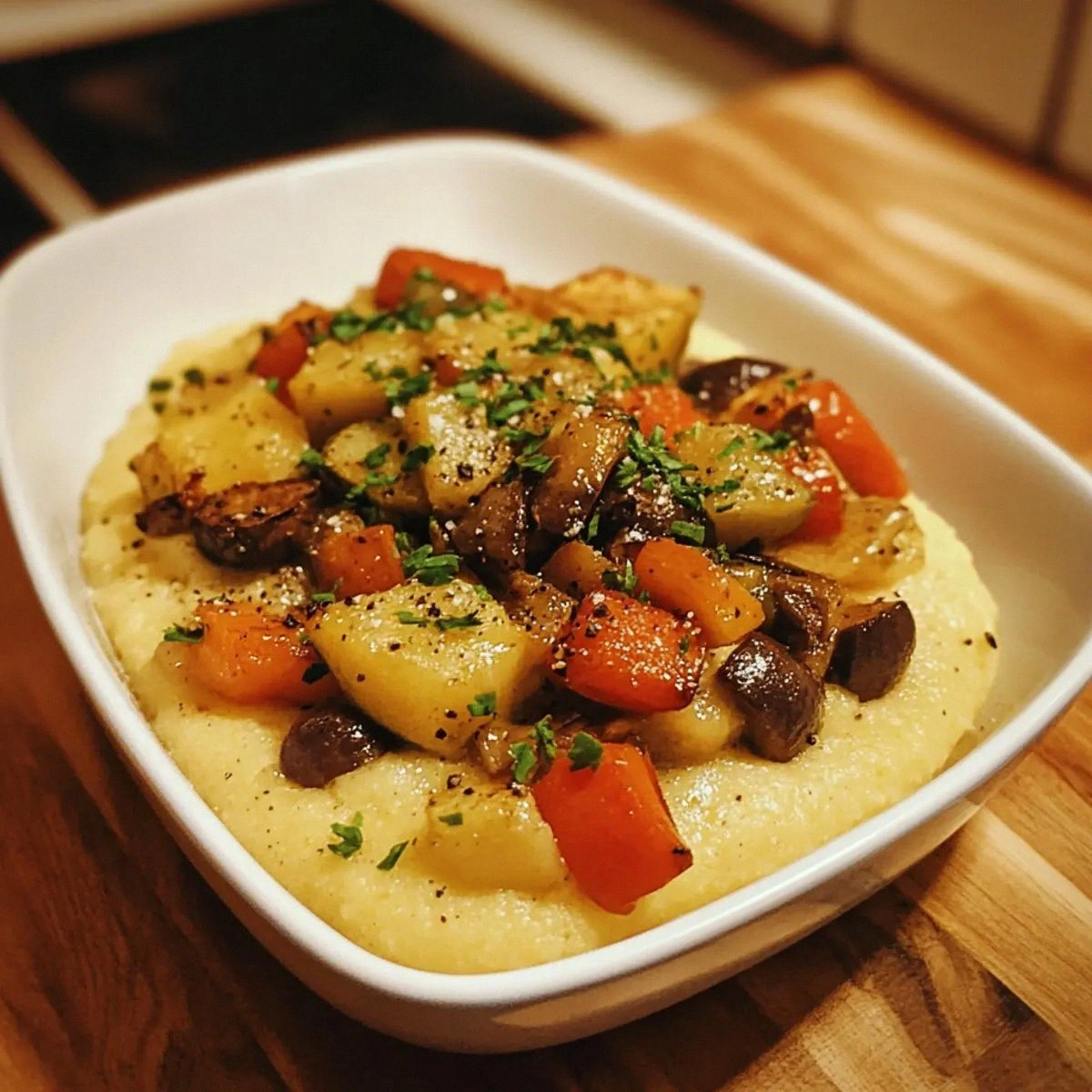
What sets this version apart is the way the creamy polenta embraces the roasted vegetables, creating a harmony of textures that feels like a velvet blanket for your palate. The combination of butter, parmesan, and a touch of salt turns the cornmeal into a silky, indulgent base that doesn’t overpower the veggies. The vegetables, roasted to perfection, bring a caramelized crunch that contrasts beautifully with the polenta’s smoothness. The fresh herbs add a burst of brightness, preventing the dish from feeling heavy or one-dimensional. Together, they form a dish that feels both comforting and elevated.
I dare you to taste this and not go back for seconds. Imagine the first bite—soft, buttery polenta that melts in your mouth, followed by the crunch of roasted carrots, the subtle sweetness of zucchini, and the peppery kick of bell peppers. The parmesan adds a savory depth that ties everything together. You’ll find yourself reaching for more, wondering how I managed to keep it from being too rich. It’s a culinary win that turns an ordinary night into a celebration.
And if you’re thinking this sounds too good to be true, I’m here to prove it. This is hands down the best version you'll ever make at home. Picture yourself pulling this out of the oven, the whole kitchen smelling incredible, the steam rising like a cloud of promise. The moment you taste it, you’ll wonder how you ever made it any other way. Let me walk you through every single step—by the end, you’ll wonder how you ever made it any other way.
What Makes This Version Stand Out
- Taste: The buttery richness of the polenta is balanced by the caramelized sweetness of the roasted veggies, creating a flavor profile that feels both indulgent and wholesome. The parmesan adds a savory depth that elevates the dish from simple comfort food to a gourmet experience.
- Texture: The polenta’s silky smoothness contrasts with the crisp edges of the roasted vegetables, delivering a satisfying bite that keeps you coming back for more. The contrast feels like a dance between velvet and crunch.
- Simplicity: With only a handful of ingredients and a single pan for the vegetables, you can create a restaurant-quality dish in under an hour. No fancy techniques, just good timing and the right heat.
- Uniqueness: The combination of creamy polenta and roasted vegetables is not commonly found in standard recipes, making it a standout dish that will surprise your guests. The fresh herbs add a final flourish that sets it apart.
- Crowd Reaction: Friends who’ve tried it rave about the balance of flavors and the comforting texture. Many say it’s the dish that turns a casual dinner into a memorable gathering.
- Ingredient Quality: Using high-quality butter and parmesan, plus fresh seasonal vegetables, elevates the dish and ensures each bite is packed with flavor. The choice of coarse polenta gives it a hearty bite.
- Cooking Method: The roasting step caramelizes the vegetables while the polenta cooks gently, creating a dish that’s both flavorful and easy to assemble. The method is forgiving, making it perfect for beginners and seasoned cooks alike.
- Make-Ahead Potential: You can prepare the polenta ahead of time and reheat it with a splash of broth or milk to restore its creaminess. The roasted vegetables can be stored in the fridge and reheated with a quick broil to bring back the crispness.
Inside the Ingredient List
The Flavor Base
Polenta is the heart of this dish, providing a creamy, comforting foundation that carries the roasted vegetables. It’s a coarse cornmeal that, when cooked slowly, develops a rich, buttery texture. If you skip it, you’ll lose that silky base that makes the dish feel indulgent. You can substitute with instant polenta for a quicker version, but the texture will be slightly different. Choosing a high‑quality, coarse polenta ensures a hearty bite that holds up against the vegetables.
Vegetable broth is the liquid that turns the cornmeal into a silky sauce. It infuses the polenta with savory depth and keeps it from drying out. If you use water instead, the flavor will be flat and the polenta will taste like plain cornmeal. A homemade broth adds a subtle complexity, but store‑bought low‑sodium works fine. The broth’s heat level should be medium‑low to allow the polenta to thicken without scorching.
Butter adds richness and helps the polenta coat the spoon like velvet. It also creates a glossy finish that makes the dish look as good as it tastes. Skipping the butter will make the polenta less luxurious. A small amount of olive oil can replace the butter for a lighter version, but you’ll miss the buttery sheen.
Parmesan cheese is the finishing touch that gives the polenta a savory, nutty note. It melts into the hot base, creating a creamy sauce that clings to the vegetables. If you’re lactose intolerant, try a dairy‑free cheese alternative; the texture will be slightly different but still delicious. The amount of cheese can be adjusted to taste, but ½ cup is the sweet spot for balance.
Salt for the polenta is essential for seasoning the base. It brings out the natural sweetness of the cornmeal and balances the richness of the butter and cheese. Too little salt will leave the dish bland; too much will overpower the other flavors. Aim for a gentle seasoning that lets the other ingredients shine.
The Texture Crew
Carrots add a sweet crunch that caramelizes beautifully when roasted. They contribute natural sugars that enhance the dish’s overall sweetness. If you skip carrots, the dish loses a key textural element and a bright, sweet flavor. A good rule is to cut them into uniform pieces so they roast evenly.
Zucchini brings a delicate, slightly sweet flavor that pairs well with the earthy vegetables. Its quick cooking time means you can roast it alongside the other veggies without overcooking. If you omit zucchini, you lose a layer of moisture and subtle sweetness. You can replace it with yellow squash for a similar effect.
Red bell peppers bring a pop of color and a sweet, smoky flavor when roasted. They also add a mild crunch that contrasts with the softer polenta. Skipping peppers will make the dish less vibrant and less sweet. If you’re not a fan of sweet peppers, try using poblano or green bell pepper for a different flavor profile.
Red onion adds a sharp, sweet undertone that caramelizes into a deep, savory note. It also provides a bit of bite that balances the smooth polenta. If you leave out the onion, the dish will feel less complex. For a milder flavor, try using a sweet onion variety or thinly slice it to reduce intensity.
The Unexpected Star
Olive oil is the medium that brings all the vegetables together. It helps them caramelize and prevents sticking to the pan. If you use a different oil, the flavor profile will change, but the roasting process remains the same. Olive oil also adds a subtle fruity note that complements the herbs.
Fresh herbs, such as rosemary or thyme, add a fragrant finish that lifts the dish. They provide a bright, herbal contrast to the richness of the polenta. If you’re out of fresh herbs, dried herbs can work, but use half the amount to avoid bitterness. The herbs also add a subtle green color that makes the dish visually appealing.
The Final Flourish
Salt for the roast brings out the natural sweetness of the vegetables. It’s the final seasoning that ties everything together. Skipping this step will result in a bland, under-seasoned dish. Use a pinch of sea salt for a more complex flavor.
Pepper adds a gentle heat that balances the sweetness of the roasted veggies. It also provides a subtle kick that prevents the dish from feeling too sweet. If you prefer a milder flavor, use a light pepper or omit it entirely. The pepper’s aroma also adds an extra layer of complexity.
Everything's prepped? Good. Let's get into the real action.
The Method — Step by Step
- Step 1: Preheat the oven to 425°F (220°C). While the oven heats, toss the carrots, zucchini, red bell peppers, and red onion with olive oil, fresh herbs, 1 teaspoon salt, and 1 teaspoon pepper. Spread the vegetables in a single layer on a baking sheet. This will give the veggies a chance to caramelize and develop that deep, sweet flavor.
- Step 2: Place the sheet in the oven and roast for 25 minutes, stirring halfway through. The vegetables should be tender inside and slightly crisp on the edges. This is where the magic of caramelization happens, turning the veggies into a savory, sweet masterpiece.
- Step 3: While the veggies roast, bring 4 cups of vegetable broth to a gentle simmer in a medium saucepan. Slowly whisk in 1 cup of coarse polenta, stirring constantly to prevent lumps. The slow addition of polenta keeps the mixture smooth and creamy.
- Step 4: Cook the polenta over medium-low heat for 10 minutes, stirring frequently. The polenta should thicken to a thick, almost pudding-like consistency. Once it’s thick, stir in 2 tablespoons of butter until melted and fully incorporated.
- Step 5: Fold in ½ cup of grated Parmesan cheese, stirring until the cheese melts into the mixture. Season the polenta with 1 teaspoon of salt, tasting as you go to ensure the flavors are balanced. This step is crucial; if you rush it, the polenta can become too thick or the cheese may not melt properly.
- Step 6: Remove the roasted vegetables from the oven and let them cool for a few minutes. This prevents the polenta from steaming too much and helps maintain the crisp edges that contrast beautifully with the creamy base.
- Step 7: Spoon the polenta into a shallow baking dish, spreading it evenly. Arrange the roasted vegetables on top, pressing them gently into the polenta. This creates a cohesive layer that will bake together.
- Step 8: Return the dish to the oven for 10 minutes, or until the top is golden brown and the edges begin to pull away. The heat will meld the flavors and create a beautiful crust.
- Step 9: Remove the dish from the oven and let it rest for 5 minutes. This allows the flavors to settle and the polenta to firm up slightly, making it easier to serve.
- Step 10: Garnish with a drizzle of olive oil and a sprinkle of fresh herbs. Serve hot, optionally with a crisp salad or a glass of red wine. The dish is ready to impress.
That's it — you did it. But hold on, I've got a few more tricks that'll take this to another level.
Insider Tricks for Flawless Results
The Temperature Rule Nobody Follows
Many cooks think a higher oven temperature always produces better roasted veggies, but the secret lies in slow, even roasting. Keeping the oven at 425°F allows the vegetables to caramelize without burning. If you roast at too low a temperature, the veggies will steam rather than crisp, leading to a soggy texture. The right temperature brings out the natural sugars and creates that beautiful golden crust.
Why Your Nose Knows Best
When the vegetables are halfway roasted, the aroma should smell like toasted nuts and sweet caramel. Trust that scent as a cue that the veggies are ready to come out of the oven. If the smell is more like raw vegetables, they need a bit more time. The aroma is the quickest way to gauge doneness without cutting into them.
The 5-Minute Rest That Changes Everything
Letting the dish rest after baking allows the polenta to set and the flavors to meld. During this time, the steam inside the dish condenses, creating a slight sheen on the surface. It also lets the Parmesan crisp up a little, adding a pleasant crunch. Skipping this rest can result in a dish that feels flat and uncoordinated.
The Secret to Creamy Consistency
If your polenta is too thick, add a splash of vegetable broth or milk to thin it out. If it’s too thin, continue cooking it over low heat and stir until it thickens. The key is to maintain a gentle simmer, which keeps the mixture silky and prevents lumps.
The Quick Flavor Boost
A splash of balsamic vinegar added just before serving can elevate the dish with a touch of acidity and sweetness. It brightens the flavors and adds depth. Use just a teaspoon; a little goes a long way. This trick is perfect for those who want a more complex taste profile.
Creative Twists and Variations
This recipe is a playground. Here are some of my favorite ways to switch things up:
Spicy Chipotle Polenta
Add a tablespoon of chipotle in adobo sauce to the polenta for a smoky heat. The chipotle pairs well with the sweet roasted veggies and adds a complex flavor profile that will thrill spice lovers.
Herb‑Infused Polenta
Replace the fresh herbs with a handful of fresh basil and oregano. The aromatic herbs create a Mediterranean twist, perfect for a summer dinner.
Protein‑Packed Version
Stir in cooked chickpeas or shredded chicken into the roasted vegetable layer. The added protein turns the dish into a complete meal without compromising the creamy texture.
Lactose‑Free Alternative
Use a plant‑based cheese or nutritional yeast instead of parmesan. The cheese will still melt into the polenta, delivering a savory depth without dairy.
Winter Warmth
Swap the zucchini and bell peppers for butternut squash and sweet potato. The sweet, nutty flavors pair wonderfully with the creamy polenta, creating a comforting winter dish.
Storing and Bringing It Back to Life
Fridge Storage
Cool the dish completely, then cover tightly with plastic wrap or an airtight container. Store in the refrigerator for up to 3 days. The polenta will firm up, but it remains creamy when reheated.
Freezer Friendly
Divide the dish into individual portions, wrap each in foil, and freeze for up to 2 months. Thaw overnight in the refrigerator before reheating. This makes it a convenient make‑ahead option for busy evenings.
Best Reheating Method
Reheat in a skillet over medium heat, adding a splash of vegetable broth or milk to restore moisture. Stir until heated through and silky. A quick broil for 2 minutes can crisp the top if desired.