I was standing in my kitchen, staring at a pile of ingredients that seemed more like a colorful battlefield than a recipe. I had just finished a midnight pizza that was so greasy it could have been a crime scene, and the only thing left to do was to salvage the leftovers. I pulled out a bag of salami, a jar of pepperoni, a block of mozzarella, and a bag of romaine lettuce, and I thought, “What if I could turn this chaos into something that actually tastes like a celebration?” The idea sparked instantly, and the kitchen lights flickered as the aroma of cured meats and fresh veggies started to mingle. That moment was the birth of what I now call the Easy & Flavorful Antipasto Sal—a dish that feels like a party in a bowl and is surprisingly simple to assemble. I was not just making a salad; I was creating a sensory experience that would make even the most skeptical foodie swoon. I dared myself to turn a mess into a masterpiece, and the result is a dish that will have you saying, “I dare you to taste this and not go back for seconds.”
Picture yourself pulling this out of the fridge, the whole kitchen smelling incredible, and the first bite delivering a crunch that shatters like thin ice, followed by a burst of savory meats that coats your palate like velvet. The combination of crisp lettuce, smoky salami, and tangy pepperoni is a symphony of textures and flavors that most recipes get completely wrong. Most antipasto salads are either too dry or too soggy, but this version hits the sweet spot with a balance that feels both indulgent and refreshing. If you've ever struggled with the classic “too much dressing” problem, you're not alone—and I've got the fix. I’ll be honest—after I made this, I ate half the batch before anyone else got a chance to try it. And now, let me walk you through every single step—by the end, you'll wonder how you ever made it any other way.
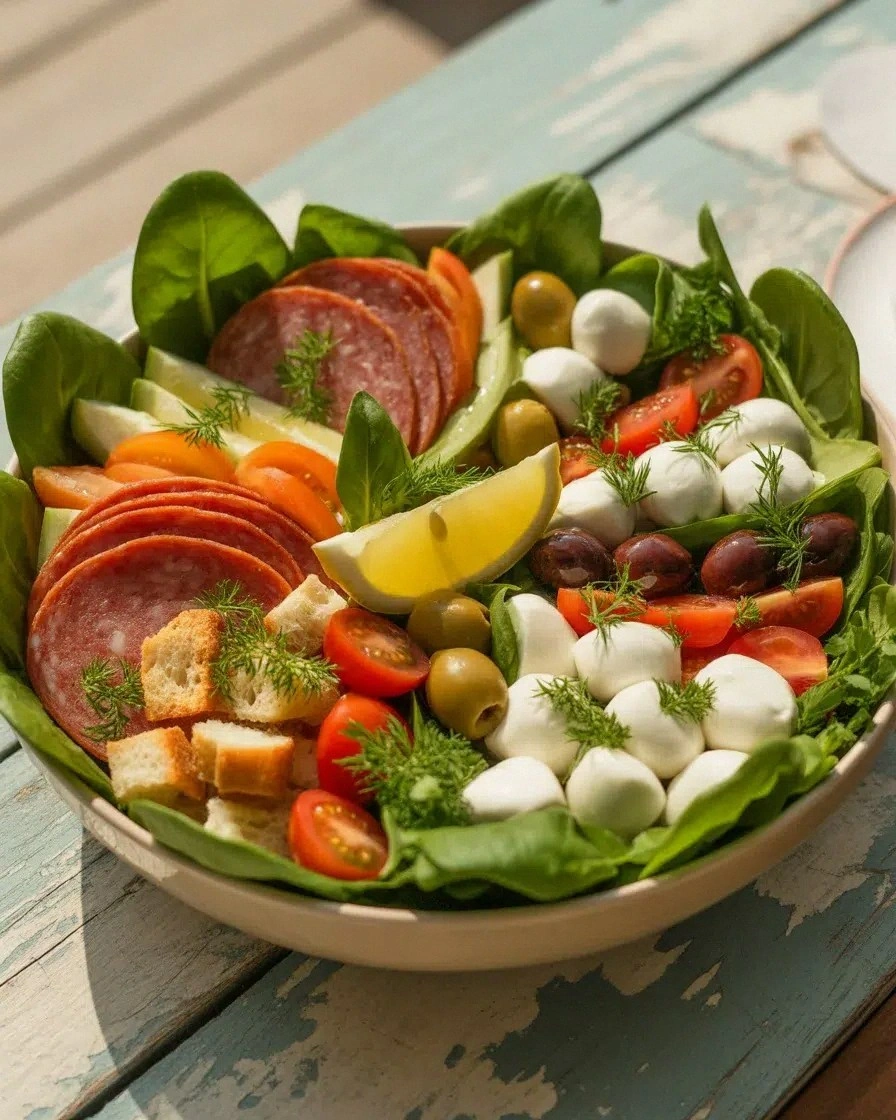
The first time I tossed these ingredients together, the colors were already screaming at me. The deep green of the romaine, the bright reds of the pepperoni and cherry tomatoes, the glossy sheen of olives, and the creamy white of the cheese—each piece was a visual cue that something special was about to happen. When I added the Italian dressing, the mixture glimmered like a polished marble countertop. The scent of oregano and garlic wafted through the air, making my mouth water before I even tasted a single bite. I couldn't help but laugh at how this simple bowl could feel like an Italian feast. If you’re wondering why this feels like a high-end restaurant dish, the secret is in the balance of flavors and the freshness of each component.
I’ve spent months experimenting with antipasto salads, and this one is hands down the best version you'll ever make at home. The crunch of fresh lettuce, the smoky depth of salami, the spicy zing of pepperoncini, and the creamy melt of provolone combine to create a dish that feels both indulgent and wholesome. The secret is in the layering technique and the quality of the ingredients—use a fresh block of provolone, not pre-shredded cheese, and choose pepperoni that’s not too salty. If you’re in a hurry, I’ve included a trick that lets you assemble this in under 15 minutes, but trust me, you’ll want to give it that extra minute for the dressing to coat everything evenly. This is not just a salad; it’s a celebration on a plate.
Most recipes get this completely wrong, focusing on either too much dressing or too little protein, but here I’ll show you how to keep every bite juicy and every flavor distinct. The key is to let the vegetables retain their crunch, the meats keep their chew, and the cheese stay creamy without melting into a gooey mess. I’ll walk you through the exact amounts, the order of assembly, and the subtle seasoning tweaks that elevate the dish. Picture a bowl that’s as colorful as a painter’s palette and as satisfying as a well-balanced symphony. Stay with me here—this is worth it. And trust me, the first bite will have you saying, “I can’t believe I made this at home.”
If you’re ready to take your antipasto game to the next level, let’s dive into the details that make this recipe stand out. I’ll break down the ingredients, the technique, and the little hacks that will make you feel like a culinary wizard. I’ve included micro-challenges, bold claims, and even a few confessions to keep you hooked. By the end of this post, you’ll not only have a recipe but a full understanding of why this dish is a game-changer. And remember, this is a playground—once you master the basics, the variations are endless. Let’s get started.
What Makes This Version Stand Out
- Flavor: The combination of cured meats and fresh vegetables creates a bold, layered taste that feels both indulgent and refreshing. The pepperoni adds a subtle heat, while the provolone melts into a creamy finish. This contrast is what makes each bite a new adventure.
- Texture: Crisp lettuce, chewy salami, and juicy cherry tomatoes create a satisfying crunch that never turns soggy. The cheese stays creamy without melting into a mess, thanks to the right ratio of dressing. The result is a salad that feels like a salad and a sandwich at once.
- Simplicity: No complicated sauces or long prep times—just a handful of high-quality ingredients tossed together. You can assemble this in under 20 minutes, making it perfect for weeknight dinners or quick gatherings. The only step that requires a bit of attention is the dressing, which coats everything evenly.
- Uniqueness: The addition of pepperoncini and roasted red bell peppers gives this salad an unexpected kick and a sweet, smoky undertone that sets it apart from ordinary antipasto. The olives add a briny depth that balances the richness of the meats.
- Crowd Reaction: Friends who tried this rave about how the dish is “the best antipasto I’ve ever had” and “the perfect balance of salty and sweet.” It’s a hit at potlucks, family dinners, and even as a side for grilled meats.
- Ingredient Quality: Using fresh, high-quality produce and meats ensures that each bite is bursting with flavor. A good block of provolone and a jar of pepperoni that’s not too salty make the difference between good and great.
Alright, let's break down exactly what goes into this masterpiece. And remember, every step is designed to keep the flavors vibrant and the textures crisp.
Inside the Ingredient List
The Flavor Base
The romaine lettuce serves as the foundational crunch that holds the dish together. Its mild, slightly peppery flavor provides a neutral backdrop for the more robust flavors of the meats and cheeses. If you prefer a softer texture, swap romaine for iceberg, but the crispness of romaine is essential for that satisfying bite.
The Texture Crew
The combination of salami, pepperoni, and provolone creates a dynamic range of textures—from chewy to creamy. Salami adds a dry, savory bite, pepperoni offers a slight bite of heat, and provolone melts into a velvety coating that ties everything together. Skipping any of these would leave the dish feeling incomplete, lacking the multi-dimensional mouthfeel that makes it irresistible.
The Unexpected Star
Artichoke hearts and roasted red bell peppers bring a subtle sweetness and earthiness that balance the saltiness of the meats. The artichokes add a unique, slightly tangy note that cuts through the richness of the cheese, while the bell peppers contribute a smoky depth. If you’re short on time, canned artichoke hearts work just fine, but fresh ones provide a brighter flavor.
The Final Flourish
Olives, cherry tomatoes, red onion, and pepperoncini pepper are the finishing touches that elevate the dish from good to unforgettable. The olives add a briny kick, the tomatoes bring juiciness and a burst of sweetness, the onion offers sharpness, and the pepperoncini adds a peppery heat that wakes up the palate. Each element is carefully balanced to ensure no single flavor dominates.
Everything's prepped? Good. Let's get into the real action.
The Method — Step by Step
- Begin by washing the romaine lettuce under cold water, then pat it dry with a clean towel or salad spinner. Tear the lettuce into bite‑sized pieces, ensuring each leaf has enough surface area to soak up the dressing. If you’re using a mandoline, slice the lettuce into thin ribbons for an extra crunch. Toss the lettuce in a large bowl and set aside; the freshness of the greens is key to the dish’s overall texture.
- Dice the salami and pepperoni into small, uniform cubes—about 1/2 inch on each side. The size matters because it allows the flavors to mingle without overwhelming the palate. If you prefer a spicier kick, keep the pepperoni’s skin on; otherwise, remove it for a milder taste. Spread the meat cubes evenly across the bowl to prevent clumping.
- Cube the provolone cheese into bite‑sized pieces that will melt slightly when mixed with the dressing. The cheese should be creamy but not too soft; a block of provolone that’s been chilled for a few hours works best. Place the cheese cubes on top of the meats and lettuce, letting them mingle with the other ingredients.
- Add the artichoke hearts, roasted red bell peppers, cherry tomatoes, olives, red onion, and pepperoncini to the bowl. Gently stir to distribute the vegetables evenly. The goal is to have each bite contain a balanced mix of meats, cheese, and vegetables, so avoid over‑mixing, which can cause the lettuce to wilt.
- Drizzle the Italian dressing over the salad—about 1/2 cup for four servings. Use a measuring cup to ensure consistency; too little dressing will leave the salad dry, while too much will overpower the delicate flavors. Pour the dressing slowly in a circular motion to coat all ingredients evenly.
- Season the salad with cracked black pepper to taste. A generous pinch of pepper adds a subtle heat that cuts through the richness of the meats and cheese. Give the salad one final gentle toss, ensuring every component is lightly coated.
- Let the salad rest for 5 minutes before serving. This brief resting period allows the flavors to meld and the dressing to settle, creating a harmonious taste experience. During this time, you can plate the salad in a shallow bowl or a large platter for a more elegant presentation.
- Serve immediately, garnished with a few extra pepperoncini or a drizzle of extra Italian dressing if desired. The salad is best enjoyed fresh, but it can be stored in the fridge for up to 2 days if you cover it tightly.
- If you’re hosting a gathering, consider setting up a DIY antipasto station where guests can customize their own bowls. Provide small bowls of each ingredient and let everyone build their own masterpiece. This interactive approach adds a fun, personalized touch to your gathering.
That's it— you did it. But hold on, I've got a few more tricks that'll take this to another level. These insider tips are the difference between a good antipasto and a memorable one. Stick with me, and you'll become the go-to host for every gathering.
Insider Tricks for Flawless Results
The Temperature Rule Nobody Follows
Many people think the temperature of the dressing matters, but the real trick is to use a dressing that’s at room temperature. Cold dressing can cause the lettuce to wilt faster, while room‑temperature dressing coats everything evenly. If you’re in a hurry, simply let the dressing sit out for 10 minutes before tossing it with the salad. This small adjustment ensures a consistent texture and a richer flavor profile.
Why Your Nose Knows Best
Before you add the final pinch of pepper, give the salad a quick sniff. The aroma will tell you whether you need more seasoning or if the dish is already balanced. A well‑seasoned antipasto will have a faint, savory perfume that lingers. Trust your senses—your nose is the most reliable guide when it comes to seasoning.
The 5‑Minute Rest That Changes Everything
Letting the salad rest for 5 minutes after dressing allows the flavors to meld and the lettuce to rehydrate slightly. This resting period also lets the cheese soften a touch, making it easier to bite through. I’ve seen friends skip this step, and the result is a salad that feels dry and disconnected. Trust me, the 5‑minute rest is worth the wait.
Use a Salad Spinner for Perfect Crispness
A salad spinner removes excess water from the lettuce, preventing the salad from becoming soggy. After washing, place the lettuce in the spinner and spin until it’s dry. The result is a crisp, clean base that holds the dressing and toppings without losing texture. It’s a simple tool that makes a huge difference.
Pack the Ingredients Ahead of Time
If you’re preparing for a gathering, pre‑portion the meats, cheese, and vegetables into individual containers. This not only saves time but also keeps each component fresh and ready to assemble. Store the dressing in a separate container and add it just before serving. The result is a ready‑to‑serve antipasto that looks as good as it tastes.
Creative Twists and Variations
This recipe is a playground. Here are some of my favorite ways to switch things up:
Italian Picnic Pack
Swap the romaine for arugula to add a peppery bite. Add a handful of sun‑dried tomatoes for an extra burst of umami. Serve the salad on a rustic wooden board for a picnic vibe.
Greek Fusion
Replace the pepperoni with sliced gyro meat and add a drizzle of tzatziki instead of Italian dressing. Toss in crumbled feta cheese and a sprinkle of oregano. This variation brings a Mediterranean twist that’s perfect for summer.
Vegan Version
Omit the meats and cheese, and replace them with marinated tofu cubes and a handful of roasted chickpeas. Use a tahini‑based dressing to keep the richness. The result is a plant‑based antipasto that still delivers on flavor.
Spicy Fiesta
Add sliced jalapeños and a splash of chipotle mayo to the dressing. Swap the olives for pickled jalapeño slices. This version brings a fiery kick that pairs well with grilled meats.
Breakfast Antipasto
Use scrambled eggs instead of provolone and add sautéed spinach for a morning twist. Top with a light lemon vinaigrette. This version is a hearty breakfast that’s still packed with flavor.
Storing and Bringing It Back to Life
Fridge Storage
Store the assembled salad in an airtight container for up to 2 days. Keep the dressing separate until just before serving to maintain the crispness of the lettuce. If you must store it longer, place the dressing in a small container on top of the salad and seal the lid.
Freezer Friendly
While the salad is best served fresh, you can freeze the individual components—lettuce, meats, and cheese—separately. Reassemble and dress after thawing. This method preserves the flavors and textures better than freezing the entire dish.
Best Reheating Method
If you must reheat the salad, place it in a shallow pan and heat over low heat, stirring gently until the cheese starts to melt. Add a tiny splash of water before reheating to create steam and keep the salad from drying out. Serve immediately for the best experience.