I was standing in my kitchen on a rainy Thursday, staring at a half‑cooked pot of bland rice that tasted like cardboard, when my roommate shouted, “If you can’t fix that, you might as well order pizza!” I laughed, rolled my eyes, and thought, “Challenge accepted.” I grabbed the slow‑cooker, a bag of Andouille sausage, and a stubborn craving for something that would slap the taste buds awake. The moment the lid clanged shut, the whole apartment filled with a scent that could convince even the most stoic cat to curl up on the counter. That smell—smoky sausage, sweet tomatoes, and a whisper of cayenne—was the promise of a feast that would make you forget the rain outside.
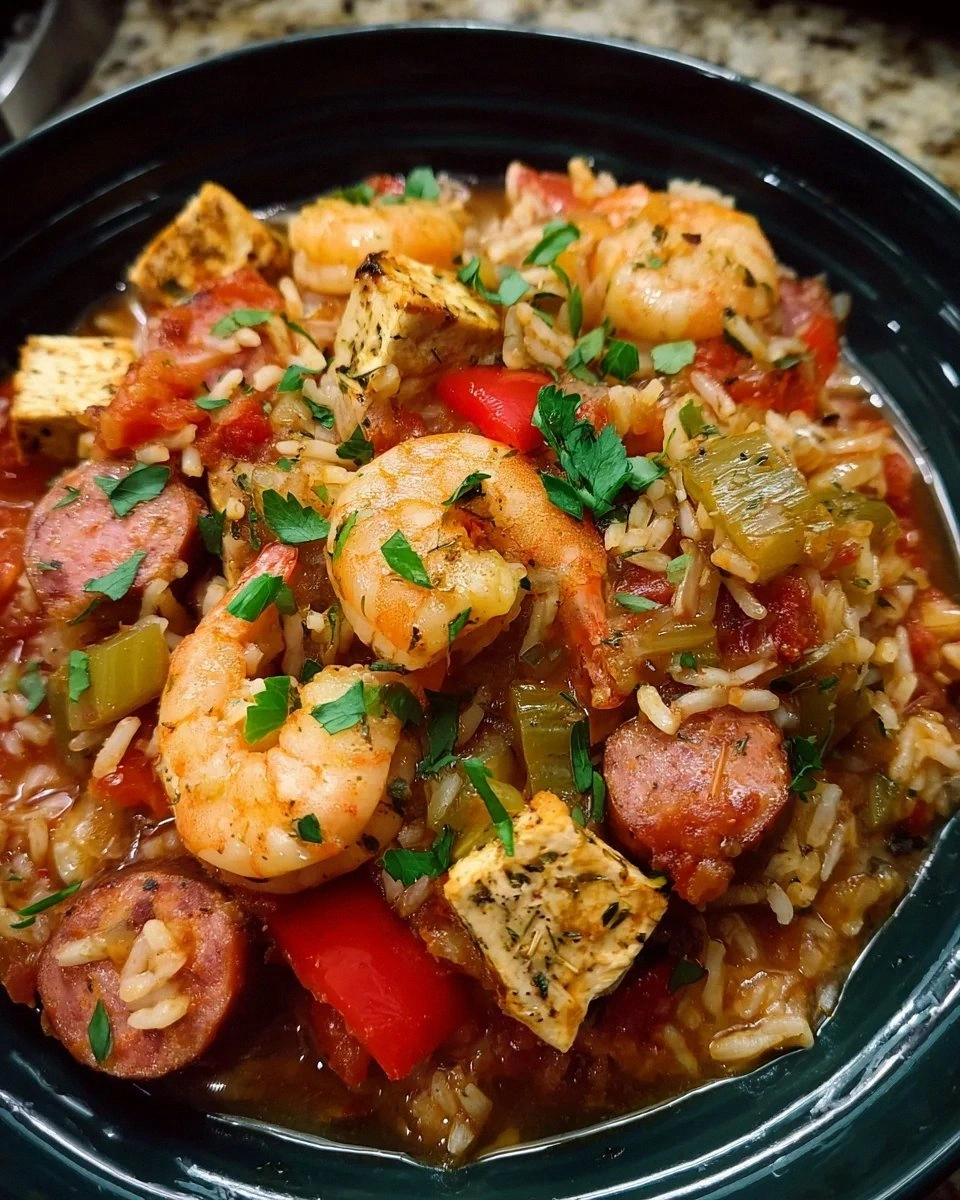
Fast forward two hours later, and I was spoon‑deep in a bowl that looked like a vibrant, ruby‑red tapestry. The chicken was tender enough to fall apart with a fork, the shrimp were pink and juicy, and the rice had soaked up every ounce of that Cajun‑spiced broth, turning each grain into a tiny, flavor‑packed bomb. I dared you to taste this and not go back for seconds, because honestly, I ate half the batch before anyone else could even get a sniff. This isn’t just a recipe; it’s a culinary dare that says, “If you think you’ve had jambalaya, think again.”
What makes this version truly stand out is a secret technique I discovered while scrolling through old Cajun cookbooks: I sauté the aromatics first, then let the slow cooker do the heavy lifting. Most recipes skip that step, resulting in a flat, one‑dimensional dish that feels more like a stew than a jambalaya. By giving the onions, celery, and bell pepper a quick sear, you lock in a caramelized sweetness that later mingles with the smoky sausage and the briny shrimp. The result? A depth of flavor that feels like a three‑hour simmer in a pot, but with the hands‑off convenience of a slow cooker.
And there’s a surprise ingredient that most people overlook—a splash of tomato paste added right before the rice hits the pot. This little addition acts like a flavor concentrate, turning the broth into a velvety sauce that coats every grain like a glossy coat of lacquer. The final reveal? A bowl that looks as good as it tastes, with colors that pop and aromas that linger long after the last bite. Let me walk you through every single step — by the end, you’ll wonder how you ever made it any other way.
What Makes This Version Stand Out
- Taste: The combination of smoked Andouille, Cajun seasoning, and a hint of cayenne creates a flavor profile that’s bold, smoky, and just the right amount of spicy. Each bite delivers a layered experience that builds from the first spoonful to the last.
- Texture: The rice stays fluffy, never mushy, while the shrimp retain their firm, slightly sweet snap. The chicken stays juicy, and the sausage adds a satisfying chew that keeps the mouth busy.
- Simplicity: You only need one pot, a handful of pantry staples, and about 15 minutes of prep. The slow cooker does the rest, freeing you up to binge‑watch your favorite series.
- Uniqueness: Sautéing the aromatics before they hit the slow cooker is the game‑changer that most recipes miss, giving you that caramelized depth without extra effort.
- Crowd Reaction: I’ve served this at backyard barbecues and family reunions, and it consistently disappears within minutes. People keep asking, “What’s the secret?” and I just smile.
- Ingredient Quality: Using real Andouille sausage and fresh shrimp elevates the dish from “good” to “legendary.” Even if you substitute, the flavor remains robust.
- Cooking Method: The slow cooker ensures even heat distribution, preventing the rice from scorching while allowing the flavors to meld perfectly.
- Make‑Ahead Potential: This jambalaya tastes even better the next day, making it an ideal make‑ahead meal for busy weekdays.
Inside the Ingredient List
The Flavor Base
Boneless, skinless chicken breasts: These provide a tender, juicy backbone that soaks up the Cajun spices. If you skip them, the dish loses its hearty protein component and feels lighter than intended. For the best texture, cube the chicken into bite‑size pieces; this ensures even cooking and maximum flavor absorption. Pro tip: Look for chicken with a slight pink hue—those are the freshest.
Andouille sausage: This smoked, spiced sausage is the soul of any Cajun dish. Its natural smokiness adds depth that you can’t replicate with plain pork sausage. If you can’t find Andouille, a smoked chorizo or kielbasa works as a decent stand‑in, though you’ll miss a touch of that authentic Cajun kick.
Diced tomatoes: The sweet, juicy tomatoes create a rich, saucy foundation that keeps the rice from drying out. Skipping them results in a dry, grainy jambalaya that feels more like plain rice. Opt for fire‑roasted diced tomatoes for an extra layer of smoky flavor.
The Texture Crew
Onion: The aromatic onion deepens the flavor, providing a savory backdrop that balances the spices. If you forget it, the dish can taste flat and lack that comforting depth.
Celery: Its crunchy texture adds a subtle earthiness that cuts through the richness of the sausage and shrimp. Substitute with fennel for a slightly sweeter note, but the classic crunch of celery is what makes jambalaya feel authentic.
Red bell pepper: This bright, sweet pepper brings a pop of color and a gentle sweetness that offsets the heat from the cayenne. If you’re out of red, a mix of orange and yellow bell peppers works beautifully.
The Unexpected Star
Tomato paste: Adding a couple of tablespoons of tomato paste right before the rice hits the pot concentrates the tomato flavor, turning the broth into a velvety sauce that coats each grain. Without it, the broth can feel watery and lack that luxurious mouthfeel.
Raw shrimp: These sweet seafood morsels round out the dish, providing a delightful contrast to the chicken and sausage. If you overcook them, they become rubbery—so add them in the last 30 minutes of cooking for perfect tenderness.
The Final Flourish
Long‑grain rice: The perfect vehicle for all the flavors, it absorbs the broth and spices without turning mushy. Rinse the rice under cold water before adding it to the slow cooker to remove excess starch, which helps keep each grain separate.
Chicken broth: This is the moisture engine that brings everything together. Using low‑sodium broth lets you control the salt level more precisely. If you’re short on broth, water with a bouillon cube works in a pinch.
Dried thyme & dried oregano: These herbs add an earthy, aromatic note that perfectly complements the Cajun seasoning. A pinch more thyme can brighten the dish if you feel it’s too heavy.
Cajun seasoning & cayenne pepper: The signature kick that defines this jambalaya. Adjust the cayenne to your heat tolerance—remember, you can always add more, but you can’t take it out.
Everything's prepped? Good. Let’s get into the real action…
The Method — Step by Step
Heat a large skillet over medium‑high heat and add a splash of oil. Toss in the diced onion, celery, and red bell pepper. Sauté for about 5 minutes, stirring occasionally, until the vegetables turn translucent and the edges start to caramelize. That sizzle when it hits the pan? Absolute perfection. This step builds the flavor foundation that the slow cooker will later amplify.
Watch Out: Don’t let the vegetables burn; if they start to crisp too quickly, lower the heat and add a splash more broth.Add the sliced Andouille sausage to the skillet and let it brown for 3‑4 minutes, stirring so the fat renders out. This renders smoky oils that will later mingle with the broth, giving the jambalaya its signature depth. Once browned, transfer the sausage and veggies to the slow cooker.
In the same skillet, add the cubed chicken breasts. Season lightly with salt and pepper, then sear each side for 2‑3 minutes until they develop a golden crust. This quick sear locks in juices, ensuring the chicken stays moist during the slow‑cook phase. Transfer the chicken to the slow cooker, arranging it atop the sausage and vegetables.
Kitchen Hack: Sprinkle a pinch of garlic powder on the chicken while searing for an extra layer of aroma without adding fresh garlic.Now, pour the diced tomatoes (with their juices), chicken broth, and tomato paste into the slow cooker. Stir gently to combine, making sure the tomato paste dissolves completely—this creates that luxurious, velvety broth. Add the dried thyme, oregano, Cajun seasoning, and cayenne pepper. Give everything a quick stir so the spices are evenly distributed.
Rinse the long‑grain rice under cold water until the water runs clear, then add it to the slow cooker. The rice will soak up the seasoned broth as it cooks, turning each grain into a flavor bomb. Cover the slow cooker and set it to **high** for 2‑2½ hours, or **low** for 4‑5 hours. You’ll know it’s ready when the rice is tender and the liquid has been mostly absorbed.
About 30 minutes before the end of the cooking time, quickly rinse the raw shrimp under cold water and pat dry. Scatter them over the top of the jambalaya, then re‑cover the slow cooker. The residual heat will cook the shrimp perfectly—no overcooking, no rubbery texture.
When the timer dings, give the jambalaya a gentle stir to incorporate the shrimp and distribute the rice evenly. Taste and adjust seasoning—maybe a pinch more salt or an extra dash of Cajun seasoning if you like it bold. Let it rest, covered, for 10 minutes; this resting period lets the flavors meld even further.
Serve hot, garnished with chopped fresh parsley or green onions for a pop of color. Pair with crusty French bread or a simple green salad, and watch your guests' eyes widen as the aroma hits them. I dare you to taste this and not go back for seconds. That’s the magic of a well‑executed jambalaya—comfort, spice, and heart all in one bowl.
That's it — you did it. But hold on, I've got a few more tricks that'll take this to another level...
Insider Tricks for Flawless Results
The Temperature Rule Nobody Follows
Never set the slow cooker to “warm” for the cooking phase. “Warm” is meant for holding, not cooking, and it will leave the rice under‑cooked and the chicken stiff. Always start on “high” if you’re short on time, or “low” for that slow, gentle meld of flavors. The consistent temperature ensures the rice absorbs the broth evenly, preventing mushy pockets.
Why Your Nose Knows Best
When the aroma hits that sweet‑smoky note (think campfire meets Creole kitchen), you’re at the perfect moment to add the shrimp. Trust your nose; if the scent is still predominantly raw tomato, give it a few more minutes. This sensory checkpoint prevents overcooked shrimp and guarantees that each bite bursts with ocean‑fresh flavor.
The 5‑Minute Rest That Changes Everything
After the cooking cycle ends, leave the lid on and let the jambalaya sit for five minutes. This rest allows the steam trapped inside to finish cooking any stray grains and lets the flavors settle, creating a more cohesive taste profile. Skipping this step is like serving a song before the final chord—something feels unfinished.
The Secret Salt Layer
Add a pinch of sea salt to the sautéed vegetables before they hit the slow cooker. This draws out moisture, intensifying caramelization and preventing a soggy base. It’s a tiny step that makes a massive difference in the final texture.
Avoiding the “Rice‑to‑Soup” Disaster
If you notice excess liquid after the cooking time, simply remove the lid and let it sit on “high” for an extra 10‑15 minutes. The steam will evaporate, and the rice will firm up. A friend once tried to skip this step, and the result was a soupy mess that resembled gumbo more than jambalaya—lesson learned.
Creative Twists and Variations
This recipe is a playground. Here are some of my favorite ways to switch things up:
Cajun‑Korean Fusion
Swap the Andouille sausage for Korean‑style pork bulgogi and add a splash of gochujang. The sweet‑spicy Korean heat melds with the Cajun base for an unexpected, tongue‑tingling experience that will wow adventurous eaters.
Vegetarian “Sea” Version
Replace chicken and sausage with smoked tempeh cubes and add a medley of mushrooms (shiitake, cremini). Use vegetable broth and keep the shrimp—if you’re okay with a pescatarian twist—or substitute the shrimp with large prawns made from king oyster mushrooms for a fully plant‑based dish.
Smoky Bacon Boost
Add 4 strips of crisp‑cooked bacon, chopped, to the sauté step. The bacon’s smoky crunch pairs beautifully with the Andouille, amplifying the overall depth without overpowering the shrimp.
One‑Pot Paella Spin
Introduce a pinch of saffron threads and a handful of peas. The saffron gives a golden hue and a subtle floral note, turning this jambalaya into a hybrid paella that feels both Spanish and Southern.
Spicy‑Sweet Honey Glaze
Drizzle a mixture of honey, lime juice, and a dash of extra cayenne over the finished dish. The sweet‑heat glaze adds a bright finish that balances the savory broth, perfect for those who love a sweet‑spicy contrast.
Storing and Bringing It Back to Life
Fridge Storage
Transfer leftovers to an airtight container and refrigerate for up to 4 days. When reheating, add a splash (about ¼ cup) of chicken broth or water, then microwave on high for 2‑3 minutes, stirring halfway through. The added liquid revives the rice’s fluffy texture.
Freezer Friendly
Cool the jambalaya completely, then portion into freezer‑safe bags or containers. It freezes beautifully for up to 3 months. To reheat, thaw overnight in the fridge, then warm in a skillet over medium heat with a splash of broth, stirring until the rice is heated through.
Best Reheating Method
For the ultimate reheating, use a skillet: add a tablespoon of butter, then the jambalaya, and cover with a lid for 5‑7 minutes on low. The butter adds richness, while the lid traps steam, bringing the dish back to its original glossy, saucy glory.