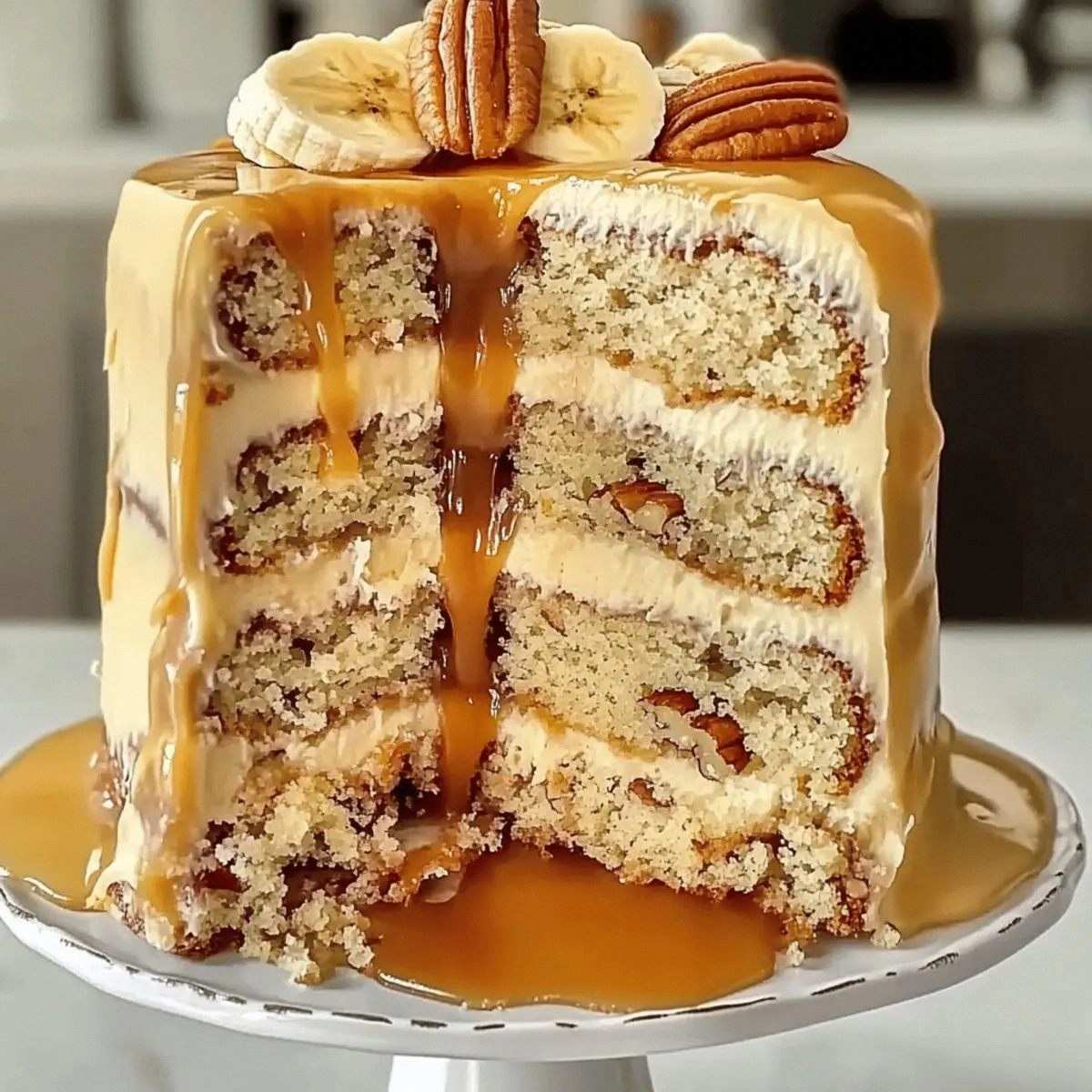
I still remember the day I ruined three banana breads in a row—one sunk like a sad soufflé, one tasted like wet cardboard, and the third glued itself to the pan so stubbornly I considered throwing the whole thing out. I stood there, spatula in hand, ready to wave the white flag, when my best friend dared me to create “the ultimate banana dessert, something that would make grown adults fight over the last slice.” Challenge accepted. What emerged from that chaotic afternoon was this towering Banana Pecan Caramel Cake, a confection so outrageously moist, nutty, and dripping with glossy caramel that my neighbor actually knocked on the door at midnight asking for a piece. The scent alone—warm bananas, toasted pecans, and buttery caramel swirling through the air—feels like wrapping yourself in a fuzzy blanket straight from the dryer.
Picture this: you pull the cake from the oven, the surface crackles like a crème-brûlée lid, the caramel bubbles up around the pecans like liquid amber hugging driftwood. You tap the pan and it answers with a soft, springy thud; you insert a skewer and it comes out with the tiniest crumb clinging on like it’s reluctant to leave the party. That’s your cue to grab a spoon and sneak a warm corner piece before anyone else knows it’s ready. I’ll be honest—on my first trial, I ate half the batch standing at the counter, swiping fingerfuls of caramel and blaming “trimming for even layers” whenever someone walked in. Zero regrets.
This isn’t your everyday banana bread dressed up with a pecan necklace. We’re talking about three sky-high cake layers that stay impossibly tender for days thanks to a buttermilk-banana mash-up, a quick stovetop caramel you’ll want to sip with a straw, and toasted pecans that stay crisp even after they’re bathed in glossy sugar. Most recipes get this completely wrong: they fold the nuts into raw batter, so they sink and turn rubbery, or they drizzle weak, grainy caramel on top as an afterthought. Here we toss the pecans in hot caramel first, coating every ridge and valley, then fold those candied beauties into the batter so you get pockets of crunchy-sweet surprise in every bite.
Okay, ready for the game-changer? We’re using brown butter—yes, liquid gold that smells like hazelnuts doing the tango—in both the cake and the caramel. It deepens the banana flavor so dramatically that tasters swear I slipped in a splash of rum (nope, just brown butter magic). Stay with me here—this is worth it. Let me walk you through every single step—by the end, you’ll wonder how you ever made it any other way.
What Makes This Version Stand Out
- Taste Explosion: Imagine banana bread and sticky toffee pudding had a love child, then rolled it in toasted pecans. That’s the vibe. The brown butter adds nutty depth, the caramel brings smoky sweetness, and ripe bananas keep everything lush.
- Texture Heaven: We’re stacking tender cake layers with candied pecan crunch and a caramel soak that seeps in like syrup on a hot pancake. Every forkful delivers soft, gooey, and crisp in one swoon-worthy bite.
- One-Bowl Ease: Despite its bakery-counter looks, the batter comes together in a single bowl—no stand mixer required. If you can whisk, mash, and fold, you’re golden.
- Make-Ahead Hero: The cake layers actually improve after a night in the fridge, letting the caramel fuse everything together. Bake on Sunday, assemble Monday, serve Tuesday, and you’ll still get applause.
- Crowd Shock Factor: People expect banana bread; they receive a three-layer showstopper dripping with caramel. I’ve seen shy guests thrust their plates forward for seconds before finishing their first piece.
- Ingredient Integrity: No fake banana extract, no corn-syrup caramel. We’re talking real fruit, real cream, real butter. You can taste the honesty.
Alright, let’s break down exactly what goes into this masterpiece...
Inside the Ingredient List
The Flavor Base
Over-ripe bananas are non-negotiable. You want the skins freckled with black spots, the fruit inside soft enough to mash with a fork. Those brown spots concentrate natural sugars, giving you banana flavor so intense it tastes like you slipped in a shot of liqueur. If your bananas are still yellow, roast them at 300°F for fifteen minutes; the skins will blacken and the sugars will caramelize. Skip the banana extract—it tastes like bubblegum had an identity crisis.
Buttermilk is the quiet genius behind the cake’s tender crumb. Its acidity reacts with baking soda to create tiny carbon-dioxide pockets, lifting the cake so it’s fluffy yet sturdy enough to stack. No buttermilk? Stir a tablespoon of lemon juice into regular milk and wait five minutes; the curdled magic works nearly as well. Just don’t swap in plain water or you’ll lose that tangy backbone.
The Texture Crew
All-purpose flour gives structure without turning the cake brick-like. I tested cake flour and the layers collapsed under the caramel weight; bread flour made it chewy like banana bagels. The sweet spot is three cups of AP flour measured with the spoon-and-level method. If you dunk the cup directly into the bag, you’ll pack in an extra half cup and end up with a dry sponge.
Chopped pecans bring the crunch party. Buy them whole, toast them in a dry skillet until they smell like popcorn, then chop by hand so you get irregular shards—some dust, some chunky—for varied bite. Pre-chopped bags are usually stale and taste like cardboard shavings. And please, no walnut swap; walnuts go bitter when caramelized, whereas pecans turn into praline perfection.
The Unexpected Star
Brown butter is the secret handshake among pastry chefs. You simply melt butter until the water evaporates and the milk solids caramelize, lending a nutty aroma that makes people ask, “What’s that incredible smell?” We’re using a full cup here, so the flavor echoes through both cake and caramel. Don’t you dare substitute oil; you’ll lose that depth and the caramel will slide off like it’s on a non-stick slide.
Heavy cream creates the silky caramel cloak. Warm it slightly before whisking into the hot sugar; cold cream seizes the caramel into a stubborn rock that takes forever to melt back. If you’re feeling decadent, swap two tablespoons of cream with bourbon for a smoky edge that flirts beautifully with banana.
The Final Flourish
Powdered sugar dissolves smoothly into the caramel frosting, giving you that glossy, pourable consistency. Sift it first or you’ll spend an eternity chasing stubborn lumps. A pinch of salt sharpens all the sweet notes—think salted caramel banana sundae without the brain freeze. And the final shower of chopped pecans on top? That’s pure visual drama, plus extra crunch insurance.
Everything’s prepped? Good. Let’s get into the real action...
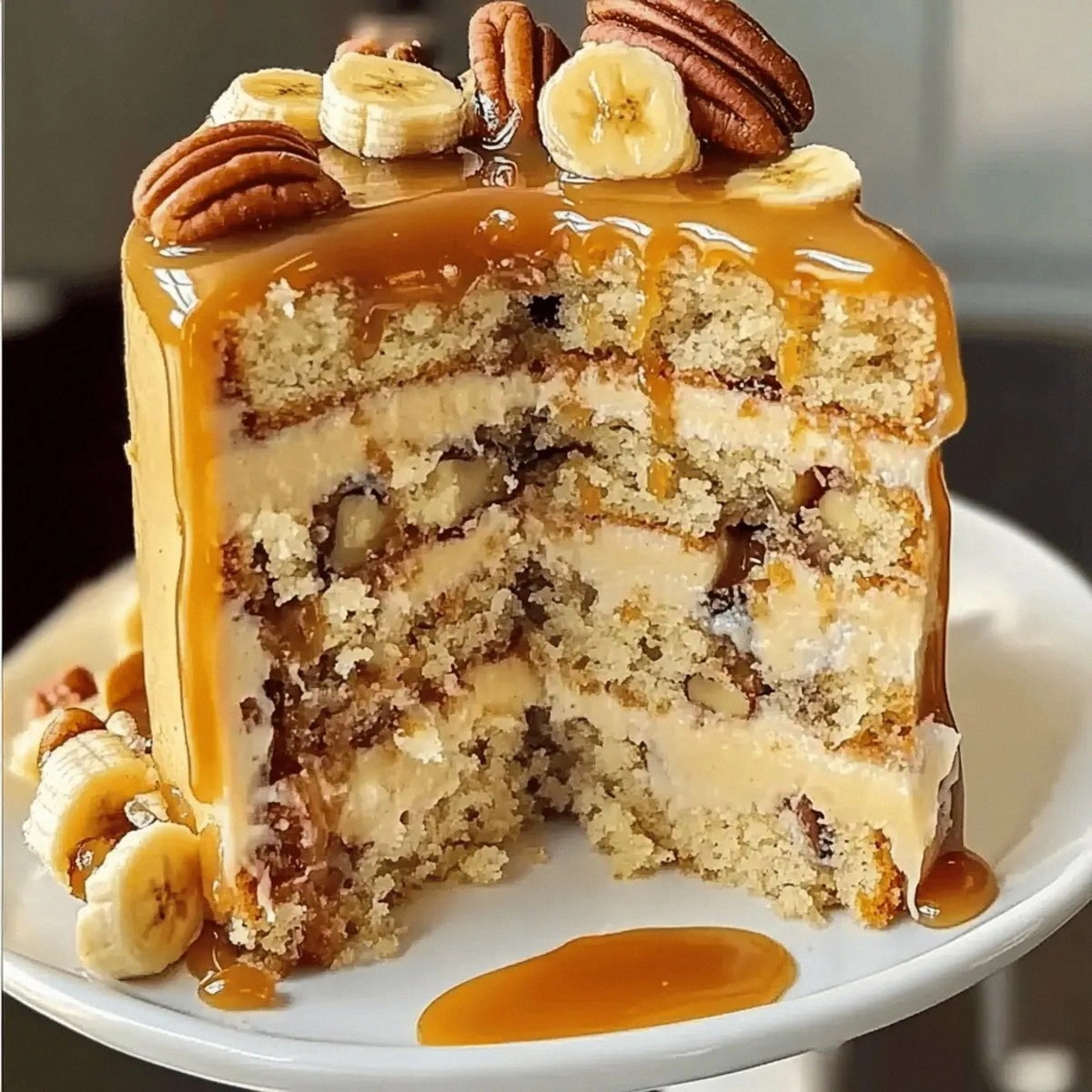
The Method — Step by Step
- Toast and candy the pecans first. Spread them on a dry skillet over medium heat, shaking every thirty seconds until they smell like buttered popcorn and darken half a shade. Pour in half of your prepared caramel (we’ll make that in step 3), stir like mad, then tip the glossy nuts onto parchment. Cool five minutes, chop roughly, and try not to eat them all. These candied shards will stay crisp inside the batter instead of turning soggy.
- Brown the butter like a pro. Dice one cup of cold butter, drop it into a stainless pan, and melt over medium. The foam will subside, the milk solids will turn hazelnut brown, and the aroma will make you weak in the knees—about eight minutes. Immediately pour into a heat-proof bowl; otherwise the carry-over heat will bitter those precious flecks. Let it cool until slightly thick but still liquid, about fifteen minutes. This brown butter goes into both cake and caramel, so portion accordingly.
- Whisk up the quick stovetop caramel. In a heavy saucepan, melt one cup of brown sugar with a quarter cup of water over medium. Once it bubbles like lava, resist stirring—just swirl the pan. When it turns deep amber (think the color of an old penny), carefully pour in warmed heavy cream and two tablespoons of your brown butter. It will hiss and splatter like an angry cat; keep whisking until silky. Set aside one cup for later drizzling; the rest gets folded into the frosting.
- Make the banana buttermilk mash. In a large bowl, mash two very ripe bananas until they look like baby food with character. Whisk in one cup of buttermilk, three large eggs, and two teaspoons of vanilla. The mixture will look lumpy and sad—perfect. The acidity wakes up the baking soda, ensuring your cake rises like a good soufflé joke.
- Combine the dry squad. In a separate bowl, whisk three cups of all-purpose flour, one tablespoon of baking powder, one teaspoon of baking soda, and one teaspoon of salt. Sifting is optional but recommended if your flour lives in a humid climate and clumps like damp sand. Even distribution prevents sneaky baking-soda pockets that taste like soap.
- Cream the butter and sugars until cloud-like. Using the same bowl (yes, one-bowl supremacy), beat one cup of brown butter with one cup of granulated sugar and one cup of brown sugar for three full minutes. The mixture will lighten in color and fluff up like whipped shortbread. Don’t rush; this step traps air, giving you tender cake layers instead of banana bricks.
- Alternate wet and dry like a slow dance. Reduce mixer speed to low. Add one-third of the dry ingredients, half the banana mixture, another third of dry, remaining banana, and final dry. Ending with flour prevents curdling. Stop as soon as the last streak of flour disappears; over-mixing develops gluten and ruins the soft crumb. The batter should look like thick yogurt studded with black sesame seeds (those are banana flecks, not bugs).
- Fold in the caramelized pecans with a spatula. Remember those shiny shards from step 1? Scrape them in, along with any caramel shards clinging to the parchment. Fold gently so you distribute crunch without deflating the batter. I dare you to taste this and not go back for seconds.
- Divide, smooth, and tap out bubbles. Grease three eight-inch pans, line bottoms with parchment, then grease again. Divide batter evenly—use a kitchen scale if you’re a perfectionist. Smooth tops with an offset spatula, then tap pans on the counter to pop hidden air pockets. These tiny steps ensure flat layers that stack like Lego.
- Bake until the edges pull away and a skewer comes out with a few moist crumbs. Oven at 350°F, middle rack, twenty-five to thirty minutes. Rotate pans halfway for even browning. The cakes are done when they pull slightly from the sides and the centers spring back gently. Cool in pans ten minutes, then invert onto racks. If you smell toasted pecans and caramel, you’ve nailed it.
That's it—you did it. But hold on, I've got a few more tricks that'll take this to another level...
Insider Tricks for Flawless Results
The Temperature Rule Nobody Follows
Room-temperature eggs and buttermilk mix into the batter without seizing the brown butter. Cold eggs shock the butter, creating tiny solid flecks that refuse to blend. Pull dairy and eggs out thirty minutes before baking, or microwave buttermilk ten seconds and soak eggs in warm water for five. Your batter will emulsify into silky perfection, and the cake will rise evenly instead of doming like a volcano.
Why Your Nose Knows Best
Trust your sense of smell more than the timer. When the toasted pecans start smelling like buttered popcorn, pull them off the heat; they’ll continue cooking from residual heat. Same with brown butter—once it smells like toasted hazelnuts and you see chestnut flecks, yank that pan off the burner. A friend tried walking away once; the butter turned black and bitter, and the cake tasted like burnt coffee grounds. Don’t be that friend.
The Five-Minute Rest That Changes Everything
After the layers bake, brush them with the reserved warm caramel while they’re still warm. Let them rest five minutes so the syrup seeps in but doesn’t make the crumb soggy. Then flip onto racks. This quick soak guarantees moist cake without risking structural collapse. I skipped this once and served what resembled banana-scented sandpaper—never again.
Frosting Fix for Hot Kitchens
On sweltering days, beat the frosting bowl over an ice bath; the caramel buttercream will whip into pipeable peaks instead of sliding off the cake like hot lava. Conversely, if your kitchen is arctic, warm the caramel slightly so it blends smoothly. Temperature is the difference between Instagram-ready and hot mess.
Creative Twists and Variations
Bourbon Bacon Bonanza
Swap half the pecans for candied bacon bits and replace two tablespoons of cream with bourbon in the caramel. The smoky-salty punch plays off banana like jazz on a Saturday night. Serve at a guys’ poker night and watch them propose marriage.
Tropical Coconut Escape
Fold toasted unsweetened coconut into the batter and sub coconut milk for buttermilk. Top with a rum-coconut cream cheese frosting and a cascade of toasted coconut flakes. Close your eyes and you’re on a beach hammock in Phuket.
Chocolate Chunk Chaos
Stir in one cup of chopped dark chocolate along with the pecans. The bittersweet pockets melt into fudgy puddles that swirl with caramel. This version converts even staunch chocolate-banana skeptics into believers.
Spiced Autumn Remix
Add one teaspoon of cinnamon, half a teaspoon of nutmeg, and a pinch of clove to the dry mix. Use maple sugar instead of granulated for deeper fall vibes. Your house will smell like October even in July.
Mini Bundt Crowd-Pleasers
Divide the batter among greased mini-Bundt pans, bake eighteen minutes, then glaze with thinned caramel. They travel like champs and fit perfectly into lunchboxes or gift tins. Picture yourself handing these out at the office and becoming the most popular human in cubicle land.
Vegan Dreamboat
Sub vegan butter for brown butter, flax eggs for chicken eggs, and oat milk curdled with lemon for buttermilk. Coconut cream whips into the caramel for a glossy finish. No one will guess it’s plant-based; they’ll be too busy swooning.
Storing and Bringing It Back to Life
Fridge Storage
Cover tightly with plastic wrap, then slide into an airtight container. The cake keeps four days refrigerated, though flavors meld so beautifully it rarely lasts that long. Bring slices to room temperature thirty minutes before serving; cold caramel firms like fudge, while room-temp caramel flows like silk.
Freezer Friendly
Wrap individual slices in parchment, then foil, then stash in a zip bag. Freeze up to two months. Thaw overnight in the fridge, then warm in a 300°F oven for ten minutes to revive the caramel gloss. The pecans retain their crunch, a miracle of modern freezer science.
Best Reheating Method
Microwave a slice ten seconds, then add a fresh drizzle of warm caramel and a scatter of toasted pecans. The quick steam revitalizes the crumb, making it taste oven-fresh. For a dinner-party flex, warm the whole cake eight minutes at 275°F; guests will think you baked it that afternoon.