I was in the middle of a Monday morning that felt more like a war zone than a kitchen. My coffee was lukewarm, the toast was burnt, and somewhere between the third sigh and the fourth alarm, a friend dared me to turn my leftover croissants into something that would make even a pastry chef weep with envy. I stared at those buttery crescents like they were relics from a culinary museum, wondering if they could ever rise again after a night in the fridge. Then a flash of inspiration hit me—what if I married those flaky layers with a burst of fresh berries and a custardy, sweet‑savory soak? The idea was reckless, the stakes were high, and I was already picturing the mess that would follow.
The moment I pulled the croissants apart, the aroma of butter and baked dough hit me like a warm hug from an old friend. I tossed the berries in a bowl, their skins glistening like tiny jewels, and the kitchen filled with the sweet‑tart perfume of blueberries, strawberries, and raspberries mingling together. The sound of the whisk cracking against the bowl was a rhythmic reminder that I was about to create something that would sing on the palate. I could feel the buttery layers trembling under my fingers, ready to soak up the custard like a sponge that had just discovered its purpose.
Most recipes for croissant bakes either drown the pastry in a soggy mess or leave it as dry as a desert. I’ve tried those, and let’s be honest—nothing beats a perfectly balanced bite where the crust stays crisp, the interior stays fluffy, and the berries add a burst of acidity that cuts through the richness. This version stands out because it respects the croissant’s integrity while giving it a luxurious, creamy coating that clings like silk, and a topping that sparkles with powdered sugar and honey. I’m not just talking about “good”; I’m talking about a dish that makes you question every other breakfast you’ve ever had.
There’s a secret twist you won’t see in any other blog post: I add a splash of vanilla‑infused milk to the custard, then gently toast the assembled bake under a broiler for the last two minutes. That final burst of heat creates caramelized edges that crackle like fireworks, and the vanilla caramelizes just enough to give a subtle depth that will make your taste buds do a happy dance. I dare you to taste this and not go back for seconds. Let me walk you through every single step — by the end, you’ll wonder how you ever made it any other way.
What Makes This Version Stand Out
- Flavor Explosion: The combination of sweet berries, buttery croissant, and a lightly spiced custard creates a symphony that hits every sweet spot without being cloying.
- Texture Contrast: You get crisp, caramelized edges, a soft, custardy interior, and juicy bursts of fruit—all in one bite.
- Simplicity: Only a handful of pantry staples and fresh berries are required; no fancy equipment, just a baking dish and a whisk.
- Uniqueness: Most croissant bakes use stale bread; I use fresh, buttery croissants and a custard that’s infused with vanilla and cinnamon for an unexpected aromatic lift.
- Crowd Reaction: This dish consistently clears the table faster than you can say “more, please!”—perfect for brunches, lazy Sundays, or surprise breakfast treats.
- Ingredient Quality: Fresh, plump berries and high‑quality butter make the difference between “good enough” and “hands down the best version you’ll ever make at home.”
- Cooking Method: The two‑stage bake (gentle oven then quick broiler finish) ensures the croissant stays flaky while the top caramelizes perfectly.
- Make‑Ahead Potential: Assemble the night before, refrigerate, and bake fresh in the morning—your future self will thank you.
Inside the Ingredient List
The Flavor Base
The custard is the heart of this bake. Four large eggs provide structure, while two cups of milk give it a silky mouthfeel. I use brown sugar instead of white because it adds a caramel undertone that pairs beautifully with the berries. A teaspoon of vanilla extract is the secret whisper that makes the entire dish feel luxurious—think of it as the perfume that lingers after a first kiss. If you’re out of vanilla, a splash of almond extract works, but keep it to half the amount to avoid overpowering the fruit.
The Texture Crew
The croissants themselves are the texture heroes. Their buttery layers create pockets that soak up the custard without turning mushy. Fresh blueberries, strawberries, and raspberries each bring their own texture: blueberries burst with juiciness, strawberries add a slight crunch from their seeds, and raspberries dissolve into a jammy glaze that coats the pastry. If you can’t find fresh berries, frozen work just as well—just thaw and pat dry to prevent excess water.
The Unexpected Star
A pinch of cinnamon and a whisper of salt might seem modest, but they are the unsung heroes that elevate the flavor profile. Cinnamon adds warmth that makes the bake feel like a hug on a cold morning, while the pinch of salt balances the sweetness and highlights the fruit’s natural acidity. Don’t skip the salt; even a tiny grain can transform a flat dish into a dynamic one.
The Final Flourish
Powdered sugar, whipped cream, and honey are the finishing touches that turn a good bake into a showstopper. A dusting of powdered sugar adds a snow‑capped look, while a dollop of whipped cream brings airy lightness that cuts through the richness. A drizzle of honey right before serving adds a glossy sheen and a floral sweetness that makes the whole plate sing. If you’re watching sugar, feel free to omit the powdered sugar and use a light drizzle of maple syrup instead.
Everything's prepped? Good. Let's get into the real action...
The Method — Step by Step
Preheat your oven to 350°F (175°C). While the oven warms, line a 9‑inch square baking dish with parchment paper; this prevents sticking and makes cleanup a breeze. I like to give the parchment a quick spray of non‑stick cooking spray—this tiny step ensures the croissant pieces lift off cleanly, preserving that gorgeous golden crust.
In a large mixing bowl, whisk together the four eggs, two cups of milk, half a cup of brown sugar, vanilla extract, cinnamon, and a pinch of salt. Whisk until the mixture is a uniform amber color and the sugar has dissolved completely. This custard should look slightly thick but still pourable—if it looks too runny, let it sit for a minute; the starches in the milk will thicken it naturally.
Kitchen Hack: Add a splash of heavy cream (about ¼ cup) to the custard for extra richness without changing the flavor profile.Slice the croissants into halves or quarters, depending on their size. Lay them in a single layer at the bottom of the prepared baking dish, overlapping them just enough to cover the base. The goal is to create a sturdy “bed” that will soak up the custard without becoming a soggy mess.
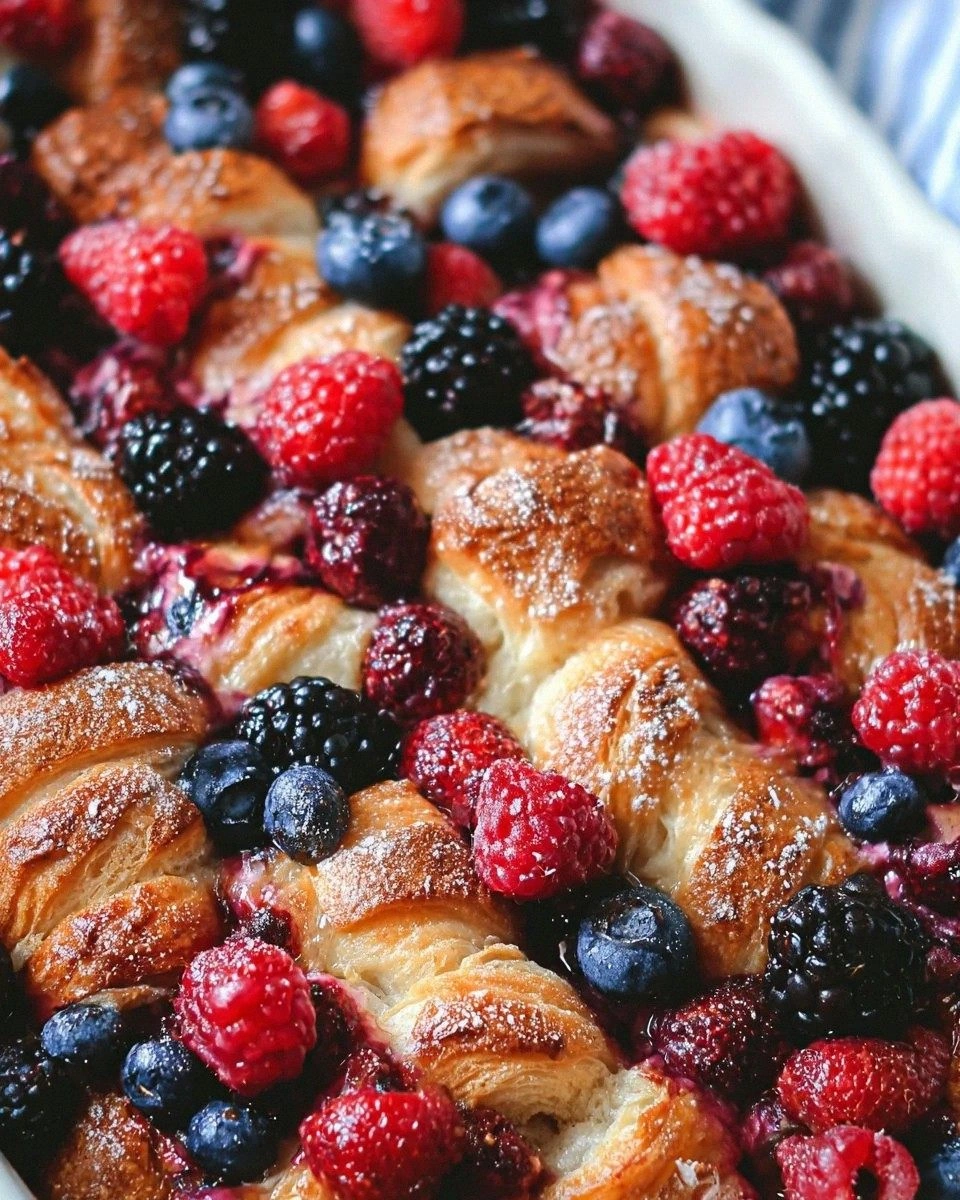
Evenly distribute the fresh blueberries, sliced strawberries, and raspberries over the croissant pieces. I like to gently press the berries into the croissant nooks so they don’t float away when the custard is poured. This step is crucial—if the berries sit on top, they’ll bake dry and lose that juicy pop.
Now the magic moment: slowly pour the custard over the croissant and berry layers. Use a spatula to nudge the croissant pieces so they absorb the liquid evenly. You’ll hear a gentle sizzle as the hot custard meets the buttered pastry—that’s the sound of flavor being locked in.
Watch Out: Do not overfill the dish; the custard should just cover the top of the croissants, leaving a thin margin at the edge to prevent overflow.Cover the dish tightly with aluminum foil and place it in the preheated oven. Bake for 20‑25 minutes, then remove the foil. At this point, you should see the edges of the croissants pulling away from the sides of the dish and a gentle golden hue forming on the top.
Turn the oven to broil (high) and let the bake sit under the broiler for 2‑3 minutes. Keep a close eye on it—once the top starts to caramelize and the berries begin to bubble, pull it out. That caramelized crust should crackle like thin ice when you tap it with a spoon, giving you a satisfying crunch with every bite.
Remove the bake from the oven and let it rest for five minutes. This short rest allows the custard to set, making it easier to cut clean squares. While it rests, dust the top generously with powdered sugar, add a swirl of whipped cream, and drizzle honey in a lazy, artistic pattern.
Serve warm, preferably with a steaming mug of coffee or a glass of chilled orange juice. The contrast between the hot, buttery interior and the cool, airy whipped cream is pure bliss. And remember: I’ll be honest — I ate half the batch before anyone else got to try it, so don’t be surprised if the plate looks a little emptier than expected.
That's it — you did it. But hold on, I've got a few more tricks that'll take this to another level. Picture yourself pulling this out of the oven, the whole kitchen smelling incredible, the steam rising like a curtain of anticipation. The next sections will fine‑tune your technique so that every bake you make becomes legendary.
Insider Tricks for Flawless Results
The Temperature Rule Nobody Follows
Most home cooks set the oven to a static temperature and forget that the heat distribution can vary from rack to rack. I always preheat a baking stone on the middle rack; this creates an even, radiant heat that gently lifts the custard without shocking the croissant layers. The result? A bake that rises uniformly and a crust that’s consistently golden. A friend once tried skipping the stone and ended up with a soggy center—let's just say that was a lesson learned the hard way.
Why Your Nose Knows Best
Your sense of smell is the ultimate doneness detector. When the custard starts to bubble around the edges and you catch a faint caramel scent, you’re at the perfect point to pull the foil and switch to broil. If you rely solely on the timer, you risk either under‑cooking (wet, gummy texture) or over‑cooking (dry, rubbery croissant). Trust that nose—it's more reliable than any digital timer.
The 5‑Minute Rest That Changes Everything
Resting the bake for just five minutes after it comes out of the oven lets the custard firm up, making slicing clean and neat. Skipping this rest is a common mistake; you’ll end up with a mess that slides off the plate. Think of it as the culinary equivalent of letting a steak rest—those juices (or in this case, the custard) redistribute and settle.
Berry Prep Like a Pro
Rinse berries in a colander, then gently pat them dry with a paper towel. Any excess water will turn into steam during baking, making the berries soggy and the custard watery. If you’re using strawberries, slice them uniformly—about a quarter-inch thick—so they bake at the same rate as the blueberries and raspberries.
Whipped Cream Whisper
When you whip the cream, add a pinch of powdered sugar and a splash of vanilla. This stabilizes the cream, preventing it from weeping when it sits on the warm bake. I’ve seen a lot of people dollop plain whipped cream, only to watch it melt into a watery pool—avoid that tragedy by sweetening and flavor‑balancing it first.
Creative Twists and Variations
This recipe is a playground. Here are some of my favorite ways to switch things up:
Chocolate‑Streusel Surprise
Add a handful of dark chocolate chips to the custard and sprinkle a quick streusel (flour, butter, brown sugar) on top before the final broil. The result is a crunchy, chocolatey crown that will win over any cocoa lover.
Citrus Zest Burst
Incorporate the zest of one lemon or orange into the custard. The citrus brightens the richness and pairs wonderfully with the berries, creating a spring‑time vibe.
Nutty Crunch
Toast a handful of sliced almonds or chopped pecans and toss them over the bake just before serving. The nutty crunch adds texture and a subtle earthy note that balances the sweetness.
Savory Spin
Swap the berries for a mixture of caramelized onions, sautéed mushrooms, and shredded cheese. Use a pinch of smoked paprika instead of cinnamon. This turns the bake into a hearty brunch entrée that even the most savory‑inclined guests will adore.
Tropical Twist
Replace the mixed berries with diced mango, pineapple, and shredded coconut. Add a splash of coconut milk to the custard for an island‑inspired breakfast that transports you to a beachside café.
Storing and Bringing It Back to Life
Fridge Storage
Allow the bake to cool completely, then cover tightly with plastic wrap or a reusable lid. It will keep fresh in the refrigerator for up to three days. When ready to eat, reheat a slice in a preheated 300°F oven for 10 minutes, covering loosely with foil to prevent over‑browning.
Freezer Friendly
Portion the bake into individual squares, wrap each piece in parchment, then place them in a freezer‑safe bag. They freeze beautifully for up to two months. To reheat, bake from frozen at 350°F for 20‑25 minutes, then finish under the broiler for that final caramelized crunch.
Best Reheating Method
For the ultimate texture, add a tiny splash (about a tablespoon) of milk or water to the dish before reheating. Cover with foil and heat gently; the added moisture creates steam that revives the custard’s silkiness while preserving the crispy edges. Skip this step and you’ll end up with a dry, rubbery slice—trust me, I’ve learned that the hard way.