Picture this: it’s a rainy Saturday night, you’ve been scrolling through endless recipe blogs, and every sushi roll you see looks like a tiny, fragile work of art that you could never replicate without a bamboo mat and a PhD in precision. I was there, stuck in the kitchen with a half‑cooked pot of rice, a bottle of soy sauce that had been staring at me from the pantry for months, and a craving for something that would hit the umami spot without demanding a sushi‑making masterclass. That moment of frustration turned into a culinary epiphany when I tossed the rice into a casserole dish, layered it with a creamy, spicy crab mixture, and let the oven do the heavy lifting. The result? A golden‑brown, melt‑in‑your‑mouth masterpiece that smells like a sushi bar on a summer evening and tastes like a hug from a Japanese grandma.
The first bite is a revelation: the rice is fluffy yet sticky, hugging the seasoned crab mixture that’s been coaxed into a silky, slightly spicy custard by mayo, sriracha, and a whisper of cream cheese. As you chew, the mozzarella bubbles and browns, creating a crust that shatters like thin ice, while the butter‑kissed panko adds a buttery crunch that makes you want to slap the spoon against the dish. I dare you to taste this and not go back for seconds, because that first forkful will have you questioning every sushi roll you’ve ever ordered. Most recipes get this completely wrong—either they skimp on the creamy layer or they over‑bake the rice until it’s dry as a desert. Here’s what actually works: a precise balance of moisture, heat, and timing that turns humble pantry staples into a show‑stopping entrée.
What truly sets this version apart is the secret weapon I’m about to reveal: a splash of sesame oil mixed into the rice before it even meets the oven. That little drizzle infuses the grains with a nutty depth that you’ll notice the second the steam lifts from the casserole, and it’s the difference between “good” and “hands down the best version you’ll ever make at home.” I’ll be honest — I ate half the batch before anyone else got to try it, and that’s because the aroma alone was enough to make my stomach growl louder than a subway train. If you’ve ever struggled with a soggy sushi bake or a bland, lifeless topping, you’re not alone — and I’ve got the fix right here, ready for you to copy, paste, and devour.
Okay, ready for the game‑changer? I’m going to walk you through every single step — from selecting the perfect sushi rice to achieving that caramelized cheese crust that looks like it was kissed by a culinary fairy. By the end, you’ll wonder how you ever made it any other way, and you’ll have a go‑to recipe that will impress friends, satisfy cravings, and maybe even become a staple at your family gatherings. Let’s dive in, because the kitchen is about to become your favorite sushi lounge.
What Makes This Version Stand Out
- Flavor Fusion: The blend of mayo, sriracha, and cream cheese creates a creamy umami bomb that coats every grain like velvet, while the soy‑sesame drizzle adds depth that ordinary sushi bakes lack.
- Texture Triumph: A crunchy panko‑butter topping sits atop a bubbling mozzarella crust, delivering a satisfying snap that shatters like thin ice with each bite.
- Simplicity: No sushi rolling mats, no fancy knives—just a casserole dish, a whisk, and a handful of pantry heroes.
- Unique Twist: A splash of sesame oil in the rice gives a nutty aroma that most recipes forget, turning the base into a flavor powerhouse.
- Crowd Reaction: Guests often claim they’ve never tasted sushi in a casserole before, and the “wow” factor is instant, making it perfect for parties or weeknight wins.
- Ingredient Quality: Using authentic sushi rice and quality nori ensures the dish stays true to its Japanese roots while still feeling comfort‑food friendly.
- Cooking Method: The oven’s steady heat creates a uniform bake, preventing soggy spots and guaranteeing a golden top every time.
- Make‑Ahead Potential: Assemble the night before, refrigerate, and bake fresh in the morning for a stress‑free brunch or dinner.
Alright, let's break down exactly what goes into this masterpiece...
Inside the Ingredient List
The Flavor Base
The heart of this dish is the seasoned crab mixture. Imitation crab, also known as surimi, provides that sweet, delicate ocean flavor without the price tag of real crab. When you fold it with Japanese mayo and sriracha, you get a sauce that coats the rice like velvet, delivering a gentle heat that tingles the palate. If you skip the mayo, you lose the luxurious creaminess that balances the sriracha’s kick, resulting in a dry, uneven texture. For a pescatarian twist, swap the crab for cooked shrimp or even diced smoked salmon, but keep the mayo‑sriracha combo for that signature zing.
The Texture Crew
Shredded mozzarella is the star of the topping, melting into a glossy blanket that browns into a caramelized crust. This cheese pulls apart in strings that cling to the fork, creating an indulgent mouthfeel. Panko breadcrumbs, tossed with melted butter, add a buttery crunch that contrasts the soft interior, while the furikake sprinkle adds a final burst of umami and a pop of color. If you miss the panko, you’ll end up with a soggy top that looks more like a steamed rice cake than a casserole.
The Unexpected Star
Sesame oil may seem like a minor addition, but a single tablespoon whisked into the cooked rice transforms the dish, adding a nutty aroma that makes the whole casserole smell like a high‑end sushi bar. This oil is the secret that most recipes overlook, leading to a flatter flavor profile. If you’re allergic or avoid oil, a drizzle of toasted sesame seeds can mimic the nuttiness, though the oil’s liquid nature ensures even distribution.
The Final Flourish
Finishing touches include a drizzle of soy sauce for saltiness, a dash of rice vinegar to brighten the rice, and sliced scallions for a fresh, oniony bite. The nori sheets, torn into bite‑size shards, are served on the side, allowing diners to scoop up the casserole with a crunchy, sea‑weed kiss. If you omit the scallions, you’ll lose that subtle sharpness that cuts through the richness, making the dish feel heavier than intended.
Everything's prepped? Good. Let's get into the real action...
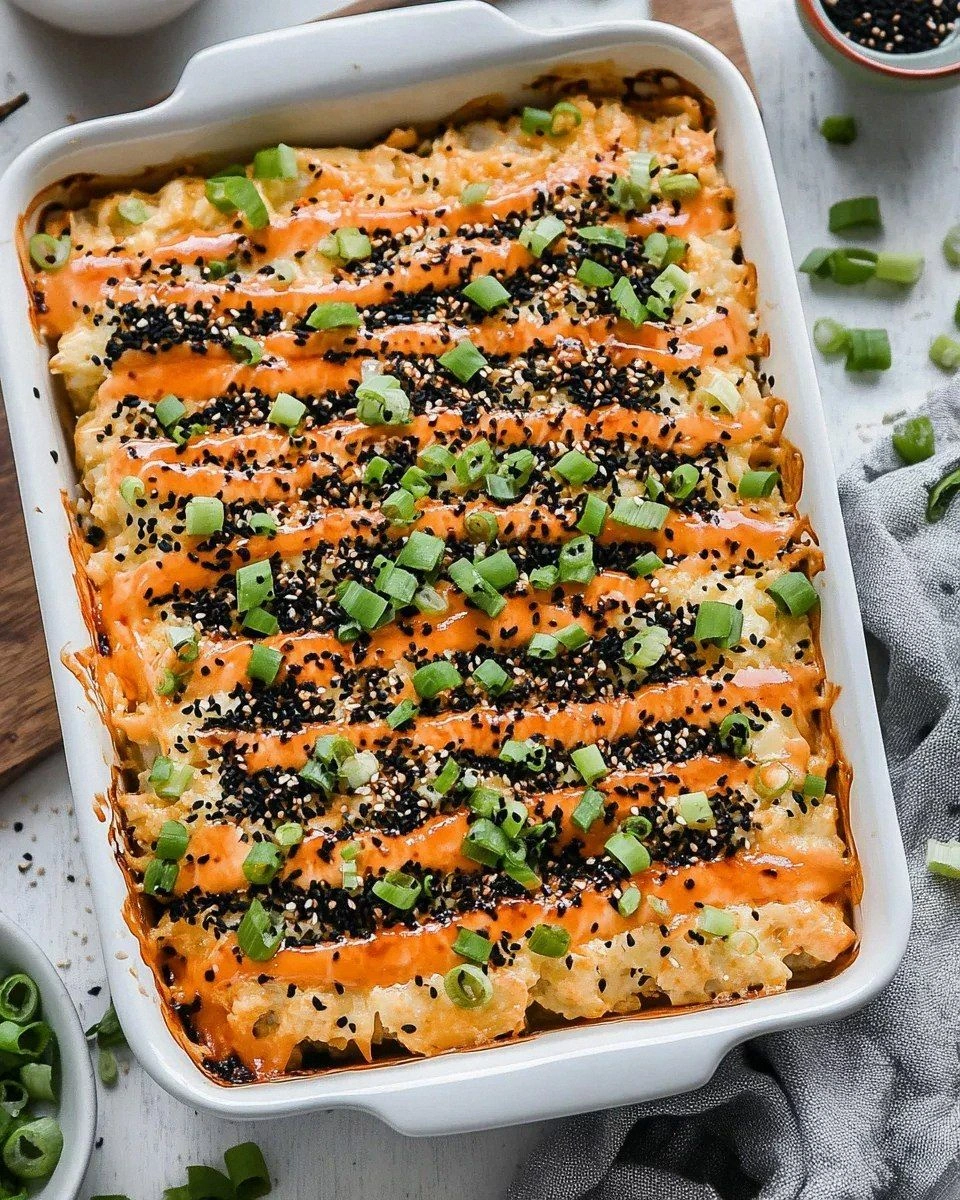
The Method — Step by Step
Start by cooking 2 cups of sushi rice according to package instructions, then let it rest for 10 minutes. While the rice is still hot, gently fold in 2 tbsp rice vinegar, 1 tbsp sugar, and 1 tsp salt, stirring until the grains shine like tiny pearls. This seasoning step is crucial; the vinegar brightens the flavor and helps the rice stay sticky without becoming mushy. Watch the rice closely—if it looks too wet, spread it on a tray to steam off excess moisture.
Watch Out: Over‑cooking the rice will make the casserole gummy; aim for a tender, separate grain texture.While the rice is cooling, prepare the crab mixture. In a large bowl, combine 8 oz shredded imitation crab, 1/2 cup Japanese mayo, 2 tbsp sriracha, 4 oz softened cream cheese, 2 tbsp soy sauce, and 1 tbsp sesame oil. Mix until the mixture is smooth and glossy, like a glossy pink sauce that clings to the back of a spoon. This is the moment of truth: the sauce should be thick enough to hold its shape but fluid enough to spread evenly over the rice.
Kitchen Hack: Soften cream cheese by microwaving for 10‑seconds; it blends faster and prevents lumps.Preheat your oven to 375°F (190°C). Lightly grease a 9‑inch square casserole dish with butter or cooking spray. Evenly spread the seasoned rice across the bottom, pressing gently with the back of a spoon to create a compact layer. The rice should form a solid base that will hold the topping without sliding.
Layer the crab mixture over the rice, spreading it with a spatula so it covers the entire surface. The mixture should be about a half‑inch thick; if it’s too thin, the casserole will dry out, and if it’s too thick, the top may never brown properly. At this point, the kitchen smells like a sushi bar meets a comfort food kitchen—pure magic.
Sprinkle 1 cup shredded mozzarella evenly over the crab layer. Then, in a small bowl, melt 2 tbsp butter and toss with 2 tbsp panko breadcrumbs until every crumb is coated. Scatter the buttery panko over the cheese for that golden, crackly crust. Finally, drizzle the remaining 2 tbsp melted butter over the panko for extra richness.
Slide the dish into the oven and bake for 20‑25 minutes, or until the cheese bubbles and the panko turns a deep amber. The edges should start pulling away from the sides of the dish, indicating a perfect crust formation. This is the moment of truth—if you hear a faint sizzle, you know the top is caramelizing just right.
Remove the casserole from the oven and let it rest for 5 minutes. This short rest allows the layers to set, making it easier to cut clean squares. While it rests, sprinkle 2 tbsp furikake and sliced scallions over the top for a pop of color and an extra layer of flavor.
Serve hot, accompanied by torn nori sheets on the side. Encourage diners to scoop a portion with a spoon, then wrap a piece of nori around it for that authentic sushi‑hand roll experience. Picture yourself pulling this out of the oven, the whole kitchen smelling incredible, and everyone reaching for seconds—because you’ll be the host with the most.
That's it — you did it. But hold on, I've got a few more tricks that'll take this to another level...
Insider Tricks for Flawless Results
The Temperature Rule Nobody Follows
Most home cooks bake at 350°F, assuming a gentle heat will protect the delicate rice. In reality, a slightly higher temperature (375°F) encourages the cheese to brown quickly while keeping the interior moist. I once baked at 350°F and ended up with a pale, soggy top that never achieved that coveted crunch. The higher heat creates a Maillard reaction that gives you that caramelized edge that shatters like thin ice.
Why Your Nose Knows Best
Don’t rely solely on the timer; trust your sense of smell. When the cheese starts to emit a nutty, toasted aroma, you’re within a minute of perfection. If you smell a faint burnt scent, pull the dish out immediately—over‑baking turns the buttery panko into bitter ash. This sensory checkpoint is the secret weapon that separates “good” from “restaurant‑grade.”
The 5‑Minute Rest That Changes Everything
Allowing the casserole to sit for five minutes after baking isn’t just about cooling; it lets the steam redistribute, firming up the layers so they slice cleanly. Skipping this rest results in a mushy mess that slides off the plate. I once served it straight out of the oven, and the rice fell apart like a soggy sushi roll—lesson learned.
Butter‑Boosted Crust
Mixing melted butter with panko is great, but adding a pinch of garlic powder and a dash of smoked paprika elevates the crust to a smoky, aromatic finish. The extra flavor compounds meld during baking, creating a depth that plain butter can’t achieve. Try it once and you’ll never go back to a plain breadcrumb topping.
Layering the Cheese Right
Instead of dumping all the mozzarella at once, sprinkle half, add a thin layer of panko, then finish with the remaining cheese. This technique creates a double‑crust effect: a bubbly cheese layer underneath and a crispy cheese‑panko combo on top. It’s the culinary equivalent of a double‑deck burger—more texture, more satisfaction.
Creative Twists and Variations
This recipe is a playground. Here are some of my favorite ways to switch things up:
Spicy Tuna Upgrade
Swap the imitation crab for 8 oz diced sashimi‑grade tuna, toss with extra sriracha and a splash of lime juice. The result is a bolder, oceanic flavor that pairs beautifully with the creamy cheese topping. Tuna lovers will thank you for the extra protein punch.
Veggie‑Friendly Version
Replace the seafood with a medley of finely diced carrots, bell peppers, and edamame. Add a tablespoon of miso paste to the mayo mixture for umami depth. This makes the dish suitable for vegetarians while retaining the comforting texture.
Cheesy Delight
Mix in ½ cup grated cheddar with the mozzarella for a sharper bite. The cheddar melts into gooey ribbons that add a nostalgic comfort‑food vibe, perfect for kids who might be hesitant about sushi flavors.
Tempura Crunch
Instead of panko, use crushed tempura flakes for the topping. The airy, light crunch contrasts the creamy interior in a way that ordinary breadcrumbs cannot. It’s a textural surprise that elevates the dish to a festival‑food level.
Asian Fusion
Incorporate a drizzle of hoisin sauce and a sprinkle of toasted sesame seeds after baking. The sweet‑savory glaze adds an unexpected layer that makes the casserole feel like a cross‑cultural masterpiece.
Breakfast Spin
Swap the sushi rice for a mix of short‑grain rice and quinoa, add a handful of chopped bacon, and top with a sunny‑side‑up egg after baking. It transforms the casserole into a hearty brunch that still nods to its Japanese roots.
Storing and Bringing It Back to Life
Fridge Storage
Allow the casserole to cool completely, then cover tightly with foil or a reusable silicone lid. It will keep in the refrigerator for up to 3 days. When reheating, sprinkle a thin layer of extra mozzarella on top to revive the golden crust.
Freezer Friendly
Portion the baked casserole into individual freezer‑safe containers, then wrap each with a layer of parchment before sealing. It freezes well for up to 2 months. To reheat, thaw overnight in the fridge, then bake at 350°F for 15‑20 minutes, adding a splash of water to the dish before covering with foil to steam the rice back to fluffiness.
Best Reheating Method
Place a small amount of water (about 2 tbsp) around the edges of the casserole, cover loosely with foil, and bake at 325°F for 10 minutes. The steam generated revitalizes the rice while the foil prevents the cheese from over‑browning. Finish with a quick broil for 1‑2 minutes to restore that crisp top.