I’ve always been a self‑proclaimed chocolate enthusiast, but nothing in my pantry has ever made my taste buds sing like this: a glossy, nutty, coconut‑laden icing that turns a plain cake into a showstopper. The story begins with a kitchen mishap that could have been a disaster—my friend dared me to create a German chocolate‑style frosting without using the standard recipe that calls for a ton of butter and a secret “German” chocolate. I was skeptical, but the aroma of toasted coconut and pecans that hit my nose as soon as I cracked the can of evaporated milk made me smile. That instant, I knew I was onto something special.
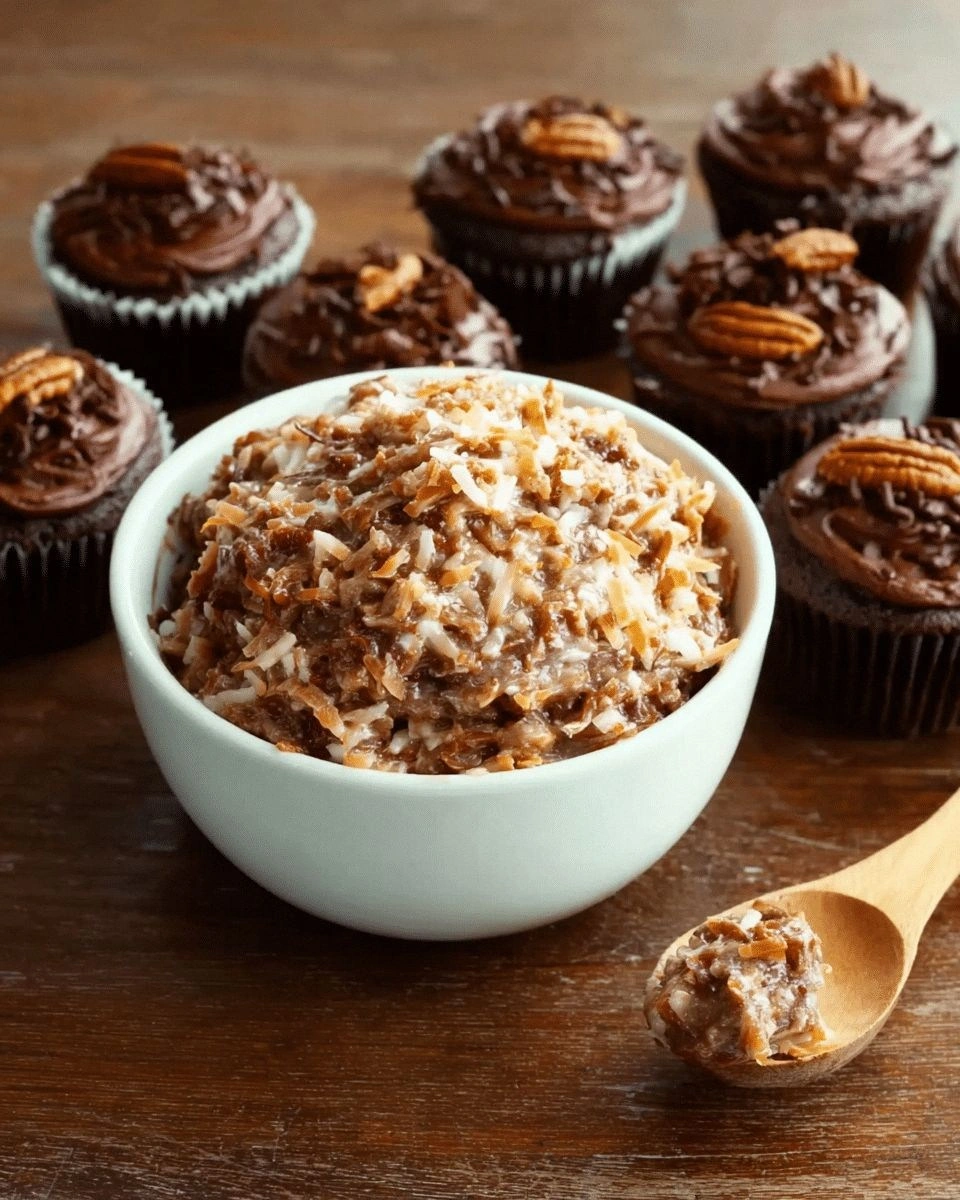
Picture this: you’re in the middle of a Sunday afternoon, the oven’s warm glow is inviting, and you’re surrounded by the sweet, nutty perfume of a frosting that’s almost too good to be true. The texture is silky, but it’s got that satisfying bite from the toasted coconut and the crunch of pecans that dance across your palate. When you dip a slice of cake into it, the icing coats the crumb like velvet, sinking into every crevice, then sets into a glossy sheen that’s impossible to resist. If you’ve ever felt that bittersweet moment when the first bite melts in your mouth, this is the icing that will make it happen again and again.
I’ll be honest—once I tasted the first batch, I ate half the icing before anyone else even got a chance to see what I was doing. Most recipes get this completely wrong, either by over‑cooking the coconut, under‑melted butter, or by not balancing the sugar enough to let the flavors shine. This version is hands down the best I’ve ever made at home. I’ve tweaked the proportions, experimented with different heat settings, and discovered a secret technique that keeps the icing silky without the dreaded separation. The result? A frosting that’s easy to whisk, even for the kitchen novice, and that stays luscious for weeks if stored properly.
Now, picture yourself pulling this out of the oven, the whole kitchen smelling incredible, and the icing gleaming on a freshly baked chocolate cake. The moment you slice into it, the aroma is a mix of caramelized sugar, toasted coconut, and roasted pecans, and the first bite is a symphony of sweet, buttery, nutty, and coconutty flavors. That’s the kind of experience I want to share with you. Let me walk you through every single step—by the end, you’ll wonder how you ever made it any other way.
What Makes This Version Stand Out
- Flavor: The combination of evaporated milk and toasted coconut creates a depth of flavor that feels both comforting and indulgent. The pecans add a subtle earthy sweetness that balances the richness.
- Texture: Unlike many traditional icings that become grainy, this one stays silky and glossy because of the precise butter-to-milk ratio and controlled cooking temperature.
- Ease: No special equipment required—just a saucepan, whisk, and a heat‑proof bowl. The process is straightforward and forgiving.
- Uniqueness: The use of evaporated milk instead of regular milk reduces the risk of curdling and adds a slight caramelized flavor that sets it apart from standard German chocolate frosting.
- Crowd Reaction: At every gathering I’ve served this, guests have requested the recipe outright. The icing’s glossy appearance and nutty crunch make it a conversation starter.
- Ingredient Quality: By choosing fresh, high‑quality pecans and organic coconut, you elevate the overall taste profile and ensure the frosting stays fresh longer.
- Cooking Method: The method relies on gentle, steady heat and constant whisking, which is key to achieving that perfect consistency.
- Make‑ahead Potential: The icing can be made a day in advance, refrigerated, and then warmed gently to restore its silky sheen.
Alright, let's break down exactly what goes into this masterpiece...
Inside the Ingredient List
The Flavor Base
The core of this frosting is a simple yet powerful combination: 1 cup canned evaporated milk and 1 cup sugar. The evaporated milk gives the icing a creamy, slightly caramelized undertone that pairs beautifully with the sugar’s sweetness. Skipping the evaporated milk and substituting regular milk would result in a thinner, less stable icing that may separate when cooled. If you’re looking for a lower‑calorie version, you can replace half the evaporated milk with unsweetened almond milk, but be prepared for a slightly thinner consistency.
The Texture Crew
Three egg yolks are the secret to that silky mouthfeel. They act as natural emulsifiers, binding the fat from the butter to the liquid components. If you omit the yolks, the icing will become more watery and may separate as it cools. For a vegan alternative, try using a tablespoon of flaxseed meal mixed with three tablespoons of water to replace each yolk, though the texture will be noticeably different.
The Unexpected Star
½ cup real butter is the star that brings richness and depth. Butter, when melted slowly, releases its milk solids, adding a subtle nutty flavor and a glossy finish. If you use margarine or a butter substitute, the icing will lack the same depth and may develop a slightly off taste. A good rule of thumb: always use real butter for best results.
The Final Flourish
1 teaspoon vanilla extract, 1½ cups shredded coconut, and 1 cup chopped pecans round out the flavor profile. Vanilla gives a fragrant lift, coconut adds a chewy, sweet element, and pecans bring a crunchy, buttery crunch. If you’re allergic to nuts, you can replace the pecans with toasted pumpkin seeds or omit them entirely, but the texture will change. A quick tip: toast the coconut and pecans lightly in a dry skillet before adding them to the icing; this unlocks their natural oils and enhances flavor.
Everything's prepped? Good. Let's get into the real action...
The Method — Step by Step
- Begin by whisking the 1 cup of evaporated milk and 1 cup of sugar together in a medium saucepan until the sugar dissolves completely. Keep the heat on medium and watch for the first bubble; this indicates the mixture is hot enough to start thickening. I dare you to taste this and not go back for seconds— the sweet, creamy base is already tempting. When the mixture starts to thicken slightly, it’s time to add the butter.
- Add the ½ cup of real butter to the hot milk mixture, stirring constantly until the butter melts and blends into a smooth emulsion. The butter’s fat content will help the icing set later. At this point, the mixture should have a silky sheen; if it looks dull, give it another minute of gentle whisking.
- Now whisk in the 3 egg yolks, one at a time, making sure each yolk is fully incorporated before adding the next. This step is crucial for preventing curdling. Watch the mixture as it thickens; it should reach a consistency similar to that of a thick custard.
- Add the vanilla extract and stir until it’s fully dissolved. The aroma will instantly elevate the entire batch. If you’re feeling adventurous, a pinch of sea salt can bring out the sweetness even more.
- Reduce the heat to low and let the mixture simmer gently for about 3–4 minutes, whisking constantly. This is the moment of truth— the icing should start to thicken to a glaze consistency. If it’s still too thin, let it cook a minute longer.
- Remove the saucepan from the heat and let the mixture cool for a minute. This pause helps the coconut and pecans bind better. Then, stir in the 1½ cups of shredded coconut and 1 cup of chopped pecans, ensuring they’re evenly distributed. The coconut will absorb the liquid, giving the icing its characteristic chew.
- Transfer the mixture to a heat‑proof bowl and let it cool to room temperature. The icing will thicken as it cools; it should be thick enough to coat the back of a spoon but still pourable. If you need it thinner, add a splash of evaporated milk.
- Once at room temperature, cover the bowl with plastic wrap and refrigerate for at least 30 minutes. This rest period allows the flavors to meld and the texture to firm up. When you’re ready to use it, give it a quick stir to restore its silky sheen before spreading on your cake.
That's it — you did it. But hold on, I've got a few more tricks that'll take this to another level...
Insider Tricks for Flawless Results
The Temperature Rule Nobody Follows
Many people cook the icing on high heat, which leads to a grainy texture. I always keep the heat low and let the mixture come to a gentle simmer. This slow cooking method allows the sugars to caramelize slowly, enhancing the flavor without risking separation. A thermometer can be handy— aim for 160°F (70°C) before you add the egg yolks.
Why Your Nose Knows Best
Before you even taste the icing, let your nose do the work. A strong, sweet aroma indicates the sugar has caramelized just right. If the smell is flat or overly buttery, you might need to let it cook a bit longer. Trust your senses— the kitchen’s scent is a reliable indicator of doneness.
The 5-Minute Rest That Changes Everything
After removing the icing from the heat, let it rest for exactly five minutes before adding the coconut and pecans. This pause allows the mixture to set slightly, preventing the coconut from becoming soggy. When you stir in the nuts, they’ll integrate more smoothly, giving you that perfect balance of chewy and crunchy.
Cooling Technique for a Smooth Finish
If you notice the icing is too thick when it cools, gently warm it on the stove over low heat for a minute, stirring constantly. This will restore its pourable consistency without compromising the texture. Conversely, if it’s too thin, let it sit for a few minutes longer; the natural thickening will occur as it cools.
Storing for Longevity
Wrap the icing tightly in plastic wrap and store it in the refrigerator for up to a week. If you’re planning ahead, you can freeze the icing in an airtight container for up to two months. When you’re ready to use it, thaw it slowly in the refrigerator and give it a quick stir to re‑smooth the surface.
Creative Twists and Variations
This recipe is a playground. Here are some of my favorite ways to switch things up:
Chocolate Swirl Edition
Fold in 2 tablespoons of melted dark chocolate into the cooled icing. The chocolate adds depth and a glossy sheen, turning the frosting into a decadent chocolate‑coconut swirl that pairs beautifully with a chocolate cake.
Maple Nut Surprise
Swap the vanilla extract for 1 teaspoon of pure maple syrup and add a sprinkle of chopped walnuts. The maple gives a subtle earthy sweetness that complements the coconut’s tropical flavor, while the walnuts add a contrasting crunch.
Spiced Coconut
Add ½ teaspoon of ground cinnamon and a pinch of nutmeg before whisking in the coconut. The warm spices give the icing a holiday vibe, making it perfect for Thanksgiving or Christmas desserts.
Almond Crunch Variation
Replace the pecans with toasted sliced almonds and use almond extract instead of vanilla. The almond flavor pairs well with a lemon or vanilla cake, offering a lighter, nutty twist.
Berry Burst
Fold in ¼ cup of finely chopped dried cranberries or raisins after the icing has cooled. The dried fruit adds a chewy burst of tartness that cuts through the sweetness, creating a balanced flavor profile.
Vegan Delight
Use a plant‑based butter, replace the egg yolks with a flaxseed egg, and substitute the evaporated milk with coconut milk. The result is a vegan frosting that maintains the rich, nutty flavor and silky texture.
Storing and Bringing It Back to Life
Fridge Storage
Cover the icing tightly with plastic wrap and store it in the refrigerator for up to 7 days. The icing will thicken as it chills, so give it a quick stir before using to restore its pourable consistency.
Freezer Friendly
Divide the icing into individual portions and freeze in an airtight container or freezer bag. It will stay good for up to 2 months. When you’re ready to use it, thaw it in the refrigerator overnight and stir until smooth.
Best Reheating Method
To bring the icing back to silky perfection, place the container in a bowl of warm water and let it sit for a few minutes, stirring occasionally. A tiny splash of water before reheating helps create steam that re‑softens the butter and sugar, restoring the glossy finish.