Picture this: you’re in the middle of a bustling dinner rush, the kitchen smells of sizzling onions, and your friend has just dared you to make a pork loin that could win a culinary competition. You’re staring at a hefty slab of pork, feeling a mix of excitement and dread. The memory of last week’s overcooked, rubbery pork roast haunts you—your taste buds still echoing that disappointment. Now, you’ve got a fresh recipe in hand that promises a tender, herb‑crusted masterpiece that will leave everyone asking for the secret.
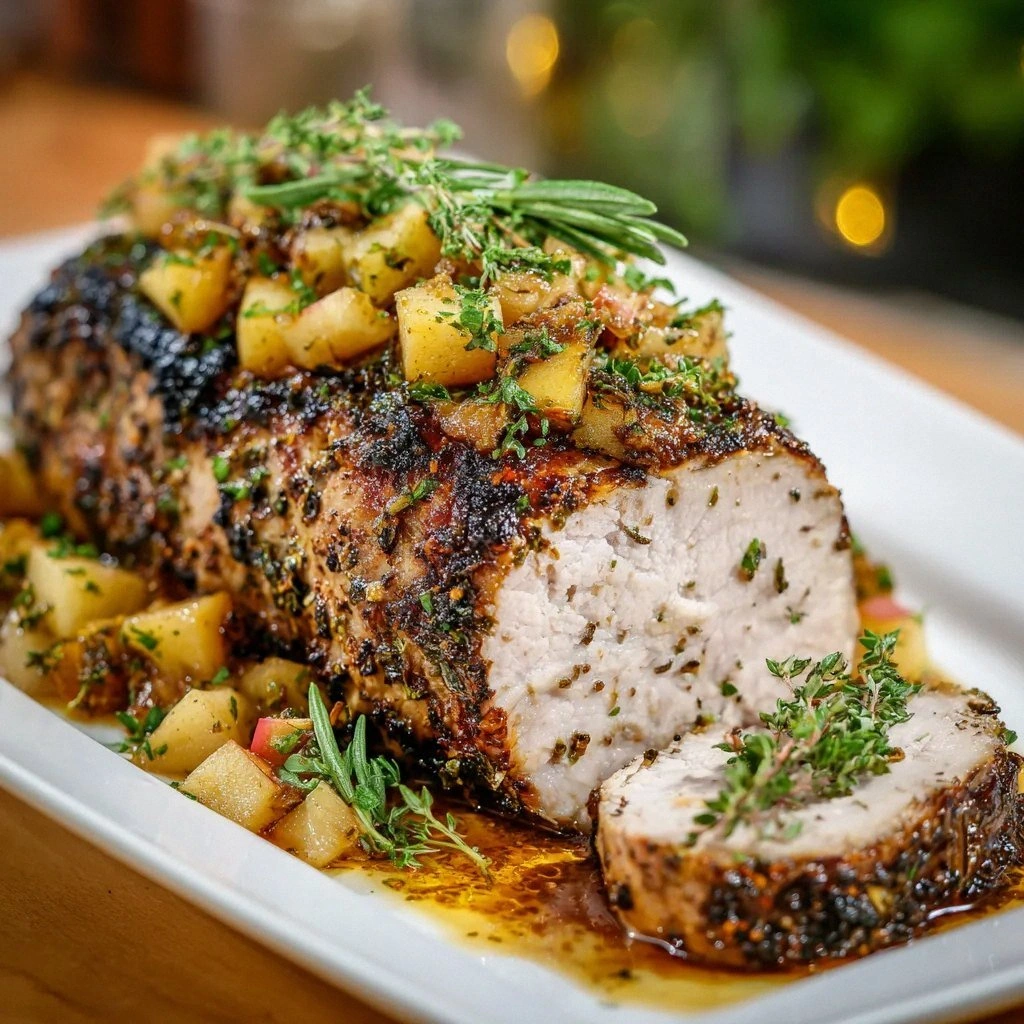
The moment the pork hits the oven, the air fills with a fragrant bouquet of rosemary, thyme, and garlic. The sizzling sound is like a drumbeat, signaling that the crust is forming—crisp edges that crackle like thin ice under a sudden burst of heat. You can already taste the caramelized apples, their sweet‑tart flavor dancing on your tongue, balanced by a splash of apple cider and a hint of lemon. The texture is a harmonious contrast: a buttery, juicy interior wrapped in a golden, herb‑laden shell that shatters with every bite.
What makes this version stand out is that it marries classic techniques with unexpected twists. The herb crust is not just a flavor layer; it’s a protective barrier that locks in moisture. The apple compote isn’t a side dish but a vibrant, glossy sauce that coats the pork like velvet, adding a pop of color and a burst of acidity. Every element—from the choice of pork loin to the precise timing of the crust—has been fine‑tuned to deliver a dish that feels both comforting and elevated.
I dare you to taste this and not go back for seconds. If you’ve ever struggled to keep pork tender or to balance sweet and savory, you’re not alone. This is hands down the best version you’ll ever make at home, and I’ll be honest—my first batch was so good I ate half before anyone else got a bite. Most recipes get this completely wrong, focusing on flavor alone and neglecting texture or presentation. Picture yourself pulling this out of the oven, the whole kitchen smelling incredible, and guests lining up for the first slice. Let me walk you through every single step—by the end, you’ll wonder how you ever made it any other way.
What Makes This Version Stand Out
- Crust: A meticulously blended herb crust that seals in juices while delivering a crunchy, aromatic bite that shatters with each forkful.
- Compote: A luscious apple compote that glazes the meat, adding a glossy finish and a sweet‑tart counterpoint that elevates the dish’s profile.
- Texture: A perfectly balanced interior—tender, moist, and slightly pink—contrasted with a crisp exterior that offers satisfying sound and mouthfeel.
- Ingredient Quality: The use of well‑marbled pork loin and fresh herbs ensures depth of flavor that canned or frozen ingredients cannot match.
- Ease: Despite its restaurant‑quality results, the recipe requires minimal prep time and no fancy equipment—just a skillet and an oven.
- Versatility: The core technique can be adapted for chicken, lamb, or even tofu, making it a foundational skill for any cook.
- Make‑ahead: The pork can be pre‑seasoned and chilled overnight, letting flavors meld while you tackle other dishes.
Alright, let’s break down exactly what goes into this masterpiece…
Inside the Ingredient List
The Flavor Base
Pork Loin: The star of the show! Look for a well‑marbled cut for tenderness and flavor. A thicker loin will hold up better against the high heat needed for a crisp crust, while a thinner slice cooks faster, reducing the risk of dryness. If you can’t find a prime cut, a good quality pork loin from a reputable butcher will still deliver.
The Aroma Crew
Olive Oil: This adds moisture and helps the herbs stick to the pork. Extra virgin is my go‑to for its rich taste. Using too little oil can cause the herbs to burn, so a generous brush before seasoning is key. A light mist of oil also helps the meat sear evenly.
The Herb Ensemble
Fresh Rosemary and Fresh Thyme: A fragrant herb that brings a woodsy flavor. Rosemary’s needle‑like leaves give a sharp, piney note, while thyme offers a subtle minty earthiness that pairs beautifully with pork. If you can’t find fresh, dried works too, but use less; the concentrated flavor can overpower the dish. Mixing the herbs with minced garlic creates a fragrant paste that coats the meat.
The Sweet‑Tart Companion
Apples: Choose sweet‑tart varieties like Granny Smith or Honeycrisp for the compote. They balance the savory pork perfectly. A good apple will caramelize without turning to mush. If you prefer a smoother sauce, peel and core the apples before chopping.
The Sweetener
Brown Sugar: This adds sweetness to the compote, helping to caramelize the apples. The molasses in brown sugar gives the sauce depth and a slightly chewy texture when it thickens. Use light brown sugar for a milder flavor or dark brown for a richer, more robust sweetness.
The Acidic Lift
Apple Cider and Lemon Juice: A splash of cider brings a tangy depth to the compote. You can substitute with apple juice if needed. Lemon juice brightens the flavors and balances the sweetness, cutting through the richness of the pork. A teaspoon of lemon zest can also add a citrusy aroma.
Everything's prepped? Good. Let's get into the real action…
The Method — Step by Step
- Prep the pork: Pat the pork loin dry with paper towels. This step is critical; excess moisture prevents a crisp crust. Season generously on all sides with salt, pepper, and the herb‑garlic paste. Let it sit at room temperature for 15 minutes to absorb the flavors.
- Heat the skillet: Place a large oven‑safe skillet over medium‑high heat and add a splash of olive oil. When the oil shimmers, it’s ready for the pork. This initial sear locks in juices and creates the first layer of flavor.
- Sear the pork: Place the pork in the skillet, fat side down, and let it sear for 3–4 minutes until a golden crust forms. Flip and sear the other side for another 3 minutes. Watch for that deep brown color—it signals a perfect sear.
- Transfer to the oven: Preheat the oven to 375°F (190°C). Slide the skillet into the oven and roast for 12–15 minutes, depending on thickness. The pork should reach an internal temperature of 145°F (63°C) for medium‑rare.
- Make the compote: While the pork roasts, sauté diced apples in a saucepan with a tablespoon of butter until they soften. Add brown sugar, apple cider, and a squeeze of lemon juice. Simmer until the mixture thickens into a glossy sauce. This should take about 10 minutes.
- Rest the pork: Remove the skillet from the oven and let the pork rest for 5 minutes. This allows juices to redistribute, keeping the meat moist.
- Serve: Slice the pork into medallions, drizzle with the apple compote, and garnish with fresh thyme sprigs. The sauce should coat the meat like velvet, adding a burst of flavor with every bite.
- Enjoy: Plate immediately while the pork is still warm. The aroma will fill the room, and the first bite will confirm that you’ve mastered this dish.
That’s it—you did it. But hold on, I’ve got a few more tricks that’ll take this to another level…
Insider Tricks for Flawless Results
The Temperature Rule Nobody Follows
Many cooks aim for a “medium” finish, but pork is best served at 145°F. The residual heat will bring the internal temperature up to 150°F, ensuring a juicy, safe result. A thermometer is your best friend; don’t guess based on time alone.
Why Your Nose Knows Best
Before you touch the pork, sniff the pan. A nutty, toasty aroma signals that the crust is ready. If you hear a faint metallic taste, the pan is too hot and the crust will burn.
The 5‑Minute Rest That Changes Everything
Resting isn’t just a courtesy; it’s essential for moisture redistribution. During the rest, the muscle fibers relax, allowing the juices to settle back into the meat, preventing them from spilling onto the plate.
The Secret to a Glaze
When you pour the apple compote over the sliced pork, let it sit for a minute before serving. The sauce will thicken slightly, creating a glossy glaze that enhances the visual appeal.
The Fresh Herb Finale
Right before serving, sprinkle a few fresh thyme leaves on top. The residual heat releases essential oils, giving the dish a bright, herbal finish that contrasts nicely with the sweet compote.
Creative Twists and Variations
This recipe is a playground. Here are some of my favorite ways to switch things up:
Maple‑Glazed Pork
Swap brown sugar for maple syrup and add a pinch of smoked paprika. The result is a sweet, smoky glaze that pairs wonderfully with the herb crust.
Citrus‑Infused Compote
Add a splash of orange juice and zest to the apple sauce. The citrus brightens the flavor profile, creating a fresh, summery twist.
Herb‑Crusted Chicken
Use bone‑in chicken thighs instead of pork. The same herb crust works beautifully, and the chicken remains moist and flavorful.
Spicy Apple Compote
Introduce a pinch of crushed red pepper flakes to the compote. The heat balances the sweetness, giving the dish a kick.
Lemon‑Rosemary Pork
Increase the amount of fresh rosemary and add a generous squeeze of lemon juice to the crust. The citrusy herb blend elevates the pork’s natural flavor.
Vegetarian Version
Replace pork with a thick slice of marinated portobello mushroom. The mushroom’s meaty texture and earthy flavor mimic pork, while the herb crust adds depth.
Storing and Bringing It Back to Life
Fridge Storage
Store leftovers in an airtight container in the refrigerator for up to 3 days. The pork will stay moist, and the compote will retain its glossy sheen.
Freezer Friendly
Freeze the pork and compote separately in freezer‑safe bags for up to 2 months. Thaw overnight in the fridge before reheating.
Best Reheating Method
Reheat in a preheated oven at 300°F (150°C) for 10 minutes, then finish under the broiler for 1–2 minutes to revive the crust. Add a tiny splash of water before reheating to keep the pork from drying out.