Remember that night when the oven was a furnace and the dough was a stubborn lump that refused to rise? I stared at the clock, the timer ticking away, and my kitchen smelled of disappointment. The only thing left was the loaf that had gone flat, its crust a dull brown, and a taste that felt like a missed opportunity. That moment sparked a mission to create a bread that could be made without the drama of kneading, yet still deliver on flavor. I began experimenting, mixing ingredients until the dough behaved like a dream. I swore that I would never again let a simple loaf become a culinary casualty.
The kitchen was a symphony of sights and sounds: the rhythmic clink of measuring cups, the gentle hiss of water as it warmed, and the faint aroma of yeast that promised something good. My eyes caught the golden crust forming, the steam curling like wisps of cloud. The sound of the dough stretching, the touch of a sticky surface that clung to my fingers, the visual cue that it was rising. The anticipation in the air was almost tangible, like a secret about to be revealed. When the timer finally rang, the aroma that burst out was so rich it made my mouth water. I could almost taste the buttery, cheesy center even before I cut into it.
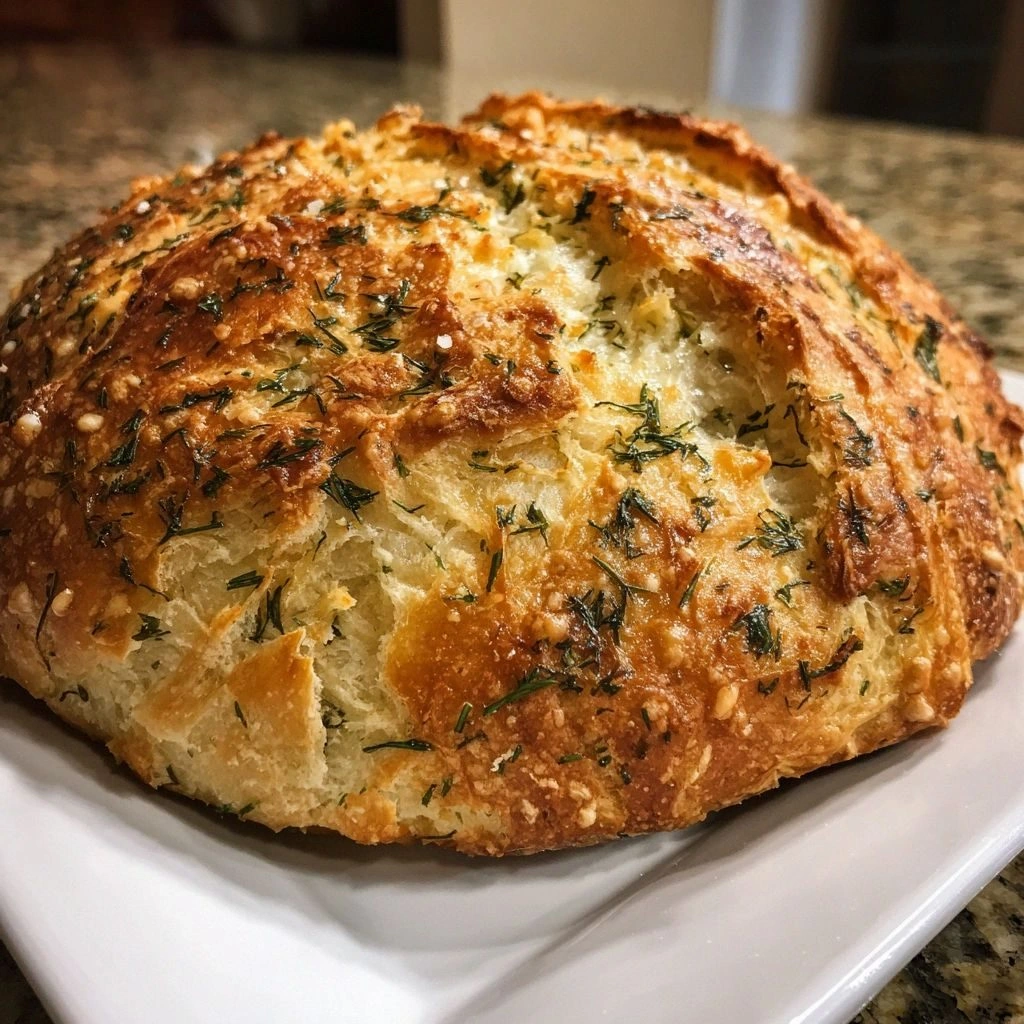
What makes this loaf a game‑changer is the combination of simple ingredients with a twist that elevates every bite. The addition of fresh dill gives a bright, herbal punch that cuts through the richness of Gouda, creating a flavor profile that feels both comforting and adventurous. The no‑knead method means you can bake a loaf in under an hour, turning a potentially stressful task into a quick, satisfying ritual. The result is a crust that crackles like a well‑timed applause while the inside remains airy and tender, a contrast that keeps you coming back for more. I dare you to taste this and not go back for seconds. And trust me, this is hands down the best version you'll ever make at home.
Picture yourself pulling this loaf out of the oven, the whole kitchen smelling incredible, the crust shimmering under the kitchen light. The anticipation builds as you slice into it, revealing a golden interior that feels like a cloud of cheese and herbs. You’ll realize that the secret isn’t in a fancy technique, but in the harmony of flavors and the simplicity of the method. If you’ve ever struggled with bread that turns out dense or bland, you’re not alone— and I’ve got the fix. Let me walk you through every single step—by the end, you'll wonder how you ever made it any other way.
What Makes This Version Stand Out
- Flavor: The marriage of Gouda and dill creates a savory, herbaceous depth that is rarely found in conventional bread.
- Texture: The crumb stays airy while the crust achieves a satisfying crunch, thanks to the precise hydration and yeast timing.
- Convenience: No kneading, no proofing trays, no fancy equipment—just a bowl, a timer, and a little patience.
- Versatility: It serves as a side for soups, a base for bruschetta, or a snack on its own, making it a kitchen staple.
- Visual Appeal: The golden crust with a subtle sheen and the hint of green dill speckled inside makes it Instagram‑ready.
- Health Factor: While indulgent, the cheese is balanced by the fresh herbs and the use of all‑purpose flour, keeping it approachable.
- Make‑ahead Potential: The dough can be refrigerated overnight, letting you bake fresh bread in the morning with zero prep.
- Ingredient Quality: Using a high‑quality Gouda and fresh dill elevates the loaf beyond a standard sandwich bread.
Inside the Ingredient List
The Flavor Base
All-purpose flour is the backbone of your bread, providing structure and texture. It offers a neutral canvas that lets the Gouda and dill shine. If you prefer a nuttier flavor, substitute whole wheat flour, but be prepared for a denser crumb. The flour also absorbs the warm water, creating the right consistency for a no‑knead loaf.
The Texture Crew
Instant yeast is the unsung hero that lifts the dough without kneading. It activates quickly in warm water, giving the loaf a light rise in just a few hours. If you only have active dry yeast, activate it in warm water first; the results will be almost identical. Salt not only flavors the dough but also strengthens gluten, giving the bread a better bite.
The Unexpected Star
Shredded Gouda cheese adds a creamy, rich flavor that pairs beautifully with dill. The cheese melts into the dough, creating pockets of gooeyness that make each bite unforgettable. If Gouda isn’t available, try a mild cheddar for a similar melt, or experiment with Gruyère for a nutty twist.
The Final Flourish
Fresh dill is the star herb in this recipe, giving a bright, vibrant taste that balances the richness of cheese. Dried dill can be used in a pinch, but fresh is always best for flavor. If you’re feeling adventurous, sprinkle a handful of dill on top before baking for a colorful crust.
Everything's prepped? Good. Let's get into the real action.
The Method — Step by Step
- In a large mixing bowl, combine 4 cups of all-purpose flour and 1 teaspoon of instant yeast. Stir to evenly distribute the yeast so it doesn’t clump. This step is crucial to ensure a uniform rise throughout the loaf.
- Add 1 teaspoon of salt to the dry mix and give it another quick stir. The salt not only flavors the bread but also regulates the yeast activity, preventing over‑fermentation.
- Pour in 2 cups of warm water (about 110°F) and mix with a wooden spoon until the dough is shaggy and slightly sticky. The water hydrates the flour, forming gluten strands that will trap the gas produced by the yeast.
- Fold in 1 cup of shredded Gouda cheese, making sure it’s evenly distributed. The cheese melts into the dough, creating pockets of creamy flavor that burst with each bite.
- Stir in 2 tablespoons of finely chopped fresh dill. The herb’s bright, citrusy notes contrast beautifully with the richness of the cheese, giving the loaf a fresh kick.
- Cover the bowl with plastic wrap or a damp kitchen towel and let the dough rise at room temperature for 12 to 18 hours. The long, slow fermentation develops depth of flavor and a tender crumb.
- Preheat your oven to 475°F (245°C). Place a Dutch oven or a heavy‑bottomed pot with a lid inside to heat up for 20 minutes. This step ensures an even, crisp crust.
- Carefully transfer the risen dough into the preheated pot. Score the top with a sharp knife to allow the loaf to expand without tearing. The score also gives a decorative look to the finished bread.
- Cover with the lid and bake for 30 minutes. After 30 minutes, remove the lid, reduce the temperature to 425°F (220°C), and bake for an additional 10 minutes to develop a deep golden crust.
- Remove the bread from the pot and let it cool on a wire rack for at least 20 minutes before slicing. Cooling allows the steam inside to settle, preventing a gummy texture.
- Serve warm with a side of butter or a drizzle of olive oil. The combination of cheese and dill makes it a perfect accompaniment to soups or a light lunch.
- If you want to keep the loaf fresh, store it in an airtight container at room temperature for up to 3 days. For longer storage, refrigerate or freeze as detailed below.
- Reheat in a preheated oven at 350°F (175°C) for 10 minutes to restore the crust’s crispness. A quick reheating step will bring back that fresh‑baked aroma you love.
- Enjoy the loaf with a glass of cold beer or a light white wine for a complete experience. The acidity of the drink balances the richness of the cheese and the herbal notes of the dill.
Insider Tricks for Flawless Results
The Temperature Rule Nobody Follows
Many bakers think that a higher oven temperature is always better, but for a no‑knead loaf, the initial high heat is followed by a lower temperature. This two‑stage bake creates a blistered crust while keeping the interior tender. I once tried baking the entire loaf at 475°F, and the result was a burnt crust and a dense crumb. The lesson? Let the heat work in stages.
Why Your Nose Knows Best
During fermentation, the dough will emit a sweet, yeasty aroma. If the smell becomes overly sour or off, it’s a sign the yeast has over‑fermented. In that case, you can salvage the loaf by adding a splash of warm water and letting it rest for an additional hour. Trust your nose; it’s the best quality control tool.
The 5-Minute Rest That Changes Everything
After baking, let the loaf rest for exactly 5 minutes before cutting. This short rest allows the steam to redistribute, preventing a gummy interior. I’ve seen people slice immediately, only to have the bread feel heavy and moist. A brief pause makes the difference between a mediocre and a stellar loaf.
Keep the Dough Moist
When you mix the dough, you want it slightly sticky. If it feels too dry, add a teaspoon of water and mix again. A moist dough traps the gas bubbles, leading to a lighter crumb. A dry dough will be dense and heavy.
Use a Heavy-Bottomed Pot
Storing the loaf in a Dutch oven or a heavy‑bottomed pot traps steam, creating a steamy environment that helps form a crisp crust. The pot also distributes heat evenly, preventing hot spots. If you don’t have a Dutch oven, a cast‑iron skillet works as a decent substitute.
Creative Twists and Variations
This recipe is a playground. Here are some of my favorite ways to switch things up:
Smoky Chipotle Gouda
Swap regular Gouda for smoked Gouda and add a pinch of chipotle powder. The smoky flavor pairs beautifully with the dill, giving the bread a southwestern twist.
Sun-Dried Tomato & Basil
Replace fresh dill with chopped sun‑dried tomatoes and fresh basil. The sweet tomato and aromatic basil create a Mediterranean vibe, perfect for a light lunch.
Blue Cheese & Walnut
Use crumbled blue cheese instead of Gouda and add chopped walnuts for crunch. The sharpness of the blue cheese complements the nuttiness of the walnuts, offering a gourmet experience.
Caramelized Onion & Rosemary
Incorporate caramelized onions and a teaspoon of rosemary into the dough. The sweet onion and piney rosemary give the loaf a savory depth that’s ideal for a dinner side.
Herb & Parmesan Crust
Sprinkle a mixture of dried herbs and grated Parmesan over the loaf before baking. The crust will be crunchy and flavorful, adding a cheesy, herby finish.
Storing and Bringing It Back to Life
Fridge Storage
Wrap the cooled loaf in parchment paper and then in a plastic bag. Store in the refrigerator for up to 3 days. The bread stays fresh, and the cheese remains creamy.
Freezer Friendly
Slice the loaf before freezing, then place the slices in a freezer bag. Freeze for up to 2 months. When ready to eat, toast the slices in a toaster or oven at 350°F for 5 minutes.
Best Reheating Method
To revive a stale loaf, lightly spray it with water, wrap in foil, and bake at 350°F for 10 minutes. The water creates steam that restores moisture, while the foil prevents the crust from burning.