Picture this: it is 2:17 a.m., the kind of sticky summer night when even the ceiling fan feels exhausted. I am standing over the kitchen sink, juice from a rogue pineapple chunk dripping down my wrist, and I am muttering the words, “I bet I can build the tropics in a bowl.” My friends had laughed earlier that evening when I claimed I could out-Hawaii Hawaii with a salad. They rolled their eyes the way people do when someone swears they can improve on Grandma’s lasagna. Fast forward three hours, and I am fork-deep in what I now call the only Hawaiian salad worth your time, and I am whispering apologies to every limp luau plate I ever pushed around with plastic cutlery. This version is Technicolor, it’s got surf-rock crunch, it’s got perfume of lime and grilled coconut, and it’s got zero tolerance for soggy greens. By the time the sun crept in, I had eaten half the batch straight from the mixing bowl, juice on my chin, victory in my heart, and I declared, “This is hands-down the best version you will ever make at home.” I’m about to prove it to you, step by step, so grab your sharpest knife and your loudest aloha shirt, friend, because we are going full island mode without leaving your kitchen.
Most recipes get Hawaiian salad completely wrong. They drown it in syrupy canned fruit cocktail, they toss in rubbery shrimp that tastes like it was thawed under lukewarm tap water, and they smother the whole thing in marshmallow fluff that could double as caulking. The result is cloying, floppy, and about as refreshing as a polyester muumuu. I am not here for that. I am here for the version that crackles with toasted macadamia, pops with fresh pineapple that still holds the morning sun, and carries a whisper of sesame oil that makes your eyelids flutter. This salad is a beach breeze in carbohydrate form, and once you taste it, you will wonder why anyone ever settled for the canned-food aisle cop-out.
I’ll be honest — I ate half the batch before anyone else got to try it. I kept telling myself I was “tweaking seasoning,” but really I was powerless against the contrast between caramelized pineapple edges and the cool snap of jicama. If you have ever struggled with fruit-based salads that feel more like dessert than lunch, you are not alone — and I have got the fix. The secret lives in layering heat against cool, crunch against velvet, and salt against sweet, so that every bite feels like a tide pulling you out and pushing you home. Let me walk you through every single step — by the end, you will wonder how you ever made it any other way.
What Makes This Version Stand Out
Fire-Kissed Fruit: We char half the pineapple and all the mango over screaming-high heat until the natural sugars bubble into a lacquered crust. That smoky depth turns the usual candy-sweet into something complex and haunting, and it only takes ninety seconds per side. Skip this and the salad tastes like a theme-park version of itself. Trust me, you want the fire.
Triple Crunch Architecture: Toasted coconut flakes, macadamia nuts, and water chestnuts each bring their own frequency of snap so your jaw stays entertained. Most recipes lean on one crunch source and the whole thing collapses into mush after twenty minutes. Not here. We are building seismic activity, not soggy granola.
Umami Back-Note: A whisper of fish sauce and sesame oil in the dressing gives the fruit a savory echo that keeps your palate guessing. You will not taste fish; you will taste “What is that glorious depth?” It is the same trick that makes Thai green papaya salad addictive.
Make-Ahead Friendly: Everything can be prepped and stored separately for up to three days, then tossed at the last second. Take it to a potluck and look like a miracle worker with zero day-of stress. Try that with lettuce-heavy salads and you are chewing on chlorophyll-flavored Kleenex by dessert.
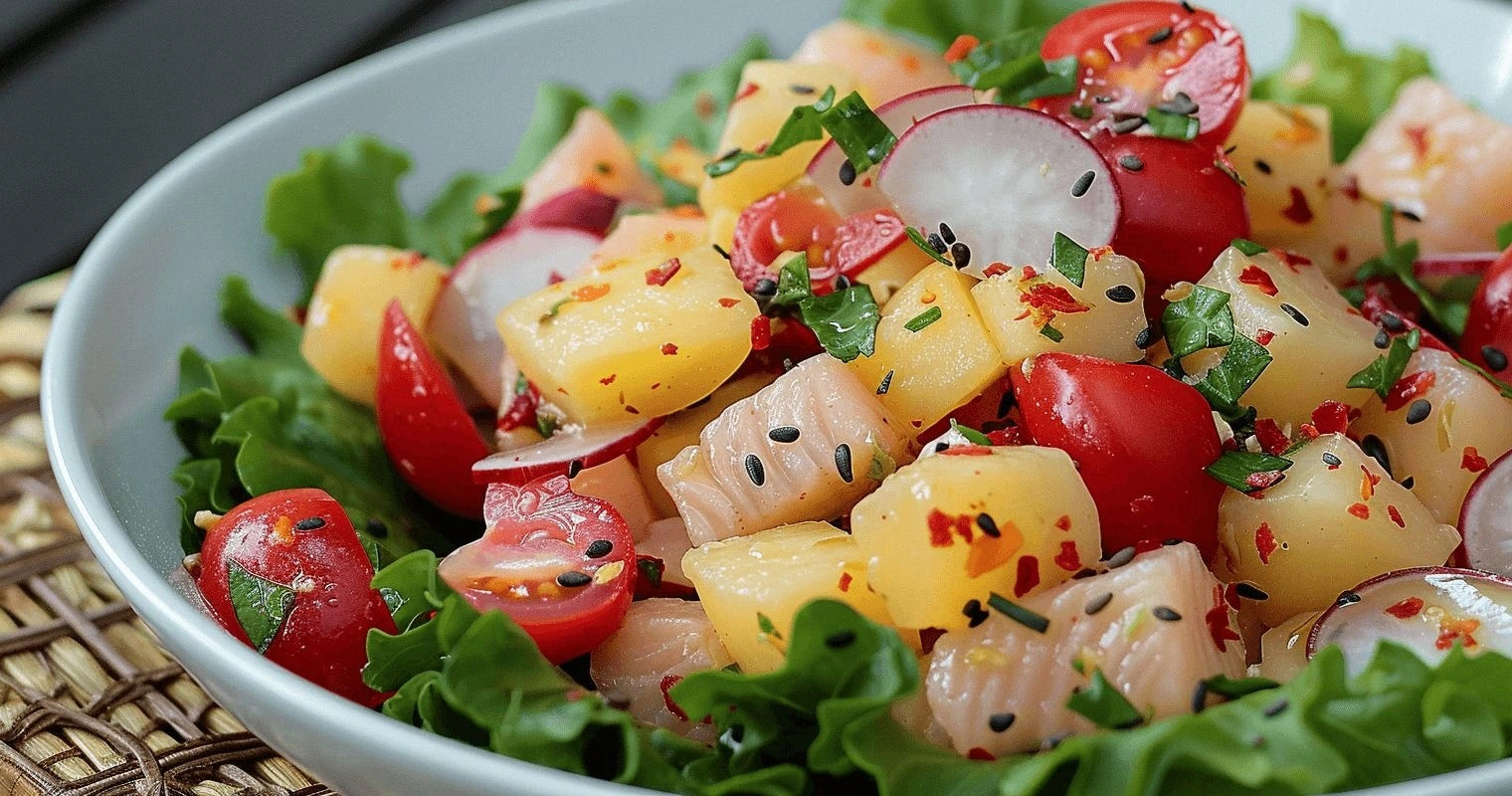
Color Therapy: Red radish, emerald scallion, sunset orange papaya, and violet micro-shiso create a confetti board so vivid your phone camera will weep. Visual appetite is real; this bowl triggers it before the fork even moves.
Light Yet Luxurious: Each serving clocks in under 350 calories, yet the healthy fats from nuts and coconut leave you genuinely satisfied. You will not need a nap, but you will need a second helping. I dare you to taste this and not go back for seconds.
Alright, let’s break down exactly what goes into this masterpiece…
Inside the Ingredient List
The Flavor Base
Fresh pineapple is non-negotiable. Canned rings sit in a tinny bath that mutes the bright, almost electric acidity you want. Look for fruit that smells fragrant at the stem end and gives slightly under your thumb; if it smells like cardboard, leave it for the juicer crowd. You will cube and char half, leaving the rest raw for a hot-cool dialogue that makes the salad feel alive. Skip the core — it is fibrous and will hijack the silky texture we are after.
Ripe but firm mango offers honeyed body and a velvety foil to pineapple’s tang. Press near the tip; it should have a gentle give, not a bruised slump. If all you can find are rock-hard specimens, bury them in a paper bag with a banana overnight and let the ethylene work its night shift.
Papaya brings that whisper of musk that screams tropics. Buy the sunset-orange Solo variety if you can; the seeds scoop out like caviar and the flesh is butter-soft. Underripe papaya tastes like a winter supermarket tomato, so be brave and wait until the skin is mottled amber and the fruit feels heavy for its size.
The Texture Crew
Jicama is the crunchy water chestnut’s cooler cousin. It stays crisp even after a citrus bath and adds a hydrating snap that balances the richer coconut. Peel with a sturdy veggie peeler, then julienne into matchsticks no thicker than a credit card so they curl around the fruit like ribbon candy.
Macadamia nuts must be raw and unsalted so we can control the roast. I toss them in a dry skillet until they start to smell like buttery popcorn and develop tiger-stripes of toast. Let them cool completely before chopping; residual heat keeps cooking, and burnt macadamias taste like regret.
Toasted coconut flakes are the bacon bits of the island world. Buy the wide, papery shards, not the fine macaroon dust, and bake at 325°F for six minutes until the edges curl and bronze. Watch them like a hawk: the leap from golden to acrid takes eight seconds, and there is no rescue mission.
The Unexpected Star
Fresh mint and Thai basil form an aromatic tag team. Mint slaps you awake; basil adds anise-y intrigue. Chiffonade them at the last second so chlorophyll stays brilliant. Dried herbs would taste like potpourri, so if you cannot find fresh, leave them out rather than settle.
Lime zest and juice supply the acid backbone, but we also add a whisper of rice vinegar for layered brightness. The combo prevents the dreaded “lime fatigue” that flattens after a few bites. Zest first, juice second; micro-planed zest releases oils that perfume the dressing like citrus cologne.
The Final Flourish
Radishes sliced on a mandoline deliver peppery snap and hot-pink fireworks. If you are shy of heat, soak slices in ice water for ten minutes; it tames the bite and keeps them postcard crisp.
Shiso microgreens taste like spearmint meets cumin and make the dish look plated by a chef on vacation. No shiso? Use baby arugula for a similar spicy lift, but expect a more peppery punch.
Everything’s prepped? Good. Let’s get into the real action…
The Method — Step by Step
- Start by firing up a grill pan or cast-iron skillet over medium-high heat until a drop of water evaporates on contact. While it heats, cube half your pineapple and mango into generous 1-inch chunks; they need to feel sturdy enough to survive the inferno. Toss them with one teaspoon of neutral oil — just enough to prevent sticking, not so much that they fry. When the pan smokes like a lazy volcano, lay the fruit in a single layer and step back. You want a hard sear, so resist the urge to shuffle them like poker chips. After ninety seconds, the underbellies should sport a tiger-caramel crust; flip once, admire the sizzling soundtrack, then slide them onto a cold plate to stop carryover cooking.
- While the hot fruit cools, prep your dressing. In a jam jar, combine juice of two limes, one tablespoon rice vinegar, two teaspoons soy sauce, one teaspoon fish sauce, one teaspoon honey, and three tablespoons neutral oil. Add a pinch of chili flakes for polite heat. Screw the lid tight and shake like you are mixing a beachside cocktail. The emulsion should look glossy and coat the back of a spoon like liquid sunshine. Taste; it should make your tongue dance the hula between sweet, tangy, and salty. If it feels flat, add another drop of fish sauce; if too sharp, a touch more honey.
- Toast your coconut and nuts. Spread coconut on one half of a sheet tray, macadamias on the other; they have different finish lines, so keeping them separate prevents a sprint to burnt. Bake at 325°F for six minutes, stir once, then cool. The coconut should smell like summer sunscreen, the nuts like toasted butter. Chop the nuts coarsely; you want chunky jewels, not nut sand.
- Julienne jicama and radishes. A mandoline speeds things up, but a sharp knife works if you channel patience. Drop jicama into ice water for five minutes; it curls like party ribbon and stays crisp for hours. Spin dry in a salad spinner so no sneaky water dilutes the dressing later.
- Cube the remaining raw pineapple and mango into smaller ½-inch pieces; they will intermingle with the charred chunks for textural contrast. Combine them in a big mixing bowl with the jicama, half the radish slices, and half the herbs. Save the photogenic pieces for the final flourish.
- Pour two-thirds of the dressing over the mixture and fold gently with a silicone spatula. You are dressing, not drowning. Let it sit five minutes; the salt draws juice from the fruit, creating a self-sauce that marries flavors. Taste again; the salad should feel bright and confident, not bashful.
- Just before serving, fold in the toasted coconut and macadamias. Add them early and they absorb moisture, turning limp like forgotten breakfast cereal. You want the crunch to arrive like fireworks at the end of the song.
- Transfer to a wide, shallow platter so every color gets its moment in the spotlight. Drizzle the remaining dressing in artistic zigzags, scatter the reserved radish and herbs on top, and finish with a final snowfall of toasted coconut. Serve immediately, preferably with someone hovering nearby ready to swipe the first bite.
That is it — you did it. But hold on, I have got a few more tricks that will take this to another level…
Insider Tricks for Flawless Results
The Temperature Rule Nobody Follows
Cold fruit mutes flavor; room-temperature fruit sings. Pull everything from the fridge thirty minutes before assembly. The aromatics bloom, the lime brightens, and you taste nuance instead of a chilly monotone. A friend tried skipping this once; let us just say the salad tasted like refrigerator deodorizer wearing a lei.
Why Your Nose Knows Best
Smell the pineapple stem first; if it offers nothing, the fruit will taste like watery phone book. A ripe pineapple smells like a piña colada wearing sunscreen — sweet, floral, a little tangy. Same goes for mango — it should perfume your car on the drive home. Trust your olfactory radar; it is cheaper than any kitchen gadget.
The Five-Minute Rest That Changes Everything
After mixing, cover the bowl with a plate, not plastic wrap. Plastic traps condensation that rains back onto the fruit and dilutes your carefully balanced dressing. Five minutes at room temp lets the salt and acid do a gentle tango, softening raw edges without turning everything to mush. Walk away, wash the blender, come back, and taste the upgrade.
Crunch Timing Is Everything
Add toasted elements last, but also add them twice. Half get folded in so their flavor seasons the fruit, the other half scatter on top so your fork hits crunch first. That sonic snap is fifty percent of the experience; treat it like the cymbal crash in a song, not background static.
Creative Twists and Variations
This recipe is a playground. Here are some of my favorite ways to switch things up:
Spicy Volcano Edition
Swap the chili flakes for one finely minced Thai bird chili, seeds left in. Add grilled rings of red bell pepper for sweetness to balance the heat. The result feels like a beach party where someone turned up the reggae bass. Serve with an ice-cold lager to extinguish the fire.
Protein-Packed Surfer Bowl
Fold in chilled, poached shrimp that have been tossed in a whisper of wasabi mayo. The creamy dressing hugs the curves of the fruit and turns the salad into a legitimate main course. Top with black sesame seeds so it looks like night surf under starlight.
Low-Sugar Sunrise
Replace honey with a few drops of liquid monk fruit and omit the raw mango. Add diced cucumber and extra lime zest. It is crisp, spa-like, and perfect for those post-yoga mornings when you want refreshment without the sugar roller-coaster.
Smoky Meets Sweet
Char the jicama alongside the fruit until it has grill marks, then chill before mixing. The faint campfire note amplifies the tropical vibe and makes the salad taste like it was kissed by beach bonfire smoke. Add a crumble of feta for salty contrast and Instagram drama.
Citrus Swap Spectacular
Sub blood orange juice for lime and add supremed segments of cara cara orange. The coral hues bleed into the dressing like a watercolor sunset. Finish with crushed pink peppercorns for floral heat that sneaks up like a tide.
Storing and Bringing It Back to Life
Fridge Storage
Store undressed fruit and toasted elements in separate airtight containers for up to three days. The jicama keeps best submerged in ice water, covered, so it stays perky. Assembled salad is happiest within four hours; after that, the radish dyes the dressing magenta and the coconut starts to sag like wet confetti.
Freezer Friendly
Do not freeze the finished salad — you will create tropical slush. You can, however, freeze the charred fruit cubes on a tray, then bag them for smoothie gold later. They whirl into piña colada texture without extra ice and still carry the smoky memory of the grill.
Best Reheating Method
There is no reheating here, but if the fruit has chilled too stiff, let it sit out fifteen minutes before serving. Add a tiny splash of sparkling water and a squeeze of fresh lime to wake everything up; the bubbles lift the flavors like a DJ dropping the beat.