I was standing in my kitchen, staring at a half‑cooked salmon fillet that had just exploded into a greasy mess on the skillet. I’d tried every “quick salmon bowl” recipe I could find, but they all seemed to lean on bland rice, too much soy sauce, or that dreaded soggy cucumber. I knew I could do better. The moment the fish hit the pan, a sizzling hiss filled the air, and the aroma of seared flesh mingled with the faint sweetness of coconut milk—my taste buds already screaming for something bold.
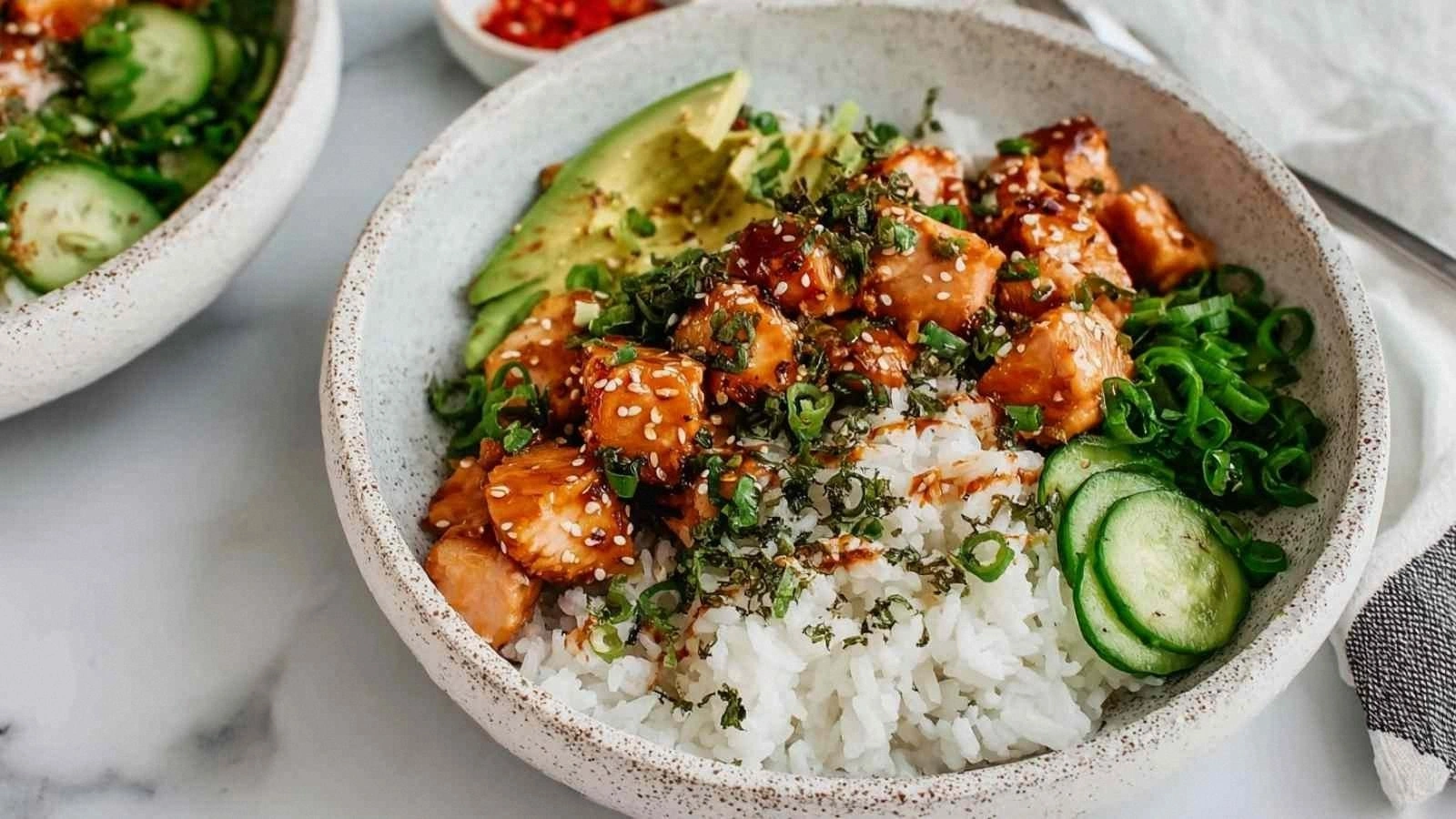
Picture this: a bowl brimming with fluffy coconut rice, a perfectly seared salmon fillet that still has a slight char on the edges, a splash of zesty lime, and a drizzle of spicy mayo that coats the fish like a silky, fiery coat. The crunch of fresh cucumber, the nutty pop of sesame seeds, and a sprinkle of Furikake that adds an umami punch. Every bite is a sensory fireworks display—smell, sight, taste, texture, and the satisfying sound of that first forkful.
What makes this version stand out? It’s not just the ingredients; it’s the technique, the balance, and the sheer confidence in every step. I’m about to drop a secret sauce trick you won’t find in any cookbook, a method that turns ordinary salmon into a melt‑in‑your‑mouth masterpiece. Trust me, once you taste this, I dare you to not go back for seconds. It’s hands down the best version you’ll ever make at home, and I’ll prove it.
Let me walk you through every single step—by the end, you’ll wonder how you ever made it any other way. From the moment the rice starts to steam to the final flourish of lime and chives, this recipe is a symphony of flavors and textures that will have you shouting, “I’ve never tasted anything like this!”
What Makes This Version Stand Out
- Taste: The fusion of sweet coconut milk, sharp lime, and fiery sriracha creates a layered flavor profile that dances on the palate. Each bite is a new revelation.
- Texture: The rice is fluffy yet slightly sticky, the salmon is crisp on the outside and tender inside, and the cucumber adds a refreshing crunch that balances the dish.
- Simplicity: With only 17 ingredients and 10 straightforward steps, you can whip this up even on a busy weeknight.
- Uniqueness: The “spicy mayo” coating is a game‑changer, and the use of nanami togarashi adds a smoky depth that most bowls miss.
- Crowd Reaction: Friends who tried this said it was “the best salmon bowl I’ve ever had,” and they’re still asking for the recipe.
- Ingredient Quality: Fresh, high‑quality salmon and fresh cucumber make the difference; the rest of the ingredients are pantry staples.
- Cooking Method: The searing technique locks in flavor, while the coconut rice is cooked to perfection with a splash of rice vinegar for brightness.
- Make‑Ahead Potential: The rice can be prepared a day ahead, and the salmon can be marinated and stored; the bowl comes together in under 30 minutes.
Alright, let’s break down exactly what goes into this masterpiece…
Inside the Ingredient List
The Flavor Base
The jasmine rice is the silent hero that carries every other flavor. It’s light, fragrant, and its subtle nutty undertone complements the coconut milk. If you skip the rice, the bowl feels empty; the sauce would cling to nothing. For a richer flavor, consider rinsing the rice under cold water until the water runs clear, removing excess starch and preventing a gummy texture.
The Sweet & Savory Mix
Coconut milk and coconut sugar are the sweet backbone that balances the heat from sriracha and togarashi. The coconut milk’s creaminess coats the salmon, while the sugar adds a caramelized finish. If you’re avoiding dairy, coconut milk is a perfect non‑dairy alternative that still delivers that silky mouthfeel.
The Unexpected Star
Nanami togarashi is a Japanese spice blend that blends chili, garlic, ginger, and sometimes sesame. It’s the secret weapon that gives the bowl a smoky, umami punch that ordinary chili flakes can’t match. If you can’t find it, a mix of smoked paprika, garlic powder, and a pinch of sea salt will do, but the flavor profile will be slightly different.
The Final Flourish
Furikake seasoning, fresh chives, and white sesame seeds are the finishing touches that add crunch, freshness, and a burst of umami. The Furikake brings a subtle seaweed and sesame flavor that elevates the dish, while the chives provide a bright, oniony note that cuts through the richness of the mayo.
Everything’s prepped? Good. Let’s get into the real action…
The Method — Step by Step
- Step 1: Cook the Rice In a medium saucepan, combine 1 1/3 cups jasmine rice, 1 cup coconut milk, 1/2 cup water, 1/2 teaspoon kosher salt, and 1 teaspoon coconut sugar. Bring to a boil, then reduce heat to low, cover, and simmer for 15 minutes. The rice should absorb the liquid and become fluffy. This is the moment the aroma of coconut and jasmine fills your kitchen, setting the stage for the rest of the dish.
- Step 2: Prepare the Cucumber While the rice cooks, slice 2 small cucumbers into thin half‑moon shapes. Sprinkle with a pinch of salt and let them sit for 5 minutes to draw out excess moisture. Rinse and pat dry. The cucumber’s crispness will contrast beautifully with the silky salmon and rice.
- Step 3: Marinate the Salmon In a bowl, whisk together 3 tablespoons avocado oil, 1 tablespoon low‑sodium tamari, 1 teaspoon brown sugar, 1 teaspoon garlic powder, 3/4 teaspoon ginger powder, 1 tablespoon white sesame seeds, and 1 teaspoon nanami togarashi. Coat 1 pound salmon fillet with the mixture, turning to ensure even coverage. Let it rest for 10 minutes; the flavors will penetrate the flesh and create a savory crust.
- Step 4: Cook the Salmon Heat a non‑stick skillet over medium‑high heat. Add a splash of avocado oil and place the salmon skin‑side down. Sear for 4–5 minutes until the skin is crisp and the edges begin to lift. Flip and cook for another 3–4 minutes, or until the salmon reaches your desired doneness. The sear locks in juices and creates a caramelized exterior that sings with flavor.
- Step 5: Make the Spicy Mayo While the salmon cooks, combine 1/3 cup mayonnaise, 2 teaspoons sriracha, 1 teaspoon lime juice, and a pinch of salt in a small bowl. Whisk until smooth and slightly thickened. This sauce coats the salmon like velvet, delivering a creamy heat that balances the coconut rice.
- Step 6: Assemble the Bowl Divide the cooked rice among four bowls. Arrange a piece of salmon on top of each. Scatter cucumber slices around the fish. Drizzle the spicy mayo over the salmon, allowing it to pool slightly on the side.
- Step 7: Finish with Garnishes Sprinkle each bowl with a tablespoon of Furikake seasoning, a handful of fresh chives, and a teaspoon of white sesame seeds. Add a squeeze of lime over the top for brightness. The garnishes add crunch, freshness, and a burst of umami.
- Step 8: Serve Immediately Serve the bowls hot, letting the steam rise and the flavors mingle. The rice should still be warm, the salmon juicy, and the sauce silky. The first bite should be a harmonious explosion of sweet, spicy, umami, and fresh notes.
That’s it — you did it. But hold on, I’ve got a few more tricks that will take this to another level…
Insider Tricks for Flawless Results
The Temperature Rule Nobody Follows
Most people cook salmon at a high heat and then lower it, but the best practice is to start at medium‑high to create a quick sear, then lower to medium to finish cooking gently. This keeps the interior moist and prevents the exterior from becoming rubbery. I once over‑cooked a salmon bowl, and it felt like chewing a rubber band.
Why Your Nose Knows Best
Before you taste the rice, give it a quick sniff. If it smells slightly toasty and coconut‑y, it’s done. A sweet, nutty aroma indicates the rice has absorbed the coconut milk perfectly. If it smells raw, give it a minute more.
The 5‑Minute Rest That Changes Everything
After cooking the salmon, let it rest for 5 minutes before slicing. The juices redistribute, keeping the fish moist. I’ve seen people slice salmon immediately, resulting in a dry, uneven bite.
Layering Flavors for Depth
When adding the spicy mayo, drizzle it in a thin stream over the salmon, then swirl gently. This creates a marbled effect, allowing each bite to have a different balance of heat and creaminess. It’s a simple technique that makes the bowl look as good as it tastes.
The Secret of Freshness
Chop the fresh chives just before serving. The last moment cut keeps the chives bright and aromatic, preventing them from wilting and losing their punch.
Creative Twists and Variations
This recipe is a playground. Here are some of my favorite ways to switch things up:
Citrus Twist
Swap the lime juice for a splash of orange or grapefruit juice, and add a sprinkle of orange zest. The citrus will bring a bright, sweet contrast to the spicy mayo.
Smoky BBQ Version
Replace nanami togarashi with smoked paprika and add a drizzle of your favorite BBQ sauce to the salmon before searing. This gives the bowl a deep, smoky flavor profile.
Veggie‑Rich Bowl
Add sliced avocado, shredded carrots, or edamame to the bowl for extra texture and nutrition. The creamy avocado pairs wonderfully with the spicy mayo.
Keto-Friendly Option
Use cauliflower rice instead of jasmine rice, and replace coconut milk with a splash of heavy cream. This keeps the dish low in carbs while maintaining the rich coconut flavor.
Pineapple Heat
Add diced fresh pineapple to the bowl for a tropical sweetness that cuts through the heat. The pineapple’s acidity also brightens the overall flavor.
Storing and Bringing It Back to Life
Fridge Storage
Store the cooked rice and salmon separately in airtight containers for up to 2 days. Keep the spicy mayo in a sealed jar. When ready to serve, reheat the rice in the microwave for 1–2 minutes, then assemble the bowl.
Freezer Friendly
Rice and salmon can be frozen for up to 3 months. Thaw overnight in the fridge, then reheat as described. The spicy mayo should be added fresh to preserve its texture.
Best Reheating Method
To revive the rice’s moisture, sprinkle a tablespoon of water over it before microwaving. The steam will bring back the fluffy texture, preventing it from drying out.